Max Lucado Daily: WORSHIP ADJUSTS US
Worship adjusts us. It lowers the chin of the haughty and straightens the back of the burdened. It bows the knees, singing to him our praise. Opening our hearts, it offers to him our uniqueness. Worship properly positions the worshiper. And oh how we need it!
We walk through life so bent out of shape. Cure any flare up of commonness by setting your eyes on our uncommon King. Worship lifts our eyes and sets them “on the realities of heaven, where Christ sits at God’s right hand in the place of honor and power” (Colossians 3:1).
We worship God because we need to. But our need runs a distant second to the thoroughbred reason for worship: God deserves it. God would die for your sin before he’d let you die in your sin. What do you do with such a Savior? You lift up your gift in worship.
Read more Cure for the Common Life
Joshua 8
Ai
God said to Joshua, “Don’t be timid and don’t so much as hesitate. Take all your soldiers with you and go back to Ai. I have turned the king of Ai over to you—his people, his city, and his land.
2 “Do to Ai and its king what you did to Jericho and its king. Only this time you may plunder its stuff and cattle to your heart’s content. Set an ambush behind the city.”
3-8 Joshua and all his soldiers got ready to march on Ai. Joshua chose thirty thousand men, tough, seasoned fighters, and sent them off at night with these orders: “Look sharp now. Lie in ambush behind the city. Get as close as you can. Stay alert. I and the troops with me will approach the city head-on. When they come out to meet us just as before, we’ll turn and run. They’ll come after us, leaving the city. As we are off and running, they’ll say, ‘They’re running away just like the first time.’ That’s your signal to spring from your ambush and take the city. God, your God, will hand it to you on a platter. Once you have the city, burn it down. God says it, you do it. Go to it. I’ve given you your orders.”
9 Joshua sent them off. They set their ambush and waited between Bethel and Ai, just west of Ai. Joshua spent the night with the people.
10-13 Joshua was up early in the morning and mustered his army. He and the leaders of Israel led the troops to Ai. The whole army, fighting men all, marched right up within sight of the city and set camp on the north side of Ai. There was a valley between them and Ai. He had taken about five thousand men and put them in ambush between Bethel and Ai, west of the city. They were all deployed, the main army to the north of the city and the ambush to the west. Joshua spent the night in the valley.
14 So it happened that when the king of Ai saw all this, the men of the city lost no time; they were out of there at the crack of dawn to join Israel in battle, the king and his troops, at a field en route to the Arabah. The king didn’t know of the ambush set against him behind the city.
15-17 Joshua and all Israel let themselves be chased; they ran toward the wilderness. Everybody in the city was called to the chase. They pursued Joshua and were led away from the city. There wasn’t a soul left in Ai or Bethel who wasn’t out there chasing after Israel. The city was left empty and undefended as they were chasing Israel down.
18-19 Then God spoke to Joshua: “Stretch out the javelin in your hand toward Ai—I’m giving it to you.” Joshua stretched out the javelin in his hand toward Ai. At the signal the men in ambush sprang to their feet, ran to the city, took it, and quickly had it up in flames.
20-21 The men of Ai looked back and, oh! saw the city going up in smoke. They found themselves trapped with nowhere to run. The army on the run toward the wilderness did an about-face—Joshua and all Israel, seeing that the ambush had taken the city, saw it going up in smoke, turned and attacked the men of Ai.
22-23 Then the men in the ambush poured out of the city. The men of Ai were caught in the middle with Israelites on both sides—a real massacre. And not a single survivor. Except for the king of Ai; they took him alive and brought him to Joshua.
24-25 When it was all over, Israel had killed everyone in Ai, whether in the fields or in the wilderness where they had chased them. When the killing was complete, the Israelites returned to Ai and completed the devastation. The death toll that day came to twelve thousand men and women—everyone in Ai.
26-27 Joshua didn’t lower his outstretched javelin until the sacred destruction of Ai and all its people was completed. Israel did get to take the livestock and loot left in the city; God’s instructions to Joshua allowed for that.
28-29 Joshua burned Ai to the ground. A “heap” of nothing forever, a “no-place”—go see for yourself. He hanged the king of Ai from a tree. At evening, with the sun going down, Joshua ordered the corpse cut down. They dumped it at the entrance to the city and piled it high with stones—you can go see that also.
30-32 Then Joshua built an altar to the God of Israel on Mount Ebal. He built it following the instructions of Moses the servant of God to the People of Israel and written in the Book of The Revelation of Moses, an altar of whole stones that hadn’t been chiseled or shaped by an iron tool. On it they offered to God Whole-Burnt-Offerings and sacrificed Peace-Offerings. He also wrote out a copy of The Revelation of Moses on the stones. He wrote it with the People of Israel looking on.
33 All Israel was there, foreigners and citizens alike, with their elders, officers, and judges, standing on opposite sides of the Chest, facing the Levitical priests who carry God’s Covenant Chest. Half of the people stood with their backs to Mount Gerizim and half with their backs to Mount Ebal to bless the People of Israel, just as Moses the servant of God had instructed earlier.
34-35 After that, he read out everything written in The Revelation, the Blessing and the Curse, everything in the Book of The Revelation. There wasn’t a word of all that Moses commanded that Joshua didn’t read to the entire congregation—men, women, children, and foreigners who had been with them on the journey.
Our Daily Bread reading and devotion
Monday, July 02, 2018
Read: 1 Peter 3:8–16
Suffering for Doing Good
8-12 Summing up: Be agreeable, be sympathetic, be loving, be compassionate, be humble. That goes for all of you, no exceptions. No retaliation. No sharp-tongued sarcasm. Instead, bless—that’s your job, to bless. You’ll be a blessing and also get a blessing.
Whoever wants to embrace life
and see the day fill up with good,
Here’s what you do:
Say nothing evil or hurtful;
Snub evil and cultivate good;
run after peace for all you’re worth.
God looks on all this with approval,
listening and responding well to what he’s asked;
But he turns his back
on those who do evil things.
13-18 If with heart and soul you’re doing good, do you think you can be stopped? Even if you suffer for it, you’re still better off. Don’t give the opposition a second thought. Through thick and thin, keep your hearts at attention, in adoration before Christ, your Master. Be ready to speak up and tell anyone who asks why you’re living the way you are, and always with the utmost courtesy. Keep a clear conscience before God so that when people throw mud at you, none of it will stick. They’ll end up realizing that they’re the ones who need a bath. It’s better to suffer for doing good, if that’s what God wants, than to be punished for doing bad. That’s what Christ did definitively: suffered because of others’ sins, the Righteous One for the unrighteous ones. He went through it all—was put to death and then made alive—to bring us to God.
INSIGHT
When we think of Peter, we often think of young Peter—his rash denials of Christ (John 18:17, 25, 27), his jumping out of the boat to walk on the water to Jesus (Matthew 14:22–31), or his cutting off a servant’s ear in the garden of Gethsemane (John 18:10). Yet aged Peter—mature Peter—is a much different man who wrote letters to encourage believers in Jesus. The man who called down a curse on himself as he denied Christ (Matthew 26:73–75) now writes that believers should be prepared to give an answer for their hope—something he was once unwilling to do. Such is the difference the Spirit makes in our lives.
How has the Spirit been transforming you and helping you to live out your faith? - J.R. Hudberg
Living Out Loud
By David C. McCasland
In your hearts revere Christ as Lord. 1 Peter 3:15
While staying at a hotel in Austin, Texas, I noticed a card lying on the desk in my room. It said:
Welcome
Our prayer is that your stay here will be restful
and that your travels will be fruitful.
May the Lord bless you and keep you, and make
His face shine upon you.
This card from the company that manages the hotel made me want to know more, so I accessed their website and read about their culture, strength, and values. In a winsome way, they seek to pursue excellence and live out their faith in the workplace.
Their philosophy reminded me of Peter’s words to the followers of Jesus scattered throughout Asia Minor. He encouraged them to demonstrate their faith in Christ in the society where they lived. Even as they faced threats and persecution, Peter told them not to be afraid, “But in your hearts revere Christ as Lord. Always be prepared to give an answer to everyone who asks you to give the reason for the hope that you have. But do this with gentleness and respect” (1 Peter 3:15).
A friend of mine calls this “living a lifestyle that demands an explanation.” No matter where we live or work, may we in God’s strength live out our faith today—always ready to reply gently and respectfully to everyone who asks the reason for our hope.
May our lives cause others to ask the reason we have hope.
My Utmost for His Highest, by Oswald Chambers
Monday, July 02, 2018
The Conditions of Discipleship
If anyone comes to Me and does not hate his father and mother, wife and children, brothers and sisters, yes, and his own life also….And whoever does not bear his cross and come after Me….So likewise, whoever of you does not forsake all that he has cannot be My disciple. —Luke 14:26-27, 33
If the closest relationships of a disciple’s life conflict with the claims of Jesus Christ, then our Lord requires instant obedience to Himself. Discipleship means personal, passionate devotion to a Person— our Lord Jesus Christ. There is a vast difference between devotion to a person and devotion to principles or to a cause. Our Lord never proclaimed a cause— He proclaimed personal devotion to Himself. To be a disciple is to be a devoted bondservant motivated by love for the Lord Jesus. Many of us who call ourselves Christians are not truly devoted to Jesus Christ. No one on earth has this passionate love for the Lord Jesus unless the Holy Spirit has given it to him. We may admire, respect, and revere Him, but we cannot love Him on our own. The only One who truly loves the Lord Jesus is the Holy Spirit, and it is He who has “poured out in our hearts” the very “love of God” (Romans 5:5). Whenever the Holy Spirit sees an opportunity to glorify Jesus through you, He will take your entire being and set you ablaze with glowing devotion to Jesus Christ.
The Christian life is a life characterized by true and spontaneous creativity. Consequently, a disciple is subject to the same charge that was leveled against Jesus Christ, namely, the charge of inconsistency. But Jesus Christ was always consistent in His relationship to God, and a Christian must be consistent in his relationship to the life of the Son of God in him, not consistent to strict, unyielding doctrines. People pour themselves into their own doctrines, and God has to blast them out of their preconceived ideas before they can become devoted to Jesus Christ.
WISDOM FROM OSWALD CHAMBERS
It is an easy thing to argue from precedent because it makes everything simple, but it is a risky thing to do. Give God “elbow room”; let Him come into His universe as He pleases. If we confine God in His working to religious people or to certain ways, we place ourselves on an equality with God. Baffled to Fight Better, 51 L
A Word with You, by Ron Hutchcraft
Monday, July 02, 2018
How to Get Rid of Your Heavy Burden - #8211
When my granddaughter was three years old she had big eyes, a big smile, and a backpack to match. She'd loaded her little red backpack with every book that she could jam in there. And being a firstborn, she must of course, carry it all by herself-which she was trying to do one day when it became clear to Daddy that she was really straining with that load. He saw again how determined she can be. (Determined actually is a grandparent's word. Parents call it stubborn.) He suggested she remove a few books and lighten the load, and that idea was a total non-starter. Then she tried taking another step. That's when she started to take off her backpack, and she said with a sigh, "Here, Daddy. I can't carry it anymore." Her Daddy gladly took it and he asked, "How's that, honey?" Her answer melted her father's heart, "All better, Daddy. All better."
I'm Ron Hutchcraft and I want to have A Word With You today about "How to Get Rid of Your Heavy Burden."
A lot of us are carrying a heavy pack on our back everywhere we go, and it's seriously weighing us down. There's a tribe in Alaska who believes that we all carry an invisible backpack with us wherever we go. Whenever we sin, we put another rock in that backpack. The longer we live, the more regrets we seem to accumulate-those things that we should have done that we didn't do; the things we thought we'd never do that we have done. Our backpack contains the pain of our past, the guilt over our mistakes, the shame of our sins. Sometimes, for a short time, you can forget about the burdens you carry. But eventually the weight of it all is there again, crushing our spirit and holding us back.
And then comes the invitation that has liberated countless millions of people, including the guy talking right now. The invitation comes from Jesus Christ, the Son of God, and it's recorded in our word for today from the Word of God in Matthew 11:28. Jesus said, "Come to Me, all you who are weary and burdened, and I will give you rest." Jesus loves you and He offers to take your burden on Himself so you can live the rest of your life free from the weight.
That's what He was doing when He hung on that cross, suspended by three nails. He was taking on Himself all the sin, the shame, the guilt, and all the punishment for every wrong thing you and I have ever done. In God's own words in the Bible, "He Himself bore our sins in His body on the tree" (1 Peter 2:24). The Bible puts it in even more graphic terms when it tells us that "He was pierced for our transgressions. He was crushed for our iniquities; the punishment that brought us peace was upon Him" (Isaiah 53:5).
When you bring a lifetime of selfishness and sin and hurt to the cross of Jesus, you can leave it there forever. You walk up to that cross dirty, and you walk away clean! And the feeling of being clean inside may be something you've needed for a long time, and it can start today. At the moment that you take all your sin and say, "Jesus, I realize that you love me so much that you took all the burdens of all my sins on yourself when you died on that cross. And because you rose from the dead, you're alive right now and you're able to take my sin and forgive it because you died for it. So, Jesus, I'm done running my own life. Beginning today, I'm yours!" That is life's most liberating moment.
God is saying to you this very day, "Let Daddy carry that." He paid a very high price so He could. Why would you walk around one more day with that heavy backpack that you've carried so long?
There’s wonderful information I’d love to give you at our website so you can be sure you have begun your relationship with the only One who can save you from your sin. Go to ANewStory.com.
Tonight you can go to sleep saying, "I'm forgiven. I'm going to heaven. I'm right with God" because you gave your backpack of sin to your Daddy in heaven. And it's finally "All better, Daddy."
Monday, July 2, 2018


Sunday, July 1, 2018
Joshua 7, Bible Reading and Daily Devotionals
Max Lucado Daily: Bring Your Children to Jesus
Lamentations 2:19 says, "Pour out your heart like water before the face of the Lord. Lift your hands toward Him for the life of your young children."
Dads- we can be loyal advocates, stubborn intercessors. We can take our parenting fears to Christ. In fact, if we don't, we'll take our fears out on our kids. Fear turns some parents into paranoid prison guards.
On the other hand, fear can also create permissive parents. High on hugs and low on discipline. Permissive parents. Paranoid parents. How can we avoid the extremes? We pray. Prayer is the saucer into which parental fears are poured to cool. When you send them off for the day, do so with a blessing. When you tell them good night, cover them in prayer. Pray that your children have a profound sense of place in this world and a heavenly place in the next.
From Dad Time
Joshua 7
Achan
Then the People of Israel violated the holy curse. Achan son of Carmi, the son of Zabdi, the son of Zerah of the tribe of Judah, took some of the cursed things. God became angry with the People of Israel.
2 Joshua sent men from Jericho to Ai (The Ruin), which is near Beth Aven just east of Bethel. He instructed them, “Go up and spy out the land.” The men went up and spied out Ai.
3 They returned to Joshua and reported, “Don’t bother sending a lot of people—two or three thousand men are enough to defeat Ai. Don’t wear out the whole army; there aren’t that many people there.”
4-5 So three thousand men went up—and then fled in defeat before the men of Ai! The men of Ai killed thirty-six—chased them from the city gate as far as The Quarries, killing them at the descent. The heart of the people sank, all spirit knocked out of them.
6 Joshua ripped his clothes and fell on his face to the ground before the Chest of God, he and the leaders throwing dirt on their heads, prostrate until evening.
7-9 Joshua said, “Oh, oh, oh . . . Master, God. Why did you insist on bringing this people across the Jordan? To make us victims of the Amorites? To wipe us out? Why didn’t we just settle down on the east side of the Jordan? Oh, Master, what can I say after this, after Israel has been run off by its enemies? When the Canaanites and all the others living here get wind of this, they’ll gang up on us and make short work of us—and then how will you keep up your reputation?”
10-12 God said to Joshua, “Get up. Why are you groveling? Israel has sinned: They’ve broken the covenant I commanded them; they’ve taken forbidden plunder—stolen and then covered up the theft, squirreling it away with their own stuff. The People of Israel can no longer look their enemies in the eye—they themselves are plunder. I can’t continue with you if you don’t rid yourselves of the cursed things.
13 “So get started. Purify the people. Tell them: Get ready for tomorrow by purifying yourselves. For this is what God, the God of Israel, says: There are cursed things in the camp. You won’t be able to face your enemies until you have gotten rid of these cursed things.
14-15 “First thing in the morning you will be called up by tribes. The tribe God names will come up clan by clan; the clan God names will come up family by family; and the family God names will come up man by man. The person found with the cursed things will be burned, he and everything he has, because he broke God’s covenant and did this despicable thing in Israel.”
16-18 Joshua was up at the crack of dawn and called Israel up tribe by tribe. The tribe of Judah was singled out. Then he called up the clans and singled out the Zerahites. He called up the Zerahite families and singled out the Zabdi family. He called up the family members one by one and singled out Achan son of Carmi, the son of Zabdi, the son of Zerah of the tribe of Judah.
19 Joshua spoke to Achan, “My son, give glory to God, the God of Israel. Make your confession to him. Tell me what you did. Don’t keep back anything from me.”
20-21 Achan answered Joshua, “It’s true. I sinned against God, the God of Israel. This is how I did it. In the plunder I spotted a beautiful Shinar robe, two hundred shekels of silver, and a fifty-shekel bar of gold, and I coveted and took them. They are buried in my tent with the silver at the bottom.”
22-23 Joshua sent off messengers. They ran to the tent. And there it was, buried in the tent with the silver at the bottom. They took the stuff from the tent and brought it to Joshua and to all the People of Israel and spread it out before God.
24 Joshua took Achan son of Zerah, took the silver, the robe, the gold bar, his sons and daughters, his ox, donkey, sheep, and tent—everything connected with him. All Israel was there. They led them off to the Valley of Achor (Trouble Valley).
25-26 Joshua said, “Why have you troubled us? God will now trouble you. Today!” And all Israel stoned him—burned him with fire and stoned him with stones. They piled a huge pile of stones over him. It’s still there. Only then did God turn from his hot anger. That’s how the place came to be called Trouble Valley right up to the present time.
Our Daily Bread reading and devotion
Sunday, July 01, 2018
Read: Hebrews 1:1–10
INSIGHT
Jesus lived out the mission of revealing the heart and character of His Father to a world that had separated itself from Him. This aspect of Jesus’s incarnation was described in John 1:18: “No one has ever seen God. But the unique One, who is himself God, is near to the Father’s heart. He has revealed God to us” (nlt). In revealing the Father to us, we see the invisible God made visible in Jesus. - Bill Crowder
What Is God Like?
By Jennifer Benson Schuldt
The Son is . . . the exact representation of [God’s] being. Hebrews 1:3
To celebrate a special occasion, my husband took me to a local art gallery and said I could choose a painting as a gift. I picked out a small picture of a brook flowing through a forest. The streambed took up most of the canvas, and because of this much of the sky was excluded from the picture. However, the stream’s reflection revealed the location of the sun, the treetops, and the hazy atmosphere. The only way to “see” the sky was to look at the surface of the water.
Jesus is like the stream, in a spiritual sense. When we want to see what God is like, we look at Jesus. The writer of Hebrews said He is “the exact representation of [God’s] being” (1:3). Although we can learn facts about God through direct statements in the Bible such as “God is love,” we can deepen our understanding by seeing the way God would act if He faced the same problems we have on Earth. Being God in human flesh, this is what Jesus has shown us.
In temptation, Jesus revealed God’s holiness. Confronting spiritual darkness, He demonstrated God’s authority. Wrestling with people problems, He showed us God’s wisdom. In His death, He illustrated God’s love.
Although we cannot grasp everything about God—He is limitless and we are limited in our thinking—we can be certain of His character when we look at Christ.
Dear God, thank You for making a way for us to know You. Help us to grow closer to You by looking at Jesus.
Looking at Jesus shows us God’s character.
My Utmost for His Highest, by Oswald Chambers
Sunday, July 01, 2018
The Inevitable Penalty
You will by no means get out of there till you have paid the last penny. —Matthew 5:26
There is no heaven that has a little corner of hell in it. God is determined to make you pure, holy, and right, and He will not allow you to escape from the scrutiny of the Holy Spirit for even one moment. He urged you to come to judgment immediately when He convicted you, but you did not obey. Then the inevitable process began to work, bringing its inevitable penalty. Now you have been “thrown into prison, [and]…you will by no means get out of there till you have paid the last penny” (5:25-26). Yet you ask, “Is this a God of mercy and love?” When seen from God’s perspective, it is a glorious ministry of love. God is going to bring you out pure, spotless, and undefiled, but He wants you to recognize the nature you were exhibiting— the nature of demanding your right to yourself. The moment you are willing for God to change your nature, His recreating forces will begin to work. And the moment you realize that God’s purpose is to get you into the right relationship with Himself and then with others, He will reach to the very limits of the universe to help you take the right road. Decide to do it right now, saying, “Yes, Lord, I will write that letter,” or, “I will be reconciled to that person now.”
These sermons of Jesus Christ are meant for your will and your conscience, not for your head. If you dispute these verses from the Sermon on the Mount with your head, you will dull the appeal to your heart.
If you find yourself asking, “I wonder why I’m not growing spiritually with God?”— then ask yourself if you are paying your debts from God’s standpoint. Do now what you will have to do someday. Every moral question or call comes with an “ought” behind it— the knowledge of knowing what we ought to do.
WISDOM FROM OSWALD CHAMBERS
We are in danger of being stern where God is tender, and of being tender where God is stern. The Love of God—The Message of Invincible Consolation, 673 L
Lamentations 2:19 says, "Pour out your heart like water before the face of the Lord. Lift your hands toward Him for the life of your young children."
Dads- we can be loyal advocates, stubborn intercessors. We can take our parenting fears to Christ. In fact, if we don't, we'll take our fears out on our kids. Fear turns some parents into paranoid prison guards.
On the other hand, fear can also create permissive parents. High on hugs and low on discipline. Permissive parents. Paranoid parents. How can we avoid the extremes? We pray. Prayer is the saucer into which parental fears are poured to cool. When you send them off for the day, do so with a blessing. When you tell them good night, cover them in prayer. Pray that your children have a profound sense of place in this world and a heavenly place in the next.
From Dad Time
Joshua 7
Achan
Then the People of Israel violated the holy curse. Achan son of Carmi, the son of Zabdi, the son of Zerah of the tribe of Judah, took some of the cursed things. God became angry with the People of Israel.
2 Joshua sent men from Jericho to Ai (The Ruin), which is near Beth Aven just east of Bethel. He instructed them, “Go up and spy out the land.” The men went up and spied out Ai.
3 They returned to Joshua and reported, “Don’t bother sending a lot of people—two or three thousand men are enough to defeat Ai. Don’t wear out the whole army; there aren’t that many people there.”
4-5 So three thousand men went up—and then fled in defeat before the men of Ai! The men of Ai killed thirty-six—chased them from the city gate as far as The Quarries, killing them at the descent. The heart of the people sank, all spirit knocked out of them.
6 Joshua ripped his clothes and fell on his face to the ground before the Chest of God, he and the leaders throwing dirt on their heads, prostrate until evening.
7-9 Joshua said, “Oh, oh, oh . . . Master, God. Why did you insist on bringing this people across the Jordan? To make us victims of the Amorites? To wipe us out? Why didn’t we just settle down on the east side of the Jordan? Oh, Master, what can I say after this, after Israel has been run off by its enemies? When the Canaanites and all the others living here get wind of this, they’ll gang up on us and make short work of us—and then how will you keep up your reputation?”
10-12 God said to Joshua, “Get up. Why are you groveling? Israel has sinned: They’ve broken the covenant I commanded them; they’ve taken forbidden plunder—stolen and then covered up the theft, squirreling it away with their own stuff. The People of Israel can no longer look their enemies in the eye—they themselves are plunder. I can’t continue with you if you don’t rid yourselves of the cursed things.
13 “So get started. Purify the people. Tell them: Get ready for tomorrow by purifying yourselves. For this is what God, the God of Israel, says: There are cursed things in the camp. You won’t be able to face your enemies until you have gotten rid of these cursed things.
14-15 “First thing in the morning you will be called up by tribes. The tribe God names will come up clan by clan; the clan God names will come up family by family; and the family God names will come up man by man. The person found with the cursed things will be burned, he and everything he has, because he broke God’s covenant and did this despicable thing in Israel.”
16-18 Joshua was up at the crack of dawn and called Israel up tribe by tribe. The tribe of Judah was singled out. Then he called up the clans and singled out the Zerahites. He called up the Zerahite families and singled out the Zabdi family. He called up the family members one by one and singled out Achan son of Carmi, the son of Zabdi, the son of Zerah of the tribe of Judah.
19 Joshua spoke to Achan, “My son, give glory to God, the God of Israel. Make your confession to him. Tell me what you did. Don’t keep back anything from me.”
20-21 Achan answered Joshua, “It’s true. I sinned against God, the God of Israel. This is how I did it. In the plunder I spotted a beautiful Shinar robe, two hundred shekels of silver, and a fifty-shekel bar of gold, and I coveted and took them. They are buried in my tent with the silver at the bottom.”
22-23 Joshua sent off messengers. They ran to the tent. And there it was, buried in the tent with the silver at the bottom. They took the stuff from the tent and brought it to Joshua and to all the People of Israel and spread it out before God.
24 Joshua took Achan son of Zerah, took the silver, the robe, the gold bar, his sons and daughters, his ox, donkey, sheep, and tent—everything connected with him. All Israel was there. They led them off to the Valley of Achor (Trouble Valley).
25-26 Joshua said, “Why have you troubled us? God will now trouble you. Today!” And all Israel stoned him—burned him with fire and stoned him with stones. They piled a huge pile of stones over him. It’s still there. Only then did God turn from his hot anger. That’s how the place came to be called Trouble Valley right up to the present time.
Our Daily Bread reading and devotion
Sunday, July 01, 2018
Read: Hebrews 1:1–10
INSIGHT
Jesus lived out the mission of revealing the heart and character of His Father to a world that had separated itself from Him. This aspect of Jesus’s incarnation was described in John 1:18: “No one has ever seen God. But the unique One, who is himself God, is near to the Father’s heart. He has revealed God to us” (nlt). In revealing the Father to us, we see the invisible God made visible in Jesus. - Bill Crowder
What Is God Like?
By Jennifer Benson Schuldt
The Son is . . . the exact representation of [God’s] being. Hebrews 1:3
To celebrate a special occasion, my husband took me to a local art gallery and said I could choose a painting as a gift. I picked out a small picture of a brook flowing through a forest. The streambed took up most of the canvas, and because of this much of the sky was excluded from the picture. However, the stream’s reflection revealed the location of the sun, the treetops, and the hazy atmosphere. The only way to “see” the sky was to look at the surface of the water.
Jesus is like the stream, in a spiritual sense. When we want to see what God is like, we look at Jesus. The writer of Hebrews said He is “the exact representation of [God’s] being” (1:3). Although we can learn facts about God through direct statements in the Bible such as “God is love,” we can deepen our understanding by seeing the way God would act if He faced the same problems we have on Earth. Being God in human flesh, this is what Jesus has shown us.
In temptation, Jesus revealed God’s holiness. Confronting spiritual darkness, He demonstrated God’s authority. Wrestling with people problems, He showed us God’s wisdom. In His death, He illustrated God’s love.
Although we cannot grasp everything about God—He is limitless and we are limited in our thinking—we can be certain of His character when we look at Christ.
Dear God, thank You for making a way for us to know You. Help us to grow closer to You by looking at Jesus.
Looking at Jesus shows us God’s character.
My Utmost for His Highest, by Oswald Chambers
Sunday, July 01, 2018
The Inevitable Penalty
You will by no means get out of there till you have paid the last penny. —Matthew 5:26
There is no heaven that has a little corner of hell in it. God is determined to make you pure, holy, and right, and He will not allow you to escape from the scrutiny of the Holy Spirit for even one moment. He urged you to come to judgment immediately when He convicted you, but you did not obey. Then the inevitable process began to work, bringing its inevitable penalty. Now you have been “thrown into prison, [and]…you will by no means get out of there till you have paid the last penny” (5:25-26). Yet you ask, “Is this a God of mercy and love?” When seen from God’s perspective, it is a glorious ministry of love. God is going to bring you out pure, spotless, and undefiled, but He wants you to recognize the nature you were exhibiting— the nature of demanding your right to yourself. The moment you are willing for God to change your nature, His recreating forces will begin to work. And the moment you realize that God’s purpose is to get you into the right relationship with Himself and then with others, He will reach to the very limits of the universe to help you take the right road. Decide to do it right now, saying, “Yes, Lord, I will write that letter,” or, “I will be reconciled to that person now.”
These sermons of Jesus Christ are meant for your will and your conscience, not for your head. If you dispute these verses from the Sermon on the Mount with your head, you will dull the appeal to your heart.
If you find yourself asking, “I wonder why I’m not growing spiritually with God?”— then ask yourself if you are paying your debts from God’s standpoint. Do now what you will have to do someday. Every moral question or call comes with an “ought” behind it— the knowledge of knowing what we ought to do.
WISDOM FROM OSWALD CHAMBERS
We are in danger of being stern where God is tender, and of being tender where God is stern. The Love of God—The Message of Invincible Consolation, 673 L
Saturday, June 30, 2018
Joshua 5, Bible Reading and Daily Devotionals
 Max Lucado Daily: Succeed at Home First
Quiet heroes dot the landscape of our society. They don't make the headlines, but they do sew the hemlines and check the outlines and stand on the sidelines. You won't find their names on the Nobel Prize short list, but you'll find their names on the carpool, and Bible teacher lists. They are parents! Heroes! Their kids call them mom. Dad. And these moms and dads, more valuable than all the executives and lawmakers, quietly hold the world together.
Be numbered among them. Read books to your kids. Play ball while you can and they want you to. Make it your aim to watch every game they play, read every story they write, hear every recital in which they perform. Children spell love with four letters: T-I-M-E. Not just quality time, but hang time, downtime, anytime, all the time! Cherish the children who share your name. Succeed at home first!
From Dad Time
Joshua 5
When all the Amorite kings west of the Jordan and the Canaanite kings along the seacoast heard how God had stopped the Jordan River before the People of Israel until they had crossed over, their hearts sank; the courage drained out of them just thinking about the People of Israel.
2-3 At that time God said to Joshua, “Make stone knives and circumcise the People of Israel a second time.” So Joshua made stone knives and circumcised the People of Israel at Foreskins Hill.
4-7 This is why Joshua conducted the circumcision. All the males who had left Egypt, the soldiers, had died in the wilderness on the journey out of Egypt. All the people who had come out of Egypt, of course, had been circumcised, but all those born in the wilderness along the way since leaving Egypt had not been. The fact is that the People of Israel had walked through that wilderness for forty years until the entire nation died out, all the men of military age who had come out of Egypt but had disobeyed the call of God. God vowed that these would never lay eyes on the land God had solemnly promised their ancestors to give us, a land flowing with milk and honey. But their children had replaced them. These are the ones Joshua circumcised. They had never been circumcised; no one had circumcised them along the way.
8 When they had completed the circumcising of the whole nation, they stayed where they were in camp until they were healed.
9 God said to Joshua, “Today I have rolled away the reproach of Egypt.” That’s why the place is called The Gilgal. It’s still called that.
10 The People of Israel continued to camp at The Gilgal. They celebrated the Passover on the evening of the fourteenth day of the month on the plains of Jericho.
11-12 Right away, the day after the Passover, they started eating the produce of that country, unraised bread and roasted grain. And then no more manna; the manna stopped. As soon as they started eating food grown in the land, there was no more manna for the People of Israel. That year they ate from the crops of Canaan.
13 And then this, while Joshua was there near Jericho: He looked up and saw right in front of him a man standing, holding his drawn sword. Joshua stepped up to him and said, “Whose side are you on—ours or our enemies’?”
14 He said, “Neither. I’m commander of God’s army. I’ve just arrived.” Joshua fell, face to the ground, and worshiped. He asked, “What orders does my Master have for his servant?”
15 God’s army commander ordered Joshua, “Take your sandals off your feet. The place you are standing is holy.”
Joshua did it.
Our Daily Bread reading and devotion
Saturday, June 30, 2018
Read: Revelation 3:14–22
To Laodicea
14 Write to Laodicea, to the Angel of the church. God’s Yes, the Faithful and Accurate Witness, the First of God’s creation, says:
15-17 “I know you inside and out, and find little to my liking. You’re not cold, you’re not hot—far better to be either cold or hot! You’re stale. You’re stagnant. You make me want to vomit. You brag, ‘I’m rich, I’ve got it made, I need nothing from anyone,’ oblivious that in fact you’re a pitiful, blind beggar, threadbare and homeless.
18 “Here’s what I want you to do: Buy your gold from me, gold that’s been through the refiner’s fire. Then you’ll be rich. Buy your clothes from me, clothes designed in Heaven. You’ve gone around half-naked long enough. And buy medicine for your eyes from me so you can see, really see.
19 “The people I love, I call to account—prod and correct and guide so that they’ll live at their best. Up on your feet, then! About face! Run after God!
20-21 “Look at me. I stand at the door. I knock. If you hear me call and open the door, I’ll come right in and sit down to supper with you. Conquerors will sit alongside me at the head table, just as I, having conquered, took the place of honor at the side of my Father. That’s my gift to the conquerors!
22 “Are your ears awake? Listen. Listen to the Wind Words, the Spirit blowing through the churches.”
INSIGHT
Why does Jesus, like Moses and the prophets before Him, remind us that it’s possible to see without seeing, to hear without hearing, and to think without understanding? (Matthew 13:15; Deuteronomy 29:4).
Seven times in His letters to the seven churches, the resurrected Lord of the church offers counsel to those who have an ear to hear. Seven times He repeats to people who already thought of themselves as believers, “Whoever has ears, let them hear.” Why such repetition? What are the distractions He mentions in these letters? (Revelation 2–3). What could possibly turn us away from the One who is waiting for us to realize we still need Him more than the air we breathe? - Mart DeHaan
Light of the World
By Lisa Samra
Here I am! I stand at the door and knock. If anyone hears my voice and opens the door, I will come in. Revelation 3:20
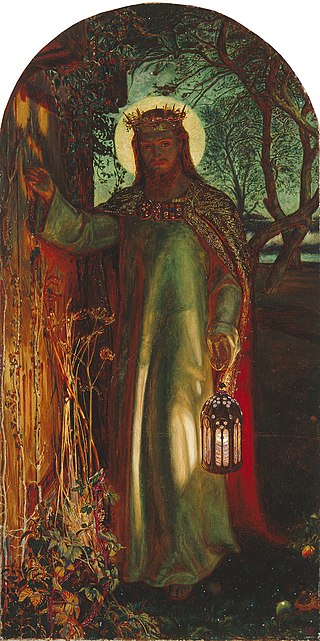
One of my favorite pieces of art hangs in the Keble College chapel in Oxford, England. The painting, The Light of the World by English artist William Holman Hunt, shows Jesus holding a lantern in His hand and knocking on a door to a home.
One of the intriguing aspects of the painting is that the door doesn’t have a handle. When questioned about the lack of a way to open the door, Hunt explained that he wanted to represent the imagery of Revelation 3:20, “Here I am! I stand at the door and knock. If anyone hears my voice and opens the door, I will come in.”
The apostle John’s words and the painting illustrate the kindness of Jesus. He gently knocks on the door of our souls with His offer of peace. Jesus stands and patiently waits for us to respond. He does not open the door Himself and force His way into our lives. He does not impose His will on ours. Instead, He offers to all people the gift of salvation and light to guide us.
To anyone who opens the door, He promises to enter. There are no other requirements or prerequisites.
If you hear the voice of Jesus and His gentle knock on the door of your soul, be encouraged that He patiently waits for you and will enter if you welcome Him in.
Lord, thank You for the gift of salvation and Your promise to enter when we open the door. Please help me to respond to this gift and open the door for You today.
Open the door to Jesus; He is patiently waiting for you.
My Utmost for His Highest, by Oswald Chambers
Saturday, June 30, 2018
Do It Now!
Agree with your adversary quickly… —Matthew 5:25
In this verse, Jesus Christ laid down a very important principle by saying, “Do what you know you must do— now. Do it quickly. If you don’t, an inevitable process will begin to work ‘till you have paid the last penny’ (Matthew 5:26) in pain, agony, and distress.” God’s laws are unchangeable and there is no escape from them. The teachings of Jesus always penetrate right to the heart of our being.
Wanting to make sure that my adversary gives me all my rights is a natural thing. But Jesus says that it is a matter of inescapable and eternal importance to me that I pay my adversary what I owe him. From our Lord’s standpoint it doesn’t matter whether I am cheated or not, but what does matter is that I don’t cheat someone else. Am I insisting on having my own rights, or am I paying what I owe from Jesus Christ’s standpoint?
Do it quickly— bring yourself to judgment now. In moral and spiritual matters, you must act immediately. If you don’t, the inevitable, relentless process will begin to work. God is determined to have His child as pure, clean, and white as driven snow, and as long as there is disobedience in any point of His teaching, He will allow His Spirit to use whatever process it may take to bring us to obedience. The fact that we insist on proving that we are right is almost always a clear indication that we have some point of disobedience. No wonder the Spirit of God so strongly urges us to stay steadfastly in the light! (see John 3:19-21).
“Agree with your adversary quickly….” Have you suddenly reached a certain place in your relationship with someone, only to find that you have anger in your heart? Confess it quickly— make it right before God. Be reconciled to that person— do it now!
ISDOM FROM OSWALD CHAMBERS
We never enter into the Kingdom of God by having our head questions answered, but only by commitment.
The Highest Good—Thy Great Redemption
Friday, June 29, 2018
Joshua 4 , Bible Reading and Daily Devotionals
Max Lucado Daily: GOD BRINGS GIFTS
Long before you knew you needed grace, your Father had you covered! “Christ died for us while we were still sinners” (Romans 5:8). Before you knew you needed a Savior, you had one. And when you ask him for mercy, he answers, “I’ve already given it, dear child. I’ve already given it.”
There’s more! When you place your trust in Christ, he places his Spirit in you. And when the Spirit comes, he brings gifts, housewarming gifts of sorts. A spiritual gift, the Bible says, is given to each of us as a means of helping the entire church. (1 Corinthians 12:7). When you become a child of God, the Holy Spirit requisitions your abilities for God’s kingdom, and they become spiritual gifts. No one is gift deprived. Are you weary of an ordinary existence? Your spiritual adventure awaits. The cure for the common life begins and ends with God.
Read more Cure for the Common Life
Joshua 4 The Message (MSG)
4 1-3 When the whole nation was finally across, God spoke to Joshua: “Select twelve men from the people, a man from each tribe, and tell them, ‘From right here, the middle of the Jordan where the feet of the priests are standing firm, take twelve stones. Carry them across with you and set them down in the place where you camp tonight.’”
4-7 Joshua called out the twelve men whom he selected from the People of Israel, one man from each tribe. Joshua directed them, “Cross to the middle of the Jordan and take your place in front of the Chest of God, your God. Each of you heft a stone to your shoulder, a stone for each of the tribes of the People of Israel, so you’ll have something later to mark the occasion. When your children ask you, ‘What are these stones to you?’ you’ll say, ‘The flow of the Jordan was stopped in front of the Chest of the Covenant of God as it crossed the Jordan—stopped in its tracks. These stones are a permanent memorial for the People of Israel.’”
8-9 The People of Israel did exactly as Joshua commanded: They took twelve stones from the middle of the Jordan—a stone for each of the twelve tribes, just as God had instructed Joshua—carried them across with them to the camp, and set them down there. Joshua set up the twelve stones taken from the middle of the Jordan that had marked the place where the priests who carried the Chest of the Covenant had stood. They are still there today.
10-11 The priests carrying the Chest continued standing in the middle of the Jordan until everything God had instructed Joshua to tell the people to do was done (confirming what Moses had instructed Joshua). The people crossed; no one dawdled. When the crossing of all the people was complete, they watched as the Chest of the Covenant and the priests crossed over.
12-13 The Reubenites, Gadites, and the half-tribe of Manasseh had crossed over in battle formation in front of the People of Israel, obedient to Moses’ instructions. All told, about forty thousand armed soldiers crossed over before God to the plains of Jericho, ready for battle.
14 God made Joshua great that day in the sight of all Israel. They were in awe of him just as they had been in awe of Moses all his life.
15-16 God told Joshua, “Command the priests carrying the Chest of The Testimony to come up from the Jordan.”
17 Joshua commanded the priests, “Come up out of the Jordan.”
18 They did it. The priests carrying God’s Chest of the Covenant came up from the middle of the Jordan. As soon as the soles of the priests’ feet touched dry land, the Jordan’s waters resumed their flow within the banks, just as before.
19-22 The people came up out of the Jordan on the tenth day of the first month. They set up camp at The Gilgal (The Circle) to the east of Jericho. Joshua erected a monument at The Gilgal, using the twelve stones that they had taken from the Jordan. And then he told the People of Israel, “In the days to come, when your children ask their fathers, ‘What are these stones doing here?’ tell your children this: ‘Israel crossed over this Jordan on dry ground.’
23-24 “Yes, God, your God, dried up the Jordan’s waters for you until you had crossed, just as God, your God, did at the Red Sea, which had dried up before us until we had crossed. This was so that everybody on earth would recognize how strong God’s rescuing hand is and so that you would hold God in solemn reverence always.”
Our Daily Bread reading and devotion
Friday, June 29, 2018
Read: 2 John 1:1–6
My dear congregation, I, your pastor, love you in very truth. And I’m not alone—everyone who knows the Truth that has taken up permanent residence in us loves you.
3 Let grace, mercy, and peace be with us in truth and love from God the Father and from Jesus Christ, Son of the Father!
4-6 I can’t tell you how happy I am to learn that many members of your congregation are diligent in living out the Truth, exactly as commanded by the Father. But permit me a reminder, friends, and this is not a new commandment but simply a repetition of our original and basic charter: that we love each other. Love means following his commandments, and his unifying commandment is that you conduct your lives in love. This is the first thing you heard, and nothing has changed.
INSIGHT
Love is a prominent theme in the apostle John’s writings. In today’s reading (2 John 1:1–6) John writes: “It has given me great joy to find some of your children walking in the truth, just as the Father commanded us” (v. 4). Just as caring parents delight in the development of the gifts and character of their children, John had a father’s pride in those who walked in love. It is interesting to contemplate what John means by “walk in love” (v. 6). The Greek word translated “walk” can also mean a consistency one exhibits in speech, attitudes, and behavior. It’s clear that we’re being told to make sure the words we say, the attitudes we have toward others, and our general behavior be characterized by sensitivity and generosity. Of course, the ultimate example of love is the Lord Jesus Christ Himself (1 John 4:10). We love others because Christ first loved us. - Dennis Fisher
Pictures of Love
By Amy Peterson
I am not writing you a new command but one we have had from the beginning. I ask that we love one another. 2 John 1:5
My children and I have started a new daily practice. Every night at bedtime, we gather colored pencils and light a candle. Asking God to light our way, we get out our journals and draw or write answers to two questions: When did I show love today? and When did I withhold love today?
Loving our neighbors has been an important part of the Christian life “from the beginning” (2 John 1:5). That’s what John writes in his second letter to his congregation, asking them to love one another in obedience to God (2 John 1:5–6). Love is one of John’s favorite topics throughout his letters. He says that practicing real love is one way to know that we “belong to the truth,” that we’re living in God’s presence (1 John 3:18–19). When my kids and I reflect, we find that in our lives love takes shape in simple actions: sharing an umbrella, encouraging someone who is sad, or cooking a favorite meal. The moments when we’re withholding love are equally practical: we gossip, refuse to share, or satisfy our own desires without thinking of others’ needs.
Paying attention each night helps us be more aware each day, more tuned in to what the Spirit might be showing us as we walk through our lives. With the Spirit’s help, we’re learning to walk in love (2 John 1:6).
Lord, let us not love just in words, but in actions and in truth. Teach us to be obedient to Your call to love.
How can I show love today?
My Utmost for His Highest, by Oswald Chambers
Friday, June 29, 2018
The Strictest Discipline
If your right hand causes you to sin, cut it off and cast it from you; for it is more profitable for you that one of your members perish, than for your whole body to be cast into hell. —Matthew 5:30
Jesus did not say that everyone must cut off his right hand, but that “if your right hand causes you to sin” in your walk with Him, then it is better to “cut it off.” There are many things that are perfectly legitimate, but if you are going to concentrate on God you cannot do them. Your right hand is one of the best things you have, but Jesus says that if it hinders you in following His precepts, then “cut it off.” The principle taught here is the strictest discipline or lesson that ever hit humankind.
When God changes you through regeneration, giving you new life through spiritual rebirth, your life initially has the characteristic of being maimed. There are a hundred and one things that you dare not do— things that would be sin for you, and would be recognized as sin by those who really know you. But the unspiritual people around you will say, “What’s so wrong with doing that? How absurd you are!” There has never yet been a saint who has not lived a maimed life initially. Yet it is better to enter into life maimed but lovely in God’s sight than to appear lovely to man’s eyes but lame to God’s. At first, Jesus Christ through His Spirit has to restrain you from doing a great many things that may be perfectly right for everyone else but not right for you. Yet, see that you don’t use your restrictions to criticize someone else.
The Christian life is a maimed life initially, but in Matthew 5:48 Jesus gave us the picture of a perfectly well-rounded life— “You shall be perfect, just as your Father in heaven is perfect."
WISDOM FROM OSWALD CHAMBERS
The truth is we have nothing to fear and nothing to overcome because He is all in all and we are more than conquerors through Him. The recognition of this truth is not flattering to the worker’s sense of heroics, but it is amazingly glorifying to the work of Christ. Approved Unto God, 4 R
A Word with You, by Ron Hutchcraft
Friday, June 29, 2018
Nice Ways to Miss God - #8210
Usually, the only way we know a musical artist we like is through listening to their CD or maybe watching their music video. We've come a long way from Grandma's old 78 RPM records. In fact, someone's listening and saying, "What's a record?" But there's something much better than either the audio or video recording of a great musician. It's called going to their concert where you can actually see them and hear them live in person. There's nothing like the live concert.
I'm Ron Hutchcraft and I want to have A Word With You today about "Nice Ways to Miss God."
If you can see a musician in person, or better yet, if you have a chance to meet that person, why would you just settle for something they've made like a recording? Sadly, many a person in their search for spiritual answers has made a tragic mistake like that. They've gotten all involved with something God made or a religion that represents Him, but they've missed meeting Him in person!
In Mark 12:34, which is our word for today from the Word of God, Jesus made a sobering statement about what I would call a spiritual "near miss." The man He said it to had a lot of Bible knowledge and spiritual understanding but he didn't have a personal commitment to Jesus. Jesus said, "You are not far from the kingdom of God." Almost there, but not in. That means there will be people who came very close to doing what they must do in order to get to heaven. But like a man who misses his airplane flight by only seconds, they still won't get there. If Jesus were to appear to you personally where you are today, I wonder if He might say those same words to you, "You're not far from the kingdom of God. But you're not in."
Maybe you've found your spiritual experience in creation: the mountains, the ocean, the universe. That's good, but that's not God. God talks about that in Romans 1. "Since the creation of the world God's invisible qualities-His eternal power and divine nature-have been clearly seen, being understood from what has been made, so that men are without excuse. For although they knew God, they neither glorified Him as God nor gave thanks to Him, but their thinking became futile..." See, that's what happens when you stop at what God made and you don't go on to a personal relationship with the God who made it! If you think what He's produced is impressive, wait until you meet Him!
Or maybe you've gotten as close to Jesus as a religion that's about Him. But your church, your religion, is just a representation of the One that you need to know personally; it's only an introduction to Him. Religion can be a very nice way to miss God. If you think your religion does something for you, well wait until you meet the One the religion is just representing! Jesus said, "I am the way, the truth and the life. No one can come to the Father except through Me" (John 14:6). It's Jesus that gets you to heaven, not Christianity. And one of the greatest spiritual dangers in the world is to put your trust in a Christian religion or a Christian belief and miss putting your trust in Jesus himself.
And today I've just got to believe He's inviting someone who's listening to finally experience the real thing-an eternal love relationship with Jesus himself. It's not practicing a religion. It's responding to His love with total trust, responding with all your heart to His pouring out all His life for you when He died on the cross to take your place. He absorbed all of God's punishment for your sin there. Responding to this Rescuer from heaven who blew the doors off His grave on Easter morning. That's what begins a relationship; it's not enough just to know He did those things, any more than it would be enough for a drowning person to know that a lifeguard could save him. You've got to grab Him; you've got to hold onto Him as your only hope.
For all your spirituality and all your religion, the hole in your heart is still empty because the missing person in your life is Jesus. The Bible says you "...were made by Him and for Him" (Colossians 1:16). This is the day you can finally have Him in your soul! Tell Him, "Jesus, I'm yours." He promised that upon your invitation, He's coming into your heart.
Look, if you want to be sure you have begun a relationship with Him; you want to know how to do that, would you go to our website today. It's ANewStory.com.
Your lifelong search for meaning, for love, for God, do you know where it ends? It ends at the feet of Jesus, and it's time to come home.
Thursday, June 28, 2018
Joshua 3, Bible Reading and Daily Devotionals
Max Lucado Daily: RELIGIOUS, YET LOST
A person can be religious and yet lost. Attending church won’t make you God’s child. You must accept his offer. “For Christ also suffered once for sins, the just for the unjust, that He might bring us to God” (1 Peter 3:18).
It makes no sense to seek your God-given strength until you trust in his. “It’s in Christ that we find out who we are and what we are living for” (Ephesians 1:11). Take a few moments and talk to God. Whether you are making a decision or reaffirming an earlier one, talk to your Maker about your eternal life. You might find this prayer helpful: Immanuel, you are with me. You became a person and took on flesh. You became my Savior and took on my sin. I accept your gift. I receive you as my Lord, Savior, and friend. Because of you, I’ll never be alone again!
Read more Cure for the Common Life
Joshua 3 The Message (MSG)
The Jordan
3 1-4 Joshua was up early and on his way from Shittim with all the People of Israel with him. He arrived at the Jordan and camped before crossing over. After three days, leaders went through the camp and gave out orders to the people: “When you see the Covenant-Chest of God, your God, carried by the Levitical priests, start moving. Follow it. Make sure you keep a proper distance between you and it, about half a mile—be sure now to keep your distance!—and you’ll see clearly the route to take. You’ve never been on this road before.”
5 Then Joshua addressed the people: “Sanctify yourselves. Tomorrow God will work miracle-wonders among you.”
6 Joshua instructed the priests, “Take up the Chest of the Covenant and step out before the people.” So they took it up and processed before the people.
7-8 God said to Joshua, “This very day I will begin to make you great in the eyes of all Israel. They’ll see for themselves that I’m with you in the same way that I was with Moses. You will command the priests who are carrying the Chest of the Covenant: ‘When you come to the edge of the Jordan’s waters, stand there on the river bank.’”
9-13 Then Joshua addressed the People of Israel: “Attention! Listen to what God, your God, has to say. This is how you’ll know that God is alive among you—he will completely dispossess before you the Canaanites, Hittites, Hivites, Perizzites, Girgashites, Amorites, and Jebusites. Look at what’s before you: the Chest of the Covenant. Think of it—the Master of the entire earth is crossing the Jordan as you watch. Now take twelve men from the tribes of Israel, one man from each tribe. When the soles of the feet of the priests carrying the Chest of God, Master of all the earth, touch the Jordan’s water, the flow of water will be stopped—the water coming from upstream will pile up in a heap.”
14-16 And that’s what happened. The people left their tents to cross the Jordan, led by the priests carrying the Chest of the Covenant. When the priests got to the Jordan and their feet touched the water at the edge (the Jordan overflows its banks throughout the harvest), the flow of water stopped. It piled up in a heap—a long way off—at Adam, which is near Zarethan. The river went dry all the way down to the Arabah Sea (the Salt Sea). And the people crossed, facing Jericho.
17 And there they stood; those priests carrying the Chest of the Covenant stood firmly planted on dry ground in the middle of the Jordan while all Israel crossed on dry ground. Finally the whole nation was across the Jordan, and not one wet foot.
Our Daily Bread reading and devotion
Thursday, June 28, 2018
Read: Matthew 13:44–46
“God’s kingdom is like a treasure hidden in a field for years and then accidentally found by a trespasser. The finder is ecstatic—what a find!—and proceeds to sell everything he owns to raise money and buy that field.
45-46 “Or, God’s kingdom is like a jewel merchant on the hunt for excellent pearls. Finding one that is flawless, he immediately sells everything and buys it.
INSIGHT
“It’s a once-in-a-lifetime opportunity.” You’ve probably heard that line used to pressure you to do something or buy any number of things that failed to live up to the hype. But in the case of the kingdom of God, the claims Jesus makes about it in Matthew 13 are actually true.
In this chapter, Jesus repeatedly emphasizes how seeing and living in the new reality of His kingdom isn’t natural. In fact, God’s kingdom is so countercultural that Jesus describes it as “yeast” (v. 33), which in Scripture is typically seen as a symbol of corruption and evil (Hosea 7:4; Matthew 16:6, 11; 1 Corinthians 5:6–13). Jesus’s shocking use of this word would be similar to saying that the kingdom is like a virus or like saying, “It ruins everything.”
And that’s exactly Jesus’s point. Truly experiencing His kingdom will not be comfortable or easy for any of us. It’ll ruin everything!—all our plans, all our assumptions, all our comfort. But it’s more than worth it. It’s the treasure that’s infinitely precious, the source of endless joy (Matthew 13:44–46). - Monica Brands
Ring in a Dumpster
By Julie Schwab
Seek and you will find; knock and the door will be opened to you. Matthew 7:7
In college, I woke up one morning to find Carol, my roommate, in a panic. Her signet ring was missing. We searched everywhere. The next morning we found ourselves picking through a dumpster.
I ripped open a trash bag. “You’re so dedicated to finding this!”
“I’m not losing a two-hundred-dollar ring!” she exclaimed.
Carol’s determination reminds me of the parable Jesus told about the kingdom of heaven, which “is like treasure hidden in a field. When a man found it, he hid it again, and then in his joy went and sold all he had and bought that field” (Matthew 13:44). Certain things are worth going great lengths to find.
Throughout the Bible, God promises that those who seek Him will find Him. In Deuteronomy, He explained to the Israelites that they would find Him when they turned from their sin and sought Him with all their hearts (4:28–29). In the book of 2 Chronicles, King Asa gained encouragement from a similar promise (15:2). And in Jeremiah, God gave the same promise to the exiles, saying He would bring them back from captivity (29:13–14).
If we seek God, through His Word, worship, and in our daily lives, we will find Him. Over time, we’ll know Him on a deeper level. That will be even better than the sweet moment when Carol pulled her ring out of that trash bag!
Lord, help me to seek You with all my heart.
To find God, we must be willing to seek Him.
My Utmost for His Highest, by Oswald Chambers
Thursday, June 28, 2018
Held by the Grip of God
I press on, that I may lay hold of that for which Christ Jesus has also laid hold of me. —Philippians 3:12
Never choose to be a worker for God, but once God has placed His call on you, woe be to you if you “turn aside to the right hand or to the left” (Deuteronomy 5:32). We are not here to work for God because we have chosen to do so, but because God has “laid hold of” us. And once He has done so, we never have this thought, “Well, I’m really not suited for this.” What you are to preach is also determined by God, not by your own natural leanings or desires. Keep your soul steadfastly related to God, and remember that you are called not simply to convey your testimony but also to preach the gospel. Every Christian must testify to the truth of God, but when it comes to the call to preach, there must be the agonizing grip of God’s hand on you— your life is in the grip of God for that very purpose. How many of us are held like that?
Never water down the Word of God, but preach it in its undiluted sternness. There must be unflinching faithfulness to the Word of God, but when you come to personal dealings with others, remember who you are— you are not some special being created in heaven, but a sinner saved by grace.
“Brethren, I do not count myself to have apprehended; but one thing I do…I press toward the goal for the prize of the upward call of God in Christ Jesus” (Philippians 3:13-14).
WISDOM FROM OSWALD CHAMBERS
The great word of Jesus to His disciples is Abandon. When God has brought us into the relationship of disciples, we have to venture on His word; trust entirely to Him and watch that when He brings us to the venture, we take it. Studies in the Sermon on the Mount, 1459 R
A Word with You, by Ron Hutchcraft
Thursday, June 28, 2018
Defying the Vultures - #8209
My friend Rich had just come through a major battle with cancer with heavy radiation therapy, and that's what helped him win. The only problem was the radiation left him feeling pretty weak and depleted. So, he would work a short week at his business and then he'd retreat to this little cabin that he and his wife had way back in the woods. One day Rich was down by the stream and feeling pretty tired. So, he lay down right there by the water and fell asleep. When he woke up, he was startled by what he saw. There were vultures circling him! Yeah! Now, you wouldn't believe how quickly Rich got up! I can just imagine him shouting to the vultures, "Hey, you birds, I may look dead to you, but I am still alive!"
I'm Ron Hutchcraft, and I want to have A Word With You today about "Defying the Vultures."
You may be in a situation where you're pretty battered right now – physically, emotionally, spiritually, maybe it's romantically or financially. You're tired, you're depleted, and maybe it looks like you're without hope, sort of like you're dead. Maybe you've even got some vultures circling, telling you it's over. Excuse me, it's time to defy the vultures!
When Abraham was told by God as an old man that he would be the father of many nations, beginning with the son God would send, oh man, that looked impossible. Both he and his wife were way beyond child-conceiving, or child-bearing years. And there were many years actually where nothing happened between the promise and the birth of that son. But even though it appeared from all human logic and circumstance that the possibility of a son was dead, Abraham just kept on defying those vultures of unbelief.
It's in our word for today from the Word of God in Romans 4:18 - "Against all hope, Abraham in hope believed and so became the father of many nations, just as it had been said to him." So, without weakening in his faith, he faced the fact that his body was as good as dead, since he was about 100 years old, and that Sarah's womb was also dead. "Yet he did not waver through unbelief regarding the promise of God, but was strengthened in his faith and gave glory to God, being fully persuaded that God had the power to do what He had promised."
Things looked like they were dead, but Abraham refused to believe what things looked like! He chose again and again to exercise stubborn faith in the promises of God. I call this defiant faith – the kind that defies the vultures of unbelief, and pessimism, and giving up and quitting. In Jesus Christ, there is no such thing as "hopeless" or "impossible" or "too late."
So right now God may be calling you to stand up and defy those vultures – to fight back against the despair, the tendency to withdraw, or to give up, or to run away – to accept the verdict of your circumstances. Don't succumb to the difficult environment or situation you're in. Capture your environment, make a difference there; focus on what you can do, not what you can't do. And be fully alive until Jesus decides it's over.
Like the victory of the Apostle Paul who said, "We are hard pressed on every side, but not crushed; perplexed, but not in despair; persecuted, but not abandoned; struck down, but not destroyed."
You may look dead and hope may look dead, but it's time you stood to your feet and you said loud and clear, "I may look dead to you, but because of the God I have, I am very much alive!"
Wednesday, June 27, 2018
Joshua 2, Bible Reading and Daily Devotionals
Max Lucado Daily: GOD KNOWS YOU
Christ takes away your sin, and in doing so, he takes away your common-ness. You no longer need to say, “No one knows me” because God knows you. “LORD, you…know all about me,” David discovered. “You know when I sit down and when I get up. You know my thoughts before I think them. You know where I go and where I lie down. You know everything I do…You are all around me…and have put your hand on me” (Psalm 139:1-3, 5).
God knows you and he is near you. See how these four words look taped to your bathroom mirror: “God is for me!” (Psalm 56:9). And his kingdom needs you to discover and deploy your unique skill. The poor need you; the lonely need you; the church needs you, the cause of God needs you. Get the word out. God is with us. We are not alone!
Read more Cure for the Common Life
Joshua 2 The Message (MSG)
Rahab
2 Joshua son of Nun secretly sent out from Shittim two men as spies: “Go. Look over the land. Check out Jericho.” They left and arrived at the house of a harlot named Rahab and stayed there.
2 The king of Jericho was told, “We’ve just learned that men arrived tonight to spy out the land. They’re from the People of Israel.”
3 The king of Jericho sent word to Rahab: “Bring out the men who came to you to stay the night in your house. They’re spies; they’ve come to spy out the whole country.”
4-7 The woman had taken the two men and hidden them. She said, “Yes, two men did come to me, but I didn’t know where they’d come from. At dark, when the gate was about to be shut, the men left. But I have no idea where they went. Hurry up! Chase them—you can still catch them!” (She had actually taken them up on the roof and hidden them under the stalks of flax that were spread out for her on the roof.) So the men set chase down the Jordan road toward the fords. As soon as they were gone, the gate was shut.
8-11 Before the spies were down for the night, the woman came up to them on the roof and said, “I know that God has given you the land. We’re all afraid. Everyone in the country feels hopeless. We heard how God dried up the waters of the Red Sea before you when you left Egypt, and what he did to the two Amorite kings east of the Jordan, Sihon and Og, whom you put under a holy curse and destroyed. We heard it and our hearts sank. We all had the wind knocked out of us. And all because of you, you and God, your God, God of the heavens above and God of the earth below.
12-13 “Now promise me by God. I showed you mercy; now show my family mercy. And give me some tangible proof, a guarantee of life for my father and mother, my brothers and sisters—everyone connected with my family. Save our souls from death!”
14 “Our lives for yours!” said the men. “But don’t tell anyone our business. When God turns this land over to us, we’ll do right by you in loyal mercy.”
15-16 She lowered them down out a window with a rope because her house was on the city wall to the outside. She told them, “Run for the hills so your pursuers won’t find you. Hide out for three days and give your pursuers time to return. Then get on your way.”
17-20 The men told her, “In order to keep this oath you made us swear, here is what you must do: Hang this red rope out the window through which you let us down and gather your entire family with you in your house—father, mother, brothers, and sisters. Anyone who goes out the doors of your house into the street and is killed, it’s his own fault—we aren’t responsible. But for everyone within the house we take full responsibility. If anyone lays a hand on one of them, it’s our fault. But if you tell anyone of our business here, the oath you made us swear is canceled—we’re no longer responsible.”
21 She said, “If that’s what you say, that’s the way it is,” and sent them off. They left and she hung the red rope out the window.
22 They headed for the hills and stayed there for three days until the pursuers had returned. The pursuers had looked high and low but found nothing.
23-24 The men headed back. They came down out of the hills, crossed the river, and returned to Joshua son of Nun and reported all their experiences. They told Joshua, “Yes! God has given the whole country to us. Everybody there is in a state of panic because of us.”
Our Daily Bread reading and devotion
Wednesday, June 27, 2018
Read: Colossians 1:13–23
God rescued us from dead-end alleys and dark dungeons. He’s set us up in the kingdom of the Son he loves so much, the Son who got us out of the pit we were in, got rid of the sins we were doomed to keep repeating.
Christ Holds It All Together
15-18 We look at this Son and see the God who cannot be seen. We look at this Son and see God’s original purpose in everything created. For everything, absolutely everything, above and below, visible and invisible, rank after rank after rank of angels—everything got started in him and finds its purpose in him. He was there before any of it came into existence and holds it all together right up to this moment. And when it comes to the church, he organizes and holds it together, like a head does a body.
18-20 He was supreme in the beginning and—leading the resurrection parade—he is supreme in the end. From beginning to end he’s there, towering far above everything, everyone. So spacious is he, so roomy, that everything of God finds its proper place in him without crowding. Not only that, but all the broken and dislocated pieces of the universe—people and things, animals and atoms—get properly fixed and fit together in vibrant harmonies, all because of his death, his blood that poured down from the cross.
21-23 You yourselves are a case study of what he does. At one time you all had your backs turned to God, thinking rebellious thoughts of him, giving him trouble every chance you got. But now, by giving himself completely at the Cross, actually dying for you, Christ brought you over to God’s side and put your lives together, whole and holy in his presence. You don’t walk away from a gift like that! You stay grounded and steady in that bond of trust, constantly tuned in to the Message, careful not to be distracted or diverted. There is no other Message—just this one. Every creature under heaven gets this same Message. I, Paul, am a messenger of this Message.
INSIGHT
These few verses (Colossians 1:13–23) in Paul’s letter to the church at Colossae are a theological goldmine! In them we read about Jesus’s relationship to God—His kingship, redemption, and forgiveness—and His role in creating and sustaining the universe. How amazing to see everything point to one thing—our reconciliation to God (v. 22).
Why not praise God today for unlocking you from the prison of sin and reconciling you to Himself. - J.R. Hudberg
Unlocked
By Amy Boucher Pye
Once you were alienated from God . . . . But now he has reconciled you. Colossians 1:21–22
A boy born with cerebral palsy was unable to speak or communicate. But his mother, Chantal Bryan, never gave up, and when he was ten years old she figured out how to communicate with him through his eyes and a letter board. After this breakthrough, she said, “He was unlocked and we could ask him anything.” Now Jonathan reads and writes, including poetry, by communicating through his eyes. When asked what it’s like to “talk” with his family and friends, he said, “It is wonderful to tell them I love them.”
Jonathan’s story is profoundly moving and leads me to consider how God unlocks us from the prison of sin. As the apostle Paul wrote to the Christians at Colossae, once we were “alienated from God” (Colossians 1:21), our evil behavior making us His enemy, but through Christ’s death on the cross we are now presented to God as “holy in his sight” (v. 22). We may now “live a life worthy of the Lord” as we bear fruit, grow in the knowledge of God, and are strengthened in His power (vv. 10–11).
We can use our unlocked voices to praise God and share His good news that we are no longer bound to a life of sin. As we continue in our faith, we can hold firm to our hope in Christ.
Lord God, You have released us from our chains of unbelief and given us words to praise You. May we share this freedom with others for Your glory.
The Lord unlocks us from our prison of sin.
My Utmost for His Highest, by Oswald Chambers
Wednesday, June 27, 2018
The Overshadowing of God’s Personal Deliverance
"…I am with you to deliver you," says the Lord. —Jeremiah 1:8
God promised Jeremiah that He would deliver him personally— “…your life shall be as a prize to you…” (Jeremiah 39:18). That is all God promises His children. Wherever God sends us, He will guard our lives. Our personal property and possessions are to be a matter of indifference to us, and our hold on these things should be very loose. If this is not the case, we will have panic, heartache, and distress. Having the proper outlook is evidence of the deeply rooted belief in the overshadowing of God’s personal deliverance.
The Sermon on the Mount indicates that when we are on a mission for Jesus Christ, there is no time to stand up for ourselves. Jesus says, in effect, “Don’t worry about whether or not you are being treated justly.” Looking for justice is actually a sign that we have been diverted from our devotion to Him. Never look for justice in this world, but never cease to give it. If we look for justice, we will only begin to complain and to indulge ourselves in the discontent of self-pity, as if to say, “Why should I be treated like this?” If we are devoted to Jesus Christ, we have nothing to do with what we encounter, whether it is just or unjust. In essence, Jesus says, “Continue steadily on with what I have told you to do, and I will guard your life. If you try to guard it yourself, you remove yourself from My deliverance.” Even the most devout among us become atheistic in this regard— we do not believe Him. We put our common sense on the throne and then attach God’s name to it. We do lean to our own understanding, instead of trusting God with all our hearts (see Proverbs 3:5-6).
WISDOM FROM OSWALD CHAMBERS
There is nothing, naturally speaking, that makes us lose heart quicker than decay—the decay of bodily beauty, of natural life, of friendship, of associations, all these things make a man lose heart; but Paul says when we are trusting in Jesus Christ these things do not find us discouraged, light comes through them.
The Place of Help
A Word with You, by Ron Hutchcraft
Wednesday, June 27, 2018
The Great Lighthouse Shortage - #8208
Because we lived along the East Coast for so many years, we had the opportunity to see many of America's old lighthouses. I mean, not long ago we came up over the top of a hill on an interstate and I saw what I certainly never expected to see hundreds of miles from the ocean. It was a lighthouse with a bright, functioning light on top. Obviously, it wasn't there to point any ships in the right direction. Actually, it was part of a church that stands right near the highway. This lighthouse is for people!
I'm Ron Hutchcraft and I want to have A Word With You today about "The Great Lighthouse Shortage."
It seems to me that Jesus intended for every church to be a lighthouse, whether or not they have a lighted tower as part of their building, as He intended for every Christian to be a lighthouse, every ministry. Tragically, there are so many lives around us headed for eternal disaster, and there is a terrible lighthouse shortage.
We know that Jesus said that those who belong to Him are "the light of the world" (Matthew 5:16). And Matthew 4:16, our word for today from the Word of God, tells us which direction our light should be pointing. Jesus says, "The people living in darkness have seen a great light; on those living in the land of the shadow of death, a light has dawned." See, it's the people in spiritual darkness, the people who are spiritually dying who should be the focus of all this light that God has given us.
The problem is that often we're content to have all the lights inside the church, shining on those who are already headed for heaven. Meanwhile, we let countless lost people just get another day closer to hell. We do what's easy. We just work with the sheep who are already in, when Jesus said He would leave ninety-nine of those just to go out and find one lost one. But notice, you have to go out to find them. You can't just stay in the Christian cocoon waiting for someone to stick their head in the door and say, "Excuse me, but is there any light in here?" The lighthouse needs to be out where they are!
We can go to all our Christian meetings, and fellowship with all our Christian friends, and enjoy all our Christian books and programs, and we feel like we must be winning. Well, not when two-thirds of Americans can't tell you half of the Ten Commandments or who did the Sermon on the Mount! Not when the number of people who say they believe in nothing has doubled in just a few years, not when the number of those who are self-declared witches grew over 1,500% in a decade. Even in one Bible Belt state, the statistics just came in: two-thirds of the people even there are essentially un-churched! You have working near you, living near you, going to school with you people who have no idea that what Jesus did on the cross was for them and that He's their only hope! If our Christian subculture makes us feel like we're winning, it's the illusion of winning.
How can we be content to spend all our time with the already rescued when we're living surrounded by a sea of dying people? How can we say that we're following the One who came, as He said, to "seek and save what was lost" and not be doing that with all our heart?
If you're following Jesus, I'll tell you where He's going. He's always headed for a sea of lost people. That should be where we end up, too. Oh, it's bright inside the lighthouse, but it's very dark outside the walls.
So many headed for eternal destruction! They desperately need a lighthouse; a lighthouse that's out where they are, pointing them to life in Jesus Christ. Please, be their lighthouse!
Christ takes away your sin, and in doing so, he takes away your common-ness. You no longer need to say, “No one knows me” because God knows you. “LORD, you…know all about me,” David discovered. “You know when I sit down and when I get up. You know my thoughts before I think them. You know where I go and where I lie down. You know everything I do…You are all around me…and have put your hand on me” (Psalm 139:1-3, 5).
God knows you and he is near you. See how these four words look taped to your bathroom mirror: “God is for me!” (Psalm 56:9). And his kingdom needs you to discover and deploy your unique skill. The poor need you; the lonely need you; the church needs you, the cause of God needs you. Get the word out. God is with us. We are not alone!
Read more Cure for the Common Life
Joshua 2 The Message (MSG)
Rahab
2 Joshua son of Nun secretly sent out from Shittim two men as spies: “Go. Look over the land. Check out Jericho.” They left and arrived at the house of a harlot named Rahab and stayed there.
2 The king of Jericho was told, “We’ve just learned that men arrived tonight to spy out the land. They’re from the People of Israel.”
3 The king of Jericho sent word to Rahab: “Bring out the men who came to you to stay the night in your house. They’re spies; they’ve come to spy out the whole country.”
4-7 The woman had taken the two men and hidden them. She said, “Yes, two men did come to me, but I didn’t know where they’d come from. At dark, when the gate was about to be shut, the men left. But I have no idea where they went. Hurry up! Chase them—you can still catch them!” (She had actually taken them up on the roof and hidden them under the stalks of flax that were spread out for her on the roof.) So the men set chase down the Jordan road toward the fords. As soon as they were gone, the gate was shut.
8-11 Before the spies were down for the night, the woman came up to them on the roof and said, “I know that God has given you the land. We’re all afraid. Everyone in the country feels hopeless. We heard how God dried up the waters of the Red Sea before you when you left Egypt, and what he did to the two Amorite kings east of the Jordan, Sihon and Og, whom you put under a holy curse and destroyed. We heard it and our hearts sank. We all had the wind knocked out of us. And all because of you, you and God, your God, God of the heavens above and God of the earth below.
12-13 “Now promise me by God. I showed you mercy; now show my family mercy. And give me some tangible proof, a guarantee of life for my father and mother, my brothers and sisters—everyone connected with my family. Save our souls from death!”
14 “Our lives for yours!” said the men. “But don’t tell anyone our business. When God turns this land over to us, we’ll do right by you in loyal mercy.”
15-16 She lowered them down out a window with a rope because her house was on the city wall to the outside. She told them, “Run for the hills so your pursuers won’t find you. Hide out for three days and give your pursuers time to return. Then get on your way.”
17-20 The men told her, “In order to keep this oath you made us swear, here is what you must do: Hang this red rope out the window through which you let us down and gather your entire family with you in your house—father, mother, brothers, and sisters. Anyone who goes out the doors of your house into the street and is killed, it’s his own fault—we aren’t responsible. But for everyone within the house we take full responsibility. If anyone lays a hand on one of them, it’s our fault. But if you tell anyone of our business here, the oath you made us swear is canceled—we’re no longer responsible.”
21 She said, “If that’s what you say, that’s the way it is,” and sent them off. They left and she hung the red rope out the window.
22 They headed for the hills and stayed there for three days until the pursuers had returned. The pursuers had looked high and low but found nothing.
23-24 The men headed back. They came down out of the hills, crossed the river, and returned to Joshua son of Nun and reported all their experiences. They told Joshua, “Yes! God has given the whole country to us. Everybody there is in a state of panic because of us.”
Our Daily Bread reading and devotion
Wednesday, June 27, 2018
Read: Colossians 1:13–23
God rescued us from dead-end alleys and dark dungeons. He’s set us up in the kingdom of the Son he loves so much, the Son who got us out of the pit we were in, got rid of the sins we were doomed to keep repeating.
Christ Holds It All Together
15-18 We look at this Son and see the God who cannot be seen. We look at this Son and see God’s original purpose in everything created. For everything, absolutely everything, above and below, visible and invisible, rank after rank after rank of angels—everything got started in him and finds its purpose in him. He was there before any of it came into existence and holds it all together right up to this moment. And when it comes to the church, he organizes and holds it together, like a head does a body.
18-20 He was supreme in the beginning and—leading the resurrection parade—he is supreme in the end. From beginning to end he’s there, towering far above everything, everyone. So spacious is he, so roomy, that everything of God finds its proper place in him without crowding. Not only that, but all the broken and dislocated pieces of the universe—people and things, animals and atoms—get properly fixed and fit together in vibrant harmonies, all because of his death, his blood that poured down from the cross.
21-23 You yourselves are a case study of what he does. At one time you all had your backs turned to God, thinking rebellious thoughts of him, giving him trouble every chance you got. But now, by giving himself completely at the Cross, actually dying for you, Christ brought you over to God’s side and put your lives together, whole and holy in his presence. You don’t walk away from a gift like that! You stay grounded and steady in that bond of trust, constantly tuned in to the Message, careful not to be distracted or diverted. There is no other Message—just this one. Every creature under heaven gets this same Message. I, Paul, am a messenger of this Message.
INSIGHT
These few verses (Colossians 1:13–23) in Paul’s letter to the church at Colossae are a theological goldmine! In them we read about Jesus’s relationship to God—His kingship, redemption, and forgiveness—and His role in creating and sustaining the universe. How amazing to see everything point to one thing—our reconciliation to God (v. 22).
Why not praise God today for unlocking you from the prison of sin and reconciling you to Himself. - J.R. Hudberg
Unlocked
By Amy Boucher Pye
Once you were alienated from God . . . . But now he has reconciled you. Colossians 1:21–22
A boy born with cerebral palsy was unable to speak or communicate. But his mother, Chantal Bryan, never gave up, and when he was ten years old she figured out how to communicate with him through his eyes and a letter board. After this breakthrough, she said, “He was unlocked and we could ask him anything.” Now Jonathan reads and writes, including poetry, by communicating through his eyes. When asked what it’s like to “talk” with his family and friends, he said, “It is wonderful to tell them I love them.”
Jonathan’s story is profoundly moving and leads me to consider how God unlocks us from the prison of sin. As the apostle Paul wrote to the Christians at Colossae, once we were “alienated from God” (Colossians 1:21), our evil behavior making us His enemy, but through Christ’s death on the cross we are now presented to God as “holy in his sight” (v. 22). We may now “live a life worthy of the Lord” as we bear fruit, grow in the knowledge of God, and are strengthened in His power (vv. 10–11).
We can use our unlocked voices to praise God and share His good news that we are no longer bound to a life of sin. As we continue in our faith, we can hold firm to our hope in Christ.
Lord God, You have released us from our chains of unbelief and given us words to praise You. May we share this freedom with others for Your glory.
The Lord unlocks us from our prison of sin.
My Utmost for His Highest, by Oswald Chambers
Wednesday, June 27, 2018
The Overshadowing of God’s Personal Deliverance
"…I am with you to deliver you," says the Lord. —Jeremiah 1:8
God promised Jeremiah that He would deliver him personally— “…your life shall be as a prize to you…” (Jeremiah 39:18). That is all God promises His children. Wherever God sends us, He will guard our lives. Our personal property and possessions are to be a matter of indifference to us, and our hold on these things should be very loose. If this is not the case, we will have panic, heartache, and distress. Having the proper outlook is evidence of the deeply rooted belief in the overshadowing of God’s personal deliverance.
The Sermon on the Mount indicates that when we are on a mission for Jesus Christ, there is no time to stand up for ourselves. Jesus says, in effect, “Don’t worry about whether or not you are being treated justly.” Looking for justice is actually a sign that we have been diverted from our devotion to Him. Never look for justice in this world, but never cease to give it. If we look for justice, we will only begin to complain and to indulge ourselves in the discontent of self-pity, as if to say, “Why should I be treated like this?” If we are devoted to Jesus Christ, we have nothing to do with what we encounter, whether it is just or unjust. In essence, Jesus says, “Continue steadily on with what I have told you to do, and I will guard your life. If you try to guard it yourself, you remove yourself from My deliverance.” Even the most devout among us become atheistic in this regard— we do not believe Him. We put our common sense on the throne and then attach God’s name to it. We do lean to our own understanding, instead of trusting God with all our hearts (see Proverbs 3:5-6).
WISDOM FROM OSWALD CHAMBERS
There is nothing, naturally speaking, that makes us lose heart quicker than decay—the decay of bodily beauty, of natural life, of friendship, of associations, all these things make a man lose heart; but Paul says when we are trusting in Jesus Christ these things do not find us discouraged, light comes through them.
The Place of Help
A Word with You, by Ron Hutchcraft
Wednesday, June 27, 2018
The Great Lighthouse Shortage - #8208
Because we lived along the East Coast for so many years, we had the opportunity to see many of America's old lighthouses. I mean, not long ago we came up over the top of a hill on an interstate and I saw what I certainly never expected to see hundreds of miles from the ocean. It was a lighthouse with a bright, functioning light on top. Obviously, it wasn't there to point any ships in the right direction. Actually, it was part of a church that stands right near the highway. This lighthouse is for people!
I'm Ron Hutchcraft and I want to have A Word With You today about "The Great Lighthouse Shortage."
It seems to me that Jesus intended for every church to be a lighthouse, whether or not they have a lighted tower as part of their building, as He intended for every Christian to be a lighthouse, every ministry. Tragically, there are so many lives around us headed for eternal disaster, and there is a terrible lighthouse shortage.
We know that Jesus said that those who belong to Him are "the light of the world" (Matthew 5:16). And Matthew 4:16, our word for today from the Word of God, tells us which direction our light should be pointing. Jesus says, "The people living in darkness have seen a great light; on those living in the land of the shadow of death, a light has dawned." See, it's the people in spiritual darkness, the people who are spiritually dying who should be the focus of all this light that God has given us.
The problem is that often we're content to have all the lights inside the church, shining on those who are already headed for heaven. Meanwhile, we let countless lost people just get another day closer to hell. We do what's easy. We just work with the sheep who are already in, when Jesus said He would leave ninety-nine of those just to go out and find one lost one. But notice, you have to go out to find them. You can't just stay in the Christian cocoon waiting for someone to stick their head in the door and say, "Excuse me, but is there any light in here?" The lighthouse needs to be out where they are!
We can go to all our Christian meetings, and fellowship with all our Christian friends, and enjoy all our Christian books and programs, and we feel like we must be winning. Well, not when two-thirds of Americans can't tell you half of the Ten Commandments or who did the Sermon on the Mount! Not when the number of people who say they believe in nothing has doubled in just a few years, not when the number of those who are self-declared witches grew over 1,500% in a decade. Even in one Bible Belt state, the statistics just came in: two-thirds of the people even there are essentially un-churched! You have working near you, living near you, going to school with you people who have no idea that what Jesus did on the cross was for them and that He's their only hope! If our Christian subculture makes us feel like we're winning, it's the illusion of winning.
How can we be content to spend all our time with the already rescued when we're living surrounded by a sea of dying people? How can we say that we're following the One who came, as He said, to "seek and save what was lost" and not be doing that with all our heart?
If you're following Jesus, I'll tell you where He's going. He's always headed for a sea of lost people. That should be where we end up, too. Oh, it's bright inside the lighthouse, but it's very dark outside the walls.
So many headed for eternal destruction! They desperately need a lighthouse; a lighthouse that's out where they are, pointing them to life in Jesus Christ. Please, be their lighthouse!
Tuesday, June 26, 2018
Joshua 1, Bible Reading and Daily Devotionals
Max Lucado Daily: GOD’S GREAT GOSPEL
No one knows me, we think. People know my name, but not my heart. They know my face but not my feelings. I have a social security number, but not a soul mate. No one really knows me.
The response of heaven is that God does! Prophets weren’t enough. Apostles wouldn’t do. Angels won’t suffice. God sent more than miracles and messages. He sent himself; he sent his Son. In God’s great gospel, he not only sends, he becomes…he lives with. He lives as one of us. He knows our hurt. He knows our hunger. He knows betrayal. Most of all, he knows sin. He knows them better than you do. He knows their price because he paid it. “For Christ also suffered once for sins, the just for the unjust, that He might bring us to God.” (1 Peter 3:18). God knows you!
Read more Cure for the Common Life
Joshua 1 The Message (MSG)
1 1-9 After the death of Moses the servant of God, God spoke to Joshua, Moses’ assistant:
“Moses my servant is dead. Get going. Cross this Jordan River, you and all the people. Cross to the country I’m giving to the People of Israel. I’m giving you every square inch of the land you set your foot on—just as I promised Moses. From the wilderness and this Lebanon east to the Great River, the Euphrates River—all the Hittite country—and then west to the Great Sea. It’s all yours. All your life, no one will be able to hold out against you. In the same way I was with Moses, I’ll be with you. I won’t give up on you; I won’t leave you. Strength! Courage! You are going to lead this people to inherit the land that I promised to give their ancestors. Give it everything you have, heart and soul. Make sure you carry out The Revelation that Moses commanded you, every bit of it. Don’t get off track, either left or right, so as to make sure you get to where you’re going. And don’t for a minute let this Book of The Revelation be out of mind. Ponder and meditate on it day and night, making sure you practice everything written in it. Then you’ll get where you’re going; then you’ll succeed. Haven’t I commanded you? Strength! Courage! Don’t be timid; don’t get discouraged. God, your God, is with you every step you take.”
The Taking of the Land
10-11 Then Joshua gave orders to the people’s leaders: “Go through the camp and give this order to the people: ‘Pack your bags. In three days you will cross this Jordan River to enter and take the land God, your God, is giving you to possess.’”
12-15 Then Joshua addressed the Reubenites, the Gadites, and the half-tribe of Manasseh. He said, “Remember what Moses the servant of God commanded you: God, your God, gives you rest and he gives you this land. Your wives, your children, and your livestock can stay here east of the Jordan, the country Moses gave you; but you, tough soldiers all, must cross the River in battle formation, leading your brothers, helping them until God, your God, gives your brothers a place of rest just as he has done for you. They also will take possession of the land that God, your God, is giving them. Then you will be free to return to your possession, given to you by Moses the servant of God, across the Jordan to the east.”
16-18 They answered Joshua: “Everything you commanded us, we’ll do. Wherever you send us, we’ll go. We obeyed Moses to the letter; we’ll also obey you—we just pray that God, your God, will be with you as he was with Moses. Anyone who questions what you say and refuses to obey whatever you command him will be put to death. Strength! Courage!”
Our Daily Bread reading and devotion
Tuesday, June 26, 2018
The Solution Is Life on God’s Terms
8 1-2 With the arrival of Jesus, the Messiah, that fateful dilemma is resolved. Those who enter into Christ’s being-here-for-us no longer have to live under a continuous, low-lying black cloud. A new power is in operation. The Spirit of life in Christ, like a strong wind, has magnificently cleared the air, freeing you from a fated lifetime of brutal tyranny at the hands of sin and death.
15-17 This resurrection life you received from God is not a timid, grave-tending life. It’s adventurously expectant, greeting God with a childlike “What’s next, Papa?” God’s Spirit touches our spirits and confirms who we really are. We know who he is, and we know who we are: Father and children. And we know we are going to get what’s coming to us—an unbelievable inheritance! We go through exactly what Christ goes through. If we go through the hard times with him, then we’re certainly going to go through the good times with him!
INSIGHT
Romans 8 is one of the theological highpoints of the Bible, specifically as it relates to the Holy Spirit. Of the many references to the Holy Spirit in the book of Romans, over half are found in Romans 8! The life-giving Spirit liberates from sin and death and empowers believers to live in ways that honor God, which includes the reorientation of our thinking (vv. 2–8). God’s Spirit is the seal of God’s ownership and those so sealed are destined for future resurrection (vv. 9–11). God’s children are not under obligation to slavish, sinful desires (vv. 12–13); rather, like Jesus, they are led by the Spirit of God (v. 14). As those in God’s family, believers in Jesus have the Spirit as their internal witness of their privileged status (vv. 15–16). Painful circumstances that make us groan and pray are our lot in this fallen world (vv. 18–25). Though sometimes our prayers are weak, we are not helpless. The Spirit of God is our prayer-helper whose intercession targets the will of God (vv. 26–27).
How have you seen the Holy Spirit working in your life? - Arthur Jackson
Set Free
By Lawrence Darmani
Therefore, there is now no condemnation for those who are in Christ Jesus. Romans 8:1
When I was a boy in the village, something about chickens fascinated me. Whenever I caught one, I held it down for a few moments and then gently released it. Thinking I was still holding it, the chicken remained down; even though it was free to dash away, it felt trapped.
When we put our faith in Jesus, He graciously delivers us from sin and the hold that Satan had on us. However, because it may take time to change our sinful habits and behavior, Satan can make us feel trapped. But God’s Spirit has set us free; He doesn’t enslave us. Paul told the Romans, “Therefore, there is now no condemnation for those who are in Christ Jesus, because through Christ Jesus the law of the Spirit who gives life has set you free from the law of sin and death” (Romans 8:1–2).
Through our Bible reading, prayer, and the power of the Holy Spirit, God works in us to cleanse us and to help us live for Him. The Bible encourages us to be confident in our walk with Jesus without feeling as if we are not set free.
Jesus said, “If the Son sets you free, you will be free indeed” (John 8:36). May the freedom we have in Christ spur us on to love Him and serve Him.
Lord, forgive me for sometimes revisiting my past and forgetting that You have washed away my sins. Thank You for taking my burden and setting me free to enjoy living for You.
My chains fell off, my heart was free, I rose, went forth, and followed Thee. Charles Wesley
My Utmost for His Highest, by Oswald Chambers
Tuesday, June 26, 2018
Drawing on the Grace of God— Now
We…plead with you not to receive the grace of God in vain. —2 Corinthians 6:1
The grace you had yesterday will not be sufficient for today. Grace is the overflowing favor of God, and you can always count on it being available to draw upon as needed. “…in much patience, in tribulations, in needs, in distresses”— that is where our patience is tested (2 Corinthians 6:4). Are you failing to rely on the grace of God there? Are you saying to yourself, “Oh well, I won’t count this time”? It is not a question of praying and asking God to help you— it is taking the grace of God now. We tend to make prayer the preparation for our service, yet it is never that in the Bible. Prayer is the practice of drawing on the grace of God. Don’t say, “I will endure this until I can get away and pray.” Pray now — draw on the grace of God in your moment of need. Prayer is the most normal and useful thing; it is not simply a reflex action of your devotion to God. We are very slow to learn to draw on God’s grace through prayer.
“…in stripes, in imprisonments, in tumults, in labors…” (2 Corinthians 6:5)— in all these things, display in your life a drawing on the grace of God, which will show evidence to yourself and to others that you are a miracle of His. Draw on His grace now, not later. The primary word in the spiritual vocabulary is now. Let circumstances take you where they will, but keep drawing on the grace of God in whatever condition you may find yourself. One of the greatest proofs that you are drawing on the grace of God is that you can be totally humiliated before others without displaying even the slightest trace of anything but His grace.
“…having nothing….” Never hold anything in reserve. Pour yourself out, giving the best that you have, and always be poor. Never be diplomatic and careful with the treasure God gives you. “…and yet possessing all things”— this is poverty triumphant (2 Corinthians 6:10).
WISDOM FROM OSWALD CHAMBERS
Am I becoming more and more in love with God as a holy God, or with the conception of an amiable Being who says, “Oh well, sin doesn’t matter much”? Disciples Indeed, 389 L
A Word with You, by Ron Hutchcraft
Tuesday, June 26, 2018
What to Say When You Don't Have the Answer - #8207
It used to be a lot simpler, you know, helping your kids with their homework. First of all, most of us have forgotten more than we remember from school anyway. Second of all, they're studying things we probably have no clue about! And they're learning things a lot sooner than we did. So here comes Junior, looking for answers. You can't just tell him you don't know. I mean, you're a parent! You're supposed to know everything, right? So you find some diversion: you have a sudden coughing seizure, a call you forgot to make. You don't need to know all the answers. All you need is to be able to Google things. You may not have the answers, but you have the source of the answers!
I'm Ron Hutchcraft and I want to have A Word With You today about "What to Say When You Don't Have the Answer."
There are a lot of spiritually seeking people who want some answers. And when someone tells them about the difference that Jesus Christ can make in their lives, they have questions. Look, you may be one of those seekers and you know Jesus has to be a serious option for anyone with an honestly seeking heart. But you do need some answers.
Or maybe you're someone who belongs to Jesus. You want people you care about to experience this love and this power and this peace you have, but you're afraid of their questions. Maybe you've been thrown by their questions. You know Jesus; you know what He can do, but you don't know the answers to their questions. That's not a reason to retreat. Like a parent going online to find the answers that he doesn't have, you may not know the answers, but you have the source of the answers. The Bible says of Jesus: "Christ (is) the power of God and the wisdom of God" (1 Corinthians 1:24). My job isn't to have all the answers. It's to point people to the One who does have all the answers-who, in fact, is all the answers!
The great Apostle Paul was a scholar trained in the finest education of his day; a writer who could craft a case that it was hard to refute. But in our word for today from the Word of God, this man who knew a lot of answers tells us all we really need to know. In 1 Corinthians 2:2, he says, "I resolved to know nothing while I was with you except Jesus Christ and Him crucified." For all that he knew, he just kept pointing people to Jesus and to the cross where He died for them.
If you're a "seeker," I just want to take you to that cross where Jesus died for you. That's what you have to decide about. If you're a "sharer" of what Jesus did, I just want to take you to that cross where Jesus died for the person you're talking to. That's what you have to tell them about. I appreciated what Mel Gibson did in "The Passion of the Christ." He stripped away 2,000 years of Christianity and took us back to what it's all about, before there were any creeds, any churches, any Christians really. There was just the Son of God, pouring out His life on a cross for you.
I don't have all the answers for poverty and suffering in the world, but I have a Savior who entered into that suffering when He came here, who lived as a poor man, a homeless man, who died to defeat the ultimate generator of human suffering-human sin. It's all about Jesus. I don't have all the answers about why someone you love died. I only know that God knows the feeling. He watched His Son murdered on a cross. It's all about Jesus. I can't explain many of the hypocrites and the horrible things that have been done in Christ's name, but I know Jesus said, "Follow Me" not "Follow My followers." It's all about Jesus.
That's why you can dare to tell people about Him, even if there are answers you don't know, because it's all about pointing them to Jesus. And that's why I challenge you to end your long search for meaning and for God by finally going to Jesus, who died for you, who rose from the dead to give you life that would never end. It's all about Jesus. And that's what Judgment Day will be all about, what you did with Jesus.
If you're ready to seriously begin this relationship with Jesus, it's not a religion. It's a relationship. Go to our website and find out how you can be sure you belong to Him. ANewStory.com.
We'll never have all the answers. We can have the One who does-Who is the answer. So, the most important choice of your life comes down to four words: It's all about Jesus.
No one knows me, we think. People know my name, but not my heart. They know my face but not my feelings. I have a social security number, but not a soul mate. No one really knows me.
The response of heaven is that God does! Prophets weren’t enough. Apostles wouldn’t do. Angels won’t suffice. God sent more than miracles and messages. He sent himself; he sent his Son. In God’s great gospel, he not only sends, he becomes…he lives with. He lives as one of us. He knows our hurt. He knows our hunger. He knows betrayal. Most of all, he knows sin. He knows them better than you do. He knows their price because he paid it. “For Christ also suffered once for sins, the just for the unjust, that He might bring us to God.” (1 Peter 3:18). God knows you!
Read more Cure for the Common Life
Joshua 1 The Message (MSG)
1 1-9 After the death of Moses the servant of God, God spoke to Joshua, Moses’ assistant:
“Moses my servant is dead. Get going. Cross this Jordan River, you and all the people. Cross to the country I’m giving to the People of Israel. I’m giving you every square inch of the land you set your foot on—just as I promised Moses. From the wilderness and this Lebanon east to the Great River, the Euphrates River—all the Hittite country—and then west to the Great Sea. It’s all yours. All your life, no one will be able to hold out against you. In the same way I was with Moses, I’ll be with you. I won’t give up on you; I won’t leave you. Strength! Courage! You are going to lead this people to inherit the land that I promised to give their ancestors. Give it everything you have, heart and soul. Make sure you carry out The Revelation that Moses commanded you, every bit of it. Don’t get off track, either left or right, so as to make sure you get to where you’re going. And don’t for a minute let this Book of The Revelation be out of mind. Ponder and meditate on it day and night, making sure you practice everything written in it. Then you’ll get where you’re going; then you’ll succeed. Haven’t I commanded you? Strength! Courage! Don’t be timid; don’t get discouraged. God, your God, is with you every step you take.”
The Taking of the Land
10-11 Then Joshua gave orders to the people’s leaders: “Go through the camp and give this order to the people: ‘Pack your bags. In three days you will cross this Jordan River to enter and take the land God, your God, is giving you to possess.’”
12-15 Then Joshua addressed the Reubenites, the Gadites, and the half-tribe of Manasseh. He said, “Remember what Moses the servant of God commanded you: God, your God, gives you rest and he gives you this land. Your wives, your children, and your livestock can stay here east of the Jordan, the country Moses gave you; but you, tough soldiers all, must cross the River in battle formation, leading your brothers, helping them until God, your God, gives your brothers a place of rest just as he has done for you. They also will take possession of the land that God, your God, is giving them. Then you will be free to return to your possession, given to you by Moses the servant of God, across the Jordan to the east.”
16-18 They answered Joshua: “Everything you commanded us, we’ll do. Wherever you send us, we’ll go. We obeyed Moses to the letter; we’ll also obey you—we just pray that God, your God, will be with you as he was with Moses. Anyone who questions what you say and refuses to obey whatever you command him will be put to death. Strength! Courage!”
Our Daily Bread reading and devotion
Tuesday, June 26, 2018
The Solution Is Life on God’s Terms
8 1-2 With the arrival of Jesus, the Messiah, that fateful dilemma is resolved. Those who enter into Christ’s being-here-for-us no longer have to live under a continuous, low-lying black cloud. A new power is in operation. The Spirit of life in Christ, like a strong wind, has magnificently cleared the air, freeing you from a fated lifetime of brutal tyranny at the hands of sin and death.
15-17 This resurrection life you received from God is not a timid, grave-tending life. It’s adventurously expectant, greeting God with a childlike “What’s next, Papa?” God’s Spirit touches our spirits and confirms who we really are. We know who he is, and we know who we are: Father and children. And we know we are going to get what’s coming to us—an unbelievable inheritance! We go through exactly what Christ goes through. If we go through the hard times with him, then we’re certainly going to go through the good times with him!
INSIGHT
Romans 8 is one of the theological highpoints of the Bible, specifically as it relates to the Holy Spirit. Of the many references to the Holy Spirit in the book of Romans, over half are found in Romans 8! The life-giving Spirit liberates from sin and death and empowers believers to live in ways that honor God, which includes the reorientation of our thinking (vv. 2–8). God’s Spirit is the seal of God’s ownership and those so sealed are destined for future resurrection (vv. 9–11). God’s children are not under obligation to slavish, sinful desires (vv. 12–13); rather, like Jesus, they are led by the Spirit of God (v. 14). As those in God’s family, believers in Jesus have the Spirit as their internal witness of their privileged status (vv. 15–16). Painful circumstances that make us groan and pray are our lot in this fallen world (vv. 18–25). Though sometimes our prayers are weak, we are not helpless. The Spirit of God is our prayer-helper whose intercession targets the will of God (vv. 26–27).
How have you seen the Holy Spirit working in your life? - Arthur Jackson
Set Free
By Lawrence Darmani
Therefore, there is now no condemnation for those who are in Christ Jesus. Romans 8:1
When I was a boy in the village, something about chickens fascinated me. Whenever I caught one, I held it down for a few moments and then gently released it. Thinking I was still holding it, the chicken remained down; even though it was free to dash away, it felt trapped.
When we put our faith in Jesus, He graciously delivers us from sin and the hold that Satan had on us. However, because it may take time to change our sinful habits and behavior, Satan can make us feel trapped. But God’s Spirit has set us free; He doesn’t enslave us. Paul told the Romans, “Therefore, there is now no condemnation for those who are in Christ Jesus, because through Christ Jesus the law of the Spirit who gives life has set you free from the law of sin and death” (Romans 8:1–2).
Through our Bible reading, prayer, and the power of the Holy Spirit, God works in us to cleanse us and to help us live for Him. The Bible encourages us to be confident in our walk with Jesus without feeling as if we are not set free.
Jesus said, “If the Son sets you free, you will be free indeed” (John 8:36). May the freedom we have in Christ spur us on to love Him and serve Him.
Lord, forgive me for sometimes revisiting my past and forgetting that You have washed away my sins. Thank You for taking my burden and setting me free to enjoy living for You.
My chains fell off, my heart was free, I rose, went forth, and followed Thee. Charles Wesley
My Utmost for His Highest, by Oswald Chambers
Tuesday, June 26, 2018
Drawing on the Grace of God— Now
We…plead with you not to receive the grace of God in vain. —2 Corinthians 6:1
The grace you had yesterday will not be sufficient for today. Grace is the overflowing favor of God, and you can always count on it being available to draw upon as needed. “…in much patience, in tribulations, in needs, in distresses”— that is where our patience is tested (2 Corinthians 6:4). Are you failing to rely on the grace of God there? Are you saying to yourself, “Oh well, I won’t count this time”? It is not a question of praying and asking God to help you— it is taking the grace of God now. We tend to make prayer the preparation for our service, yet it is never that in the Bible. Prayer is the practice of drawing on the grace of God. Don’t say, “I will endure this until I can get away and pray.” Pray now — draw on the grace of God in your moment of need. Prayer is the most normal and useful thing; it is not simply a reflex action of your devotion to God. We are very slow to learn to draw on God’s grace through prayer.
“…in stripes, in imprisonments, in tumults, in labors…” (2 Corinthians 6:5)— in all these things, display in your life a drawing on the grace of God, which will show evidence to yourself and to others that you are a miracle of His. Draw on His grace now, not later. The primary word in the spiritual vocabulary is now. Let circumstances take you where they will, but keep drawing on the grace of God in whatever condition you may find yourself. One of the greatest proofs that you are drawing on the grace of God is that you can be totally humiliated before others without displaying even the slightest trace of anything but His grace.
“…having nothing….” Never hold anything in reserve. Pour yourself out, giving the best that you have, and always be poor. Never be diplomatic and careful with the treasure God gives you. “…and yet possessing all things”— this is poverty triumphant (2 Corinthians 6:10).
WISDOM FROM OSWALD CHAMBERS
Am I becoming more and more in love with God as a holy God, or with the conception of an amiable Being who says, “Oh well, sin doesn’t matter much”? Disciples Indeed, 389 L
A Word with You, by Ron Hutchcraft
Tuesday, June 26, 2018
What to Say When You Don't Have the Answer - #8207
It used to be a lot simpler, you know, helping your kids with their homework. First of all, most of us have forgotten more than we remember from school anyway. Second of all, they're studying things we probably have no clue about! And they're learning things a lot sooner than we did. So here comes Junior, looking for answers. You can't just tell him you don't know. I mean, you're a parent! You're supposed to know everything, right? So you find some diversion: you have a sudden coughing seizure, a call you forgot to make. You don't need to know all the answers. All you need is to be able to Google things. You may not have the answers, but you have the source of the answers!
I'm Ron Hutchcraft and I want to have A Word With You today about "What to Say When You Don't Have the Answer."
There are a lot of spiritually seeking people who want some answers. And when someone tells them about the difference that Jesus Christ can make in their lives, they have questions. Look, you may be one of those seekers and you know Jesus has to be a serious option for anyone with an honestly seeking heart. But you do need some answers.
Or maybe you're someone who belongs to Jesus. You want people you care about to experience this love and this power and this peace you have, but you're afraid of their questions. Maybe you've been thrown by their questions. You know Jesus; you know what He can do, but you don't know the answers to their questions. That's not a reason to retreat. Like a parent going online to find the answers that he doesn't have, you may not know the answers, but you have the source of the answers. The Bible says of Jesus: "Christ (is) the power of God and the wisdom of God" (1 Corinthians 1:24). My job isn't to have all the answers. It's to point people to the One who does have all the answers-who, in fact, is all the answers!
The great Apostle Paul was a scholar trained in the finest education of his day; a writer who could craft a case that it was hard to refute. But in our word for today from the Word of God, this man who knew a lot of answers tells us all we really need to know. In 1 Corinthians 2:2, he says, "I resolved to know nothing while I was with you except Jesus Christ and Him crucified." For all that he knew, he just kept pointing people to Jesus and to the cross where He died for them.
If you're a "seeker," I just want to take you to that cross where Jesus died for you. That's what you have to decide about. If you're a "sharer" of what Jesus did, I just want to take you to that cross where Jesus died for the person you're talking to. That's what you have to tell them about. I appreciated what Mel Gibson did in "The Passion of the Christ." He stripped away 2,000 years of Christianity and took us back to what it's all about, before there were any creeds, any churches, any Christians really. There was just the Son of God, pouring out His life on a cross for you.
I don't have all the answers for poverty and suffering in the world, but I have a Savior who entered into that suffering when He came here, who lived as a poor man, a homeless man, who died to defeat the ultimate generator of human suffering-human sin. It's all about Jesus. I don't have all the answers about why someone you love died. I only know that God knows the feeling. He watched His Son murdered on a cross. It's all about Jesus. I can't explain many of the hypocrites and the horrible things that have been done in Christ's name, but I know Jesus said, "Follow Me" not "Follow My followers." It's all about Jesus.
That's why you can dare to tell people about Him, even if there are answers you don't know, because it's all about pointing them to Jesus. And that's why I challenge you to end your long search for meaning and for God by finally going to Jesus, who died for you, who rose from the dead to give you life that would never end. It's all about Jesus. And that's what Judgment Day will be all about, what you did with Jesus.
If you're ready to seriously begin this relationship with Jesus, it's not a religion. It's a relationship. Go to our website and find out how you can be sure you belong to Him. ANewStory.com.
We'll never have all the answers. We can have the One who does-Who is the answer. So, the most important choice of your life comes down to four words: It's all about Jesus.
Monday, June 25, 2018
Deuteronomy 1, Bible Reading and Daily Devotionals
Max Lucado Daily: THE LANGUAGE OF LONELINESS
We may relish moments of solitude—but a lifetime of it? No way. Many of us, however, are too fluent in the language of loneliness. The kids used to need me…the business once needed me…my spouse never needs me. Lonely people fight feelings of insignificance.
What do you do? How do you cope with such cries for significance? Well, some stay busy; others stay drunk. Some buy pets; others buy lovers. Some seek therapy. Yet only a few seek God. He invites all of us to do so. God’s ultimate cure for the common life takes you to a manger. “…and they shall call His name Immanuel,” which is translated, “God with us” (Matthew 1:23). There’s no withholding tax on God’s with promise. He is with us. God is with us!
Read more Cure for the Common Life
Deuteronomy 1
1-2 These are the sermons Moses preached to all Israel when they were east of the Jordan River in the Arabah Wilderness, opposite Suph, in the vicinity of Paran, Tophel, Laban, Hazeroth, and Dizahab. It takes eleven days to travel from Horeb to Kadesh Barnea following the Mount Seir route.
3-4 It was on the first day of the eleventh month of the fortieth year when Moses addressed the People of Israel, telling them everything God had commanded him concerning them. This came after he had defeated Sihon king of the Amorites, who ruled from Heshbon, and Og king of Bashan, who ruled from Ashtaroth in Edrei. It was east of the Jordan in the land of Moab that Moses set out to explain this Revelation.
Moses Preaches to Israel on the Plains of Moab
5 He said:
6-8 Back at Horeb, God, our God, spoke to us: “You’ve stayed long enough at this mountain. On your way now. Get moving. Head for the Amorite hills, wherever people are living in the Arabah, the mountains, the foothills, the Negev, the seashore—the Canaanite country and the Lebanon all the way to the big river, the Euphrates. Look, I’ve given you this land. Now go in and take it. It’s the land God promised to give your ancestors Abraham, Isaac, and Jacob and their children after them.”
9-13 At the time I told you, “I can’t do this, can’t carry you all by myself. God, your God, has multiplied your numbers. Why, look at you—you rival the stars in the sky! And may God, the God-of-Your-Fathers, keep it up and multiply you another thousand times, bless you just as he promised. But how can I carry, all by myself, your troubles and burdens and quarrels? So select some wise, understanding, and seasoned men from your tribes, and I will commission them as your leaders.”
14 You answered me, “Good! A good solution.”
15 So I went ahead and took the top men of your tribes, wise and seasoned, and made them your leaders—leaders of thousands, of hundreds, of fifties, and of tens, officials adequate for each of your tribes.
16-17 At the same time I gave orders to your judges: “Listen carefully to complaints and accusations between your fellow Israelites. Judge fairly between each person and his fellow or foreigner. Don’t play favorites; treat the little and the big alike; listen carefully to each. Don’t be impressed by big names. This is God’s judgment you’re dealing with. Hard cases you can bring to me; I’ll deal with them.”
18 I issued orders to you at that time regarding everything you would have to deal with.
19-21 Then we set out from Horeb and headed for the Amorite hill country, going through that huge and frightening wilderness that you’ve had more than an eyeful of by now—all under the command of God, our God—and finally arrived at Kadesh Barnea. There I told you, “You’ve made it to the Amorite hill country that God, our God, is giving us. Look, God, your God, has placed this land as a gift before you. Go ahead and take it now. God, the God-of-Your-Fathers, promised it to you. Don’t be afraid. Don’t lose heart.”
22 But then you all came to me and said, “Let’s send some men on ahead to scout out the land for us and bring back a report on the best route to take and the kinds of towns we can expect to find.”
23-25 That seemed like a good idea to me, so I picked twelve men, one from each tribe. They set out, climbing through the hills. They came to the Eshcol Valley and looked it over. They took samples of the produce of the land and brought them back to us, saying, “It’s a good land that God, our God, is giving us!”
26-28 But then you weren’t willing to go up. You rebelled against God, your God’s plain word. You complained in your tents: “God hates us. He hauled us out of Egypt in order to dump us among the Amorites—a death sentence for sure! How can we go up? We’re trapped in a dead end. Our brothers took all the wind out of our sails, telling us, ‘The people are bigger and stronger than we are; their cities are huge, their defenses massive—we even saw Anakite giants there!’”
29-33 I tried to relieve your fears: “Don’t be terrified of them. God, your God, is leading the way; he’s fighting for you. You saw with your own eyes what he did for you in Egypt; you saw what he did in the wilderness, how God, your God, carried you as a father carries his child, carried you the whole way until you arrived here. But now that you’re here, you won’t trust God, your God—this same God who goes ahead of you in your travels to scout out a place to pitch camp, a fire by night and a cloud by day to show you the way to go.”
34-36 When God heard what you said, he exploded in anger. He swore, “Not a single person of this evil generation is going to get so much as a look at the good land that I promised to give to your parents. Not one—except for Caleb son of Jephunneh. He’ll see it. I’ll give him and his descendants the land he walked on because he was all for following God, heart and soul.”
37-40 But I also got it. Because of you God’s anger spilled over onto me. He said, “You aren’t getting in either. Your assistant, Joshua son of Nun, will go in. Build up his courage. He’s the one who will claim the inheritance for Israel. And your babies of whom you said, ‘They’ll be grabbed for plunder,’ and all these little kids who right now don’t even know right from wrong—they’ll get in. I’ll give it to them. Yes, they’ll be the new owners. But not you. Turn around and head back into the wilderness following the route to the Red Sea.”
41 You spoke up, “We’ve sinned against God. We’ll go up and fight, following all the orders that God, our God, has commanded.” You took your weapons and dressed for battle—you thought it would be so easy going into those hills!
42 But God told me, “Tell them, ‘Don’t do it; don’t go up to fight—I’m not with you in this. Your enemies will waste you.’”
43-46 I told you but you wouldn’t listen. You rebelled at the plain word of God. You threw out your chests and strutted into the hills. And those Amorites, who had lived in those hills all their lives, swarmed all over you like a hive of bees, chasing you from Seir all the way to Hormah, a stinging defeat. You came back and wept in the presence of God, but he didn’t pay a bit of attention to you; God didn’t give you the time of day. You stayed there in Kadesh a long time, about as long as you had stayed there earlier.
Our Daily Bread reading and devotion
Monday, June 25, 2018
So, chosen by God for this new life of love, dress in the wardrobe God picked out for you: compassion, kindness, humility, quiet strength, discipline. Be even-tempered, content with second place, quick to forgive an offense. Forgive as quickly and completely as the Master forgave you. And regardless of what else you put on, wear love. It’s your basic, all-purpose garment. Never be without it.
15-17 Let the peace of Christ keep you in tune with each other, in step with each other. None of this going off and doing your own thing. And cultivate thankfulness. Let the Word of Christ—the Message—have the run of the house. Give it plenty of room in your lives. Instruct and direct one another using good common sense. And sing, sing your hearts out to God! Let every detail in your lives—words, actions, whatever—be done in the name of the Master, Jesus, thanking God the Father every step of the way.
INSIGHT
Could anything make whatever we do better? When the apostle Paul wrote to readers in Colossae, he described an alternative to any and all attitudes that are harmful to us and others (Colossians 3:5–10). In his letter to the Philippians he uses the word whatever as he describes his personal accomplishments. Whatever he once considered gained, he now considers loss for the sake of Christ (Philippians 3:7). For reasons he never expected, he found a way to move on to something better than his own efforts to be seen as a good, moral, and religious person.
Many of us know the story behind Paul’s change. After an unforeseen encounter with the resurrected Christ (Acts 9:1–6), he thought differently about anything and everything. Seeing the failure of his own efforts, he learned to live by the grace of God. By relying on the presence of Jesus, Paul discovered the means by which any of us can live with divine help and thankfulness in anything and everything worth doing.
What will we face today that will give us a chance to see and say “grace” in whatever we encounter? - Mart DeHaan
Saying Grace
By David C. McCasland
Whatever you do, whether in word or deed, do it all in the name of the Lord Jesus, giving thanks to God the Father through him. Colossians 3:17
For many years, I’ve enjoyed the writings of British author G. K. Chesterton. His humor and insight often cause me to chuckle and then pause for more serious contemplation. For example, he wrote, “You say grace before meals. All right. But I say grace before the play and the opera, and grace before the concert and pantomime, and grace before I open a book, and grace before sketching, painting, swimming, fencing, boxing, walking, playing, dancing; and grace before I dip the pen in the ink.”
It’s good for us to thank the Lord before every meal, but it shouldn’t stop there. The apostle Paul saw every activity, every endeavor as something for which we should thank God and that we should do for His glory. “And whatever you do, whether in word or deed, do it all in the name of the Lord Jesus, giving thanks to God the Father through him” (Colossians 3:17). Recreation, occupation, and education are all avenues through which we can honor the Lord and express our gratefulness to Him.
Paul also encouraged the believers in Colossae to “let the peace of Christ rule in your hearts, since as members of one body you were called to peace. And be thankful” (v. 15).
The best place to “say grace” is anywhere and anytime we want to give thanks to the Lord and honor Him.
Thank You for Your gift of life eternal. May we acknowledge and honor You throughout this day.
In all we do, let’s give thanks to God and honor Him.
My Utmost for His Highest, by Oswald Chambers
Monday, June 25, 2018
Receiving Yourself in the Fires of Sorrow
…what shall I say? "Father, save Me from this hour"? But for this purpose I came to this hour. "Father, glorify Your name." —John 12:27-28
As a saint of God, my attitude toward sorrow and difficulty should not be to ask that they be prevented, but to ask that God protect me so that I may remain what He created me to be, in spite of all my fires of sorrow. Our Lord received Himself, accepting His position and realizing His purpose, in the midst of the fire of sorrow. He was saved not from the hour, but out of the hour.
We say that there ought to be no sorrow, but there is sorrow, and we have to accept and receive ourselves in its fires. If we try to evade sorrow, refusing to deal with it, we are foolish. Sorrow is one of the biggest facts in life, and there is no use in saying it should not be. Sin, sorrow, and suffering are, and it is not for us to say that God has made a mistake in allowing them.
Sorrow removes a great deal of a person’s shallowness, but it does not always make that person better. Suffering either gives me to myself or it destroys me. You cannot find or receive yourself through success, because you lose your head over pride. And you cannot receive yourself through the monotony of your daily life, because you give in to complaining. The only way to find yourself is in the fires of sorrow. Why it should be this way is immaterial. The fact is that it is true in the Scriptures and in human experience. You can always recognize who has been through the fires of sorrow and received himself, and you know that you can go to him in your moment of trouble and find that he has plenty of time for you. But if a person has not been through the fires of sorrow, he is apt to be contemptuous, having no respect or time for you, only turning you away. If you will receive yourself in the fires of sorrow, God will make you nourishment for other people.
WISDOM FROM OSWALD CHAMBERS
It is in the middle that human choices are made; the beginning and the end remain with God. The decrees of God are birth and death, and in between those limits man makes his own distress or joy. Shade of His Hand, 1223 L
A Word with You, by Ron Hutchcraft
Monday, June 25, 2018
When The Plan Comes Together - #8206
We tend to know the TV shows that were big when our children were growing up. So, I happen to know something about a program called "The A-Team". Yeah, our guys had a must-not-miss date each week with Hannibal Smith, B. A. Baracus, and the rest of this team of fugitive Vietnam vets who took on the causes of people victimized by the bad guys. The basic plot of each show was fairly predictable - bad guys pick on person, person hires A-Team, bad guys are about to win, A-Team comes up with a brilliant, and usually unlikely plan, A-Team wins. (There you go; now you've seen them all.) These elaborate plans were hatched by the leader of the team--Col. Hannibal Smith. And he never seemed to tell anybody, including his team, why he was doing what he was doing – or asking them to do. But at the end, when the strategy finally unfolded victoriously, Hannibal would always smile and he said his trademark words, "I love it when a plan comes together" I still remember.
I'm Ron Hutchcraft, and I want to have A Word With You today about "When The Plan Comes Together."
A flawless plan, a leader who carries it out without explaining it, an amazing outcome when the plan comes together. This is starting to sound familiar. That's more than a scenario for some fictional TV show. It might be exactly what's playing out in your life right now, because God is working out an incredible plan for your life.
He actually guarantees us in Jeremiah 29:11, "'I know the plans I have for you,' declares the Lord, 'plans to prosper you and not to harm you, plans to give you hope and a future.'" Right now, the issues and questions in your life may seem totally overwhelming to you. I mean, it's hard to see where this is all going; to see how it can possibly work out.
Well, you need the seven powerful words that are in our word for today from the Word of God. This statement, from 2 Samuel 22:31, is one of the anchor statements of my life. I quote it most days of my life. It simply says, "As for God, His way is perfect." God is working out a plan for you, and when it comes together, it will be perfect – perfectly timed, perfect for everyone affected by it, perfect for the long-term - not just the short-term -- with no ragged edges.
Look, I might be able to come up with a plan that would seem perfect for me, but not one that would be good for every person that's affected by it. Only God can do that. I might be able to come up with a plan that was good for a month, or a year, or maybe even a couple of years. But only God can orchestrate a plan that's good for all the years to come. My plans, at their best, have a lot of ragged edges, loose ends, unanticipated snafus. Not God's. No, His way is perfect. So His way is worth waiting for, it's worth trusting for, it's worth praying for. And as long as you are submitted to God's will, there is never anything worth worrying about!
There is a Sovereign synchronicity in everything God does. He brings people, and events, and opportunities, and resources together in the most amazing way. We sometimes balk at following God's leading because we get hung up on the "mights" and the "coulds" and the "what ifs", and the "yeah buts". The good news is that all the fallout of you doing God's will is God's business. Romans 12:2 says that when you are surrendered to God, "then you will be able to test and approve what God's will is – His good, pleasing, and perfect will." And Psalm 4:5 says, "Offer right sacrifices and trust in the Lord."
So now, in this season before God brings it all together, don't stop trusting Him. You can enjoy the wonderful peace of knowing that "as for God, His way is perfect." And on that day when God smiles and says, "I love it when the plan comes together", I guarantee you're going to love it, too.
We may relish moments of solitude—but a lifetime of it? No way. Many of us, however, are too fluent in the language of loneliness. The kids used to need me…the business once needed me…my spouse never needs me. Lonely people fight feelings of insignificance.
What do you do? How do you cope with such cries for significance? Well, some stay busy; others stay drunk. Some buy pets; others buy lovers. Some seek therapy. Yet only a few seek God. He invites all of us to do so. God’s ultimate cure for the common life takes you to a manger. “…and they shall call His name Immanuel,” which is translated, “God with us” (Matthew 1:23). There’s no withholding tax on God’s with promise. He is with us. God is with us!
Read more Cure for the Common Life
Deuteronomy 1
1-2 These are the sermons Moses preached to all Israel when they were east of the Jordan River in the Arabah Wilderness, opposite Suph, in the vicinity of Paran, Tophel, Laban, Hazeroth, and Dizahab. It takes eleven days to travel from Horeb to Kadesh Barnea following the Mount Seir route.
3-4 It was on the first day of the eleventh month of the fortieth year when Moses addressed the People of Israel, telling them everything God had commanded him concerning them. This came after he had defeated Sihon king of the Amorites, who ruled from Heshbon, and Og king of Bashan, who ruled from Ashtaroth in Edrei. It was east of the Jordan in the land of Moab that Moses set out to explain this Revelation.
Moses Preaches to Israel on the Plains of Moab
5 He said:
6-8 Back at Horeb, God, our God, spoke to us: “You’ve stayed long enough at this mountain. On your way now. Get moving. Head for the Amorite hills, wherever people are living in the Arabah, the mountains, the foothills, the Negev, the seashore—the Canaanite country and the Lebanon all the way to the big river, the Euphrates. Look, I’ve given you this land. Now go in and take it. It’s the land God promised to give your ancestors Abraham, Isaac, and Jacob and their children after them.”
9-13 At the time I told you, “I can’t do this, can’t carry you all by myself. God, your God, has multiplied your numbers. Why, look at you—you rival the stars in the sky! And may God, the God-of-Your-Fathers, keep it up and multiply you another thousand times, bless you just as he promised. But how can I carry, all by myself, your troubles and burdens and quarrels? So select some wise, understanding, and seasoned men from your tribes, and I will commission them as your leaders.”
14 You answered me, “Good! A good solution.”
15 So I went ahead and took the top men of your tribes, wise and seasoned, and made them your leaders—leaders of thousands, of hundreds, of fifties, and of tens, officials adequate for each of your tribes.
16-17 At the same time I gave orders to your judges: “Listen carefully to complaints and accusations between your fellow Israelites. Judge fairly between each person and his fellow or foreigner. Don’t play favorites; treat the little and the big alike; listen carefully to each. Don’t be impressed by big names. This is God’s judgment you’re dealing with. Hard cases you can bring to me; I’ll deal with them.”
18 I issued orders to you at that time regarding everything you would have to deal with.
19-21 Then we set out from Horeb and headed for the Amorite hill country, going through that huge and frightening wilderness that you’ve had more than an eyeful of by now—all under the command of God, our God—and finally arrived at Kadesh Barnea. There I told you, “You’ve made it to the Amorite hill country that God, our God, is giving us. Look, God, your God, has placed this land as a gift before you. Go ahead and take it now. God, the God-of-Your-Fathers, promised it to you. Don’t be afraid. Don’t lose heart.”
22 But then you all came to me and said, “Let’s send some men on ahead to scout out the land for us and bring back a report on the best route to take and the kinds of towns we can expect to find.”
23-25 That seemed like a good idea to me, so I picked twelve men, one from each tribe. They set out, climbing through the hills. They came to the Eshcol Valley and looked it over. They took samples of the produce of the land and brought them back to us, saying, “It’s a good land that God, our God, is giving us!”
26-28 But then you weren’t willing to go up. You rebelled against God, your God’s plain word. You complained in your tents: “God hates us. He hauled us out of Egypt in order to dump us among the Amorites—a death sentence for sure! How can we go up? We’re trapped in a dead end. Our brothers took all the wind out of our sails, telling us, ‘The people are bigger and stronger than we are; their cities are huge, their defenses massive—we even saw Anakite giants there!’”
29-33 I tried to relieve your fears: “Don’t be terrified of them. God, your God, is leading the way; he’s fighting for you. You saw with your own eyes what he did for you in Egypt; you saw what he did in the wilderness, how God, your God, carried you as a father carries his child, carried you the whole way until you arrived here. But now that you’re here, you won’t trust God, your God—this same God who goes ahead of you in your travels to scout out a place to pitch camp, a fire by night and a cloud by day to show you the way to go.”
34-36 When God heard what you said, he exploded in anger. He swore, “Not a single person of this evil generation is going to get so much as a look at the good land that I promised to give to your parents. Not one—except for Caleb son of Jephunneh. He’ll see it. I’ll give him and his descendants the land he walked on because he was all for following God, heart and soul.”
37-40 But I also got it. Because of you God’s anger spilled over onto me. He said, “You aren’t getting in either. Your assistant, Joshua son of Nun, will go in. Build up his courage. He’s the one who will claim the inheritance for Israel. And your babies of whom you said, ‘They’ll be grabbed for plunder,’ and all these little kids who right now don’t even know right from wrong—they’ll get in. I’ll give it to them. Yes, they’ll be the new owners. But not you. Turn around and head back into the wilderness following the route to the Red Sea.”
41 You spoke up, “We’ve sinned against God. We’ll go up and fight, following all the orders that God, our God, has commanded.” You took your weapons and dressed for battle—you thought it would be so easy going into those hills!
42 But God told me, “Tell them, ‘Don’t do it; don’t go up to fight—I’m not with you in this. Your enemies will waste you.’”
43-46 I told you but you wouldn’t listen. You rebelled at the plain word of God. You threw out your chests and strutted into the hills. And those Amorites, who had lived in those hills all their lives, swarmed all over you like a hive of bees, chasing you from Seir all the way to Hormah, a stinging defeat. You came back and wept in the presence of God, but he didn’t pay a bit of attention to you; God didn’t give you the time of day. You stayed there in Kadesh a long time, about as long as you had stayed there earlier.
Our Daily Bread reading and devotion
Monday, June 25, 2018
So, chosen by God for this new life of love, dress in the wardrobe God picked out for you: compassion, kindness, humility, quiet strength, discipline. Be even-tempered, content with second place, quick to forgive an offense. Forgive as quickly and completely as the Master forgave you. And regardless of what else you put on, wear love. It’s your basic, all-purpose garment. Never be without it.
15-17 Let the peace of Christ keep you in tune with each other, in step with each other. None of this going off and doing your own thing. And cultivate thankfulness. Let the Word of Christ—the Message—have the run of the house. Give it plenty of room in your lives. Instruct and direct one another using good common sense. And sing, sing your hearts out to God! Let every detail in your lives—words, actions, whatever—be done in the name of the Master, Jesus, thanking God the Father every step of the way.
INSIGHT
Could anything make whatever we do better? When the apostle Paul wrote to readers in Colossae, he described an alternative to any and all attitudes that are harmful to us and others (Colossians 3:5–10). In his letter to the Philippians he uses the word whatever as he describes his personal accomplishments. Whatever he once considered gained, he now considers loss for the sake of Christ (Philippians 3:7). For reasons he never expected, he found a way to move on to something better than his own efforts to be seen as a good, moral, and religious person.
Many of us know the story behind Paul’s change. After an unforeseen encounter with the resurrected Christ (Acts 9:1–6), he thought differently about anything and everything. Seeing the failure of his own efforts, he learned to live by the grace of God. By relying on the presence of Jesus, Paul discovered the means by which any of us can live with divine help and thankfulness in anything and everything worth doing.
What will we face today that will give us a chance to see and say “grace” in whatever we encounter? - Mart DeHaan
Saying Grace
By David C. McCasland
Whatever you do, whether in word or deed, do it all in the name of the Lord Jesus, giving thanks to God the Father through him. Colossians 3:17
For many years, I’ve enjoyed the writings of British author G. K. Chesterton. His humor and insight often cause me to chuckle and then pause for more serious contemplation. For example, he wrote, “You say grace before meals. All right. But I say grace before the play and the opera, and grace before the concert and pantomime, and grace before I open a book, and grace before sketching, painting, swimming, fencing, boxing, walking, playing, dancing; and grace before I dip the pen in the ink.”
It’s good for us to thank the Lord before every meal, but it shouldn’t stop there. The apostle Paul saw every activity, every endeavor as something for which we should thank God and that we should do for His glory. “And whatever you do, whether in word or deed, do it all in the name of the Lord Jesus, giving thanks to God the Father through him” (Colossians 3:17). Recreation, occupation, and education are all avenues through which we can honor the Lord and express our gratefulness to Him.
Paul also encouraged the believers in Colossae to “let the peace of Christ rule in your hearts, since as members of one body you were called to peace. And be thankful” (v. 15).
The best place to “say grace” is anywhere and anytime we want to give thanks to the Lord and honor Him.
Thank You for Your gift of life eternal. May we acknowledge and honor You throughout this day.
In all we do, let’s give thanks to God and honor Him.
My Utmost for His Highest, by Oswald Chambers
Monday, June 25, 2018
Receiving Yourself in the Fires of Sorrow
…what shall I say? "Father, save Me from this hour"? But for this purpose I came to this hour. "Father, glorify Your name." —John 12:27-28
As a saint of God, my attitude toward sorrow and difficulty should not be to ask that they be prevented, but to ask that God protect me so that I may remain what He created me to be, in spite of all my fires of sorrow. Our Lord received Himself, accepting His position and realizing His purpose, in the midst of the fire of sorrow. He was saved not from the hour, but out of the hour.
We say that there ought to be no sorrow, but there is sorrow, and we have to accept and receive ourselves in its fires. If we try to evade sorrow, refusing to deal with it, we are foolish. Sorrow is one of the biggest facts in life, and there is no use in saying it should not be. Sin, sorrow, and suffering are, and it is not for us to say that God has made a mistake in allowing them.
Sorrow removes a great deal of a person’s shallowness, but it does not always make that person better. Suffering either gives me to myself or it destroys me. You cannot find or receive yourself through success, because you lose your head over pride. And you cannot receive yourself through the monotony of your daily life, because you give in to complaining. The only way to find yourself is in the fires of sorrow. Why it should be this way is immaterial. The fact is that it is true in the Scriptures and in human experience. You can always recognize who has been through the fires of sorrow and received himself, and you know that you can go to him in your moment of trouble and find that he has plenty of time for you. But if a person has not been through the fires of sorrow, he is apt to be contemptuous, having no respect or time for you, only turning you away. If you will receive yourself in the fires of sorrow, God will make you nourishment for other people.
WISDOM FROM OSWALD CHAMBERS
It is in the middle that human choices are made; the beginning and the end remain with God. The decrees of God are birth and death, and in between those limits man makes his own distress or joy. Shade of His Hand, 1223 L
A Word with You, by Ron Hutchcraft
Monday, June 25, 2018
When The Plan Comes Together - #8206
We tend to know the TV shows that were big when our children were growing up. So, I happen to know something about a program called "The A-Team". Yeah, our guys had a must-not-miss date each week with Hannibal Smith, B. A. Baracus, and the rest of this team of fugitive Vietnam vets who took on the causes of people victimized by the bad guys. The basic plot of each show was fairly predictable - bad guys pick on person, person hires A-Team, bad guys are about to win, A-Team comes up with a brilliant, and usually unlikely plan, A-Team wins. (There you go; now you've seen them all.) These elaborate plans were hatched by the leader of the team--Col. Hannibal Smith. And he never seemed to tell anybody, including his team, why he was doing what he was doing – or asking them to do. But at the end, when the strategy finally unfolded victoriously, Hannibal would always smile and he said his trademark words, "I love it when a plan comes together" I still remember.
I'm Ron Hutchcraft, and I want to have A Word With You today about "When The Plan Comes Together."
A flawless plan, a leader who carries it out without explaining it, an amazing outcome when the plan comes together. This is starting to sound familiar. That's more than a scenario for some fictional TV show. It might be exactly what's playing out in your life right now, because God is working out an incredible plan for your life.
He actually guarantees us in Jeremiah 29:11, "'I know the plans I have for you,' declares the Lord, 'plans to prosper you and not to harm you, plans to give you hope and a future.'" Right now, the issues and questions in your life may seem totally overwhelming to you. I mean, it's hard to see where this is all going; to see how it can possibly work out.
Well, you need the seven powerful words that are in our word for today from the Word of God. This statement, from 2 Samuel 22:31, is one of the anchor statements of my life. I quote it most days of my life. It simply says, "As for God, His way is perfect." God is working out a plan for you, and when it comes together, it will be perfect – perfectly timed, perfect for everyone affected by it, perfect for the long-term - not just the short-term -- with no ragged edges.
Look, I might be able to come up with a plan that would seem perfect for me, but not one that would be good for every person that's affected by it. Only God can do that. I might be able to come up with a plan that was good for a month, or a year, or maybe even a couple of years. But only God can orchestrate a plan that's good for all the years to come. My plans, at their best, have a lot of ragged edges, loose ends, unanticipated snafus. Not God's. No, His way is perfect. So His way is worth waiting for, it's worth trusting for, it's worth praying for. And as long as you are submitted to God's will, there is never anything worth worrying about!
There is a Sovereign synchronicity in everything God does. He brings people, and events, and opportunities, and resources together in the most amazing way. We sometimes balk at following God's leading because we get hung up on the "mights" and the "coulds" and the "what ifs", and the "yeah buts". The good news is that all the fallout of you doing God's will is God's business. Romans 12:2 says that when you are surrendered to God, "then you will be able to test and approve what God's will is – His good, pleasing, and perfect will." And Psalm 4:5 says, "Offer right sacrifices and trust in the Lord."
So now, in this season before God brings it all together, don't stop trusting Him. You can enjoy the wonderful peace of knowing that "as for God, His way is perfect." And on that day when God smiles and says, "I love it when the plan comes together", I guarantee you're going to love it, too.
Subscribe to:
Posts (Atom)