Confirming One’s Calling and Election

2 Peter 1:5-7 5 For this very reason, make every effort to add to your faith goodness; and to goodness, knowledge; 6 and to knowledge, self-control; and to self-control, perseverance; and to perseverance, godliness; 7 and to godliness, mutual affection; and to mutual affection, love. 8 For if you possess these qualities in increasing measure, they will keep you from being ineffective and unproductive in your knowledge of our Lord Jesus Christ.

Sunday, May 29, 2016

Psalm 42 , Bible Reading and Daily Devotionals

Max Lucado Daily: Goodness and Mercy

Our moods may shift, but God’s doesn’t. Our minds may change, but God’s doesn’t. Our devotion may falter, but God’s never does. Even if we are faithless, he is faithful, for he cannot betray himself. He is a sure God. And because he is, we can confidently say with Psalm 23:6, “Surely goodness and mercy shall follow me all the days of my life.”

What a huge statement. Look at the size of it! Goodness and mercy follow the child of God each and every day. Think of the days ahead. He will walk you through. He will take your hand. Surely goodness and mercy shall follow me—not some, not most, but all the days of my life. Release your doubts. You are no candidate for insecurity. You can trust God. . .all the days of your life!

From Traveling Light

Book two (Psalms 42–72)
Psalm 42

For the choir director: A psalm[a] of the descendants of Korah.

As the deer longs for streams of water,
    so I long for you, O God.
2 I thirst for God, the living God.
    When can I go and stand before him?
3 Day and night I have only tears for food,
    while my enemies continually taunt me, saying,
    “Where is this God of yours?”
4 My heart is breaking
    as I remember how it used to be:
I walked among the crowds of worshipers,
    leading a great procession to the house of God,
singing for joy and giving thanks
    amid the sound of a great celebration!
5 Why am I discouraged?
    Why is my heart so sad?
I will put my hope in God!
    I will praise him again—
    my Savior and 6 my God!
Now I am deeply discouraged,
    but I will remember you—
even from distant Mount Hermon, the source of the Jordan,
    from the land of Mount Mizar.
7 I hear the tumult of the raging seas
    as your waves and surging tides sweep over me.
8 But each day the Lord pours his unfailing love upon me,
    and through each night I sing his songs,
    praying to God who gives me life.
9 “O God my rock,” I cry,
    “Why have you forgotten me?
Why must I wander around in grief,
    oppressed by my enemies?”
10 Their taunts break my bones.
    They scoff, “Where is this God of yours?”
11 Why am I discouraged?
    Why is my heart so sad?
I will put my hope in God!
    I will praise him again—
    my Savior and my God!
Footnotes:

42:Title Hebrew maskil. This may be a literary or musical term.

Our Daily Bread reading and devotion
Sunday, May 29, 2016

Read: Matthew 10:26–32

 “But don’t be afraid of those who threaten you. For the time is coming when everything that is covered will be revealed, and all that is secret will be made known to all. 27 What I tell you now in the darkness, shout abroad when daybreak comes. What I whisper in your ear, shout from the housetops for all to hear!

28 “Don’t be afraid of those who want to kill your body; they cannot touch your soul. Fear only God, who can destroy both soul and body in hell.[a] 29 What is the price of two sparrows—one copper coin[b]? But not a single sparrow can fall to the ground without your Father knowing it. 30 And the very hairs on your head are all numbered. 31 So don’t be afraid; you are more valuable to God than a whole flock of sparrows.

32 “Everyone who acknowledges me publicly here on earth, I will also acknowledge before my Father in heaven.

Footnotes:

10:28 Greek Gehenna.
10:29 Greek one assarion [i.e., one “as,” a Roman coin equal to 1/16 of a denarius].

INSIGHT:
The passage we are reading today explores the likelihood of persecution for those who profess faith in Christ. We are encouraged by the certain future judgment of God when everything done on Earth will be disclosed (vv. 26–27). Meanwhile, Christ admonishes us not to fear the harm man can do to us but rather to fear God (v. 28). Then our Lord points to God’s care for even the smallest of creatures and tells us we are much more valuable than they are (vv. 29–31). If God cares for the sparrow, how much more will He care for us. Persecution will one day end, and we will receive God’s eternal reward.

Can’t Die But Once
By Tim Gustafson

Do not be afraid of those who kill the body but cannot kill the soul. Matthew 10:28

Born into slavery and badly treated as a young girl, Harriet Tubman (c. 1822–1913) found a shining ray of hope in the Bible stories her mother told. The account of Israel’s escape from slavery under Pharaoh showed her a God who desired freedom for His people.
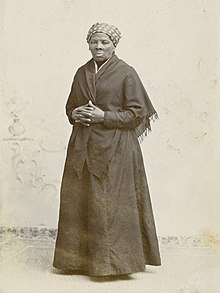
Harriet Tubman by Squyer, NPG, c1885.jpg
Harriet Tubman
Harriet found freedom when she slipped over the Maryland state line and out of slavery. She couldn’t remain content, however, knowing so many were still trapped in captivity. So she led more than a dozen rescue missions to free those still in slavery, dismissing the personal danger. “I can’t die but once,” she said.

May we find our peace and purpose in You, Lord.
Harriet knew the truth of the statement: “Do not be afraid of those who kill the body but cannot kill the soul” (Matt. 10:28). Jesus spoke those words as He sent His disciples on their first mission. He knew they would face danger, and not everyone would receive them warmly. So why expose the disciples to the risk? The answer is found in the previous chapter. “When he saw the crowds, [Jesus] had compassion on them, because they were harassed and helpless, like sheep without a shepherd” (9:36).

When Harriet Tubman couldn’t forget those still trapped in slavery, she showed us a picture of Christ, who did not forget us when we were trapped in our sins. Her courageous example inspires us to remember those who remain without hope in the world.

May we find our peace and purpose in You, Lord, and share You with others.

True freedom is found in knowing and serving Christ.

My Utmost for His Highest, by Oswald Chambers
Sunday, May 29, 2016
Untroubled Relationship
In that day you will ask in My name…for the Father Himself loves you… —John 16:26-27

“In that day you will ask in My name…,” that is, in My nature. Not “You will use My name as some magic word,” but— “You will be so intimate with Me that you will be one with Me.” “That day” is not a day in the next life, but a day meant for here and now. “…for the Father Himself loves you…”— the Father’s love is evidence that our union with Jesus is complete and absolute. Our Lord does not mean that our lives will be free from external difficulties and uncertainties, but that just as He knew the Father’s heart and mind, we too can be lifted by Him into heavenly places through the baptism of the Holy Spirit, so that He can reveal the teachings of God to us.

“…whatever you ask the Father in My name…” (John 16:23). “That day” is a day of peace and an untroubled relationship between God and His saint. Just as Jesus stood unblemished and pure in the presence of His Father, we too by the mighty power and effectiveness of the baptism of the Holy Spirit can be lifted into that relationship— “…that they may be one just as We are one…” (John 17:22).

“…He will give you” (John 16:23). Jesus said that because of His name God will recognize and respond to our prayers. What a great challenge and invitation— to pray in His name! Through the resurrection and ascension power of Jesus, and through the Holy Spirit He has sent, we can be lifted into such a relationship. Once in that wonderful position, having been placed there by Jesus Christ, we can pray to God in Jesus’ name— in His nature. This is a gift granted to us through the Holy Spirit, and Jesus said, “…whatever you ask the Father in My name He will give you.” The sovereign character of Jesus Christ is tested and proved by His own statements.

WISDOM FROM OSWALD CHAMBERS

We begin our Christian life by believing what we are told to believe, then we have to go on to so assimilate our beliefs that they work out in a way that redounds to the glory of God. The danger is in multiplying the acceptation of beliefs we do not make our own. Conformed to His Image, 381 L

Saturday, May 28, 2016

1 Chronicles 16, Bible Reading and Daily Devotionals

Max Lucado Daily:  God Gives Hope

God gives hope! So what if someone was born thinner or stronger, lighter or darker than you? Why count diplomas or compare resumes? What does it matter if they have a place at the head table? You have a place at God's table! And he's filling your cup to overflowing. Hasn't our Father given us a strong wall of grace to protect us? A sure exit to deliver us? Of whom can we be envious? Who has more than we do?
Rather than want what others have, shouldn't we wonder if they have what we do? Instead of being jealous of them, how about zealous for them? Hold out the cup! There's enough to go around. One thing is certain. When the final storm comes and you are safe in your Father's house, you won't regret what he didn't give. You will be stunned at what he did.
From Traveling Light

1 Chronicles 16

Ministering Before the Ark

They brought the ark of God and set it inside the tent that David had pitched for it, and they presented burnt offerings and fellowship offerings before God. 2 After David had finished sacrificing the burnt offerings and fellowship offerings, he blessed the people in the name of the Lord. 3 Then he gave a loaf of bread, a cake of dates and a cake of raisins to each Israelite man and woman.

4 He appointed some of the Levites to minister before the ark of the Lord, to extol,[a] thank, and praise the Lord, the God of Israel: 5 Asaph was the chief, and next to him in rank were Zechariah, then Jaaziel,[b] Shemiramoth, Jehiel, Mattithiah, Eliab, Benaiah, Obed-Edom and Jeiel. They were to play the lyres and harps, Asaph was to sound the cymbals, 6 and Benaiah and Jahaziel the priests were to blow the trumpets regularly before the ark of the covenant of God.

7 That day David first appointed Asaph and his associates to give praise to the Lord in this manner:

8 Give praise to the Lord, proclaim his name;
    make known among the nations what he has done.
9 Sing to him, sing praise to him;
    tell of all his wonderful acts.
10 Glory in his holy name;
    let the hearts of those who seek the Lord rejoice.
11 Look to the Lord and his strength;
    seek his face always.
12 Remember the wonders he has done,
    his miracles, and the judgments he pronounced,
13 you his servants, the descendants of Israel,
    his chosen ones, the children of Jacob.
14 He is the Lord our God;
    his judgments are in all the earth.
15 He remembers[c] his covenant forever,
    the promise he made, for a thousand generations,
16 the covenant he made with Abraham,
    the oath he swore to Isaac.
17 He confirmed it to Jacob as a decree,
    to Israel as an everlasting covenant:
18 “To you I will give the land of Canaan
    as the portion you will inherit.”
19 When they were but few in number,
    few indeed, and strangers in it,
20 they[d] wandered from nation to nation,
    from one kingdom to another.
21 He allowed no one to oppress them;
    for their sake he rebuked kings:
22 “Do not touch my anointed ones;
    do my prophets no harm.”
23 Sing to the Lord, all the earth;
    proclaim his salvation day after day.
24 Declare his glory among the nations,
    his marvelous deeds among all peoples.
25 For great is the Lord and most worthy of praise;
    he is to be feared above all gods.
26 For all the gods of the nations are idols,
    but the Lord made the heavens.
27 Splendor and majesty are before him;
    strength and joy are in his dwelling place.
28 Ascribe to the Lord, all you families of nations,
    ascribe to the Lord glory and strength.
29 Ascribe to the Lord the glory due his name;
    bring an offering and come before him.
Worship the Lord in the splendor of his[e] holiness.
30     Tremble before him, all the earth!
    The world is firmly established; it cannot be moved.
31 Let the heavens rejoice, let the earth be glad;
    let them say among the nations, “The Lord reigns!”
32 Let the sea resound, and all that is in it;
    let the fields be jubilant, and everything in them!
33 Let the trees of the forest sing,
    let them sing for joy before the Lord,
    for he comes to judge the earth.
34 Give thanks to the Lord, for he is good;
    his love endures forever.
35 Cry out, “Save us, God our Savior;
    gather us and deliver us from the nations,
that we may give thanks to your holy name,
    and glory in your praise.”
36 Praise be to the Lord, the God of Israel,
    from everlasting to everlasting.
Then all the people said “Amen” and “Praise the Lord.”

37 David left Asaph and his associates before the ark of the covenant of the Lord to minister there regularly, according to each day’s requirements. 38 He also left Obed-Edom and his sixty-eight associates to minister with them. Obed-Edom son of Jeduthun, and also Hosah, were gatekeepers.

39 David left Zadok the priest and his fellow priests before the tabernacle of the Lord at the high place in Gibeon 40 to present burnt offerings to the Lord on the altar of burnt offering regularly, morning and evening, in accordance with everything written in the Law of the Lord, which he had given Israel. 41 With them were Heman and Jeduthun and the rest of those chosen and designated by name to give thanks to the Lord, “for his love endures forever.” 42 Heman and Jeduthun were responsible for the sounding of the trumpets and cymbals and for the playing of the other instruments for sacred song. The sons of Jeduthun were stationed at the gate.

43 Then all the people left, each for their own home, and David returned home to bless his family.

Footnotes:

1 Chronicles 16:4 Or petition; or invoke
1 Chronicles 16:5 See 15:18,20; Hebrew Jeiel, possibly another name for Jaaziel.
1 Chronicles 16:15 Some Septuagint manuscripts (see also Psalm 105:8); Hebrew Remember
1 Chronicles 16:20 One Hebrew manuscript, Septuagint and Vulgate (see also Psalm 105:12); most Hebrew manuscripts inherit, / 19 though you are but few in number, / few indeed, and strangers in it.” / 20 They
1 Chronicles 16:29 Or Lord with the splendor of

Our Daily Bread reading and devotion
Saturday, May 28, 2016

Read: Hebrews 2:10-18

 God, for whom and through whom everything was made, chose to bring many children into glory. And it was only right that he should make Jesus, through his suffering, a perfect leader, fit to bring them into their salvation.

11 So now Jesus and the ones he makes holy have the same Father. That is why Jesus is not ashamed to call them his brothers and sisters.[a] 12 For he said to God,

“I will proclaim your name to my brothers and sisters.
    I will praise you among your assembled people.”[b]
13 He also said,

“I will put my trust in him,”
    that is, “I and the children God has given me.”[c]
14 Because God’s children are human beings—made of flesh and blood—the Son also became flesh and blood. For only as a human being could he die, and only by dying could he break the power of the devil, who had[d] the power of death. 15 Only in this way could he set free all who have lived their lives as slaves to the fear of dying.

16 We also know that the Son did not come to help angels; he came to help the descendants of Abraham. 17 Therefore, it was necessary for him to be made in every respect like us, his brothers and sisters,[e] so that he could be our merciful and faithful High Priest before God. Then he could offer a sacrifice that would take away the sins of the people. 18 Since he himself has gone through suffering and testing, he is able to help us when we are being tested.

Footnotes:

2:11 Greek brothers; also in 2:12.
2:12 Ps 22:22.
2:13 Isa 8:17-18.
2:14 Or has.
2:17 Greek like the brothers.

INSIGHT:
Having affirmed the superiority of Christ because of His deity (Heb. 1), the writer of Hebrews now focuses on His humanity (2:5–18). It was necessary for Christ to become “flesh and blood” (v. 14) so that He could “make atonement for the sins of the people” (v. 17). That Jesus—who was “fully human in every way”—had to suffer in order to save us is a constant emphasis in Hebrews (vv. 9–10, 17–18; 5:8–10). Jesus told His disciples many times that He must suffer (Matt. 16:21; 17:12; Luke 22:15; 24:26), and Isaiah prophesied it 700 years earlier (Isa. 53).

He Walked in Our Shoes
By David McCasland

Because he himself suffered when he was tempted, he is able to help those who are being tempted. Hebrews 2:18

To help his staff of young architects understand the needs of those for whom they design housing, David Dillard sends them on “sleepovers.” They put on pajamas and spend 24 hours in a senior living center in the same conditions as people in their 80s and 90s. They wear earplugs to simulate hearing loss, tape their fingers together to limit manual dexterity, and exchange eyeglasses to replicate vision problems. Dillard says, “The biggest benefit is [that] when I send 27-year-olds out, they come back with a heart 10 times as big. They meet people and understand their plights” (Rodney Brooks, USA Today).

Jesus lived on this earth for 33 years and shared in our humanity. He was made like us, “fully human in every way” (Heb. 2:17), so He knows what it’s like to live in a human body on this earth. He understands the struggles we face and comes alongside with understanding and encouragement.

Jesus walks beside us to give us courage, strength, and hope.
“Because [Jesus] himself suffered when he was tempted, he is able to help those who are being tempted” (v. 18). The Lord could have avoided the cross. Instead, He obeyed His Father. Through His death, He broke the power of Satan and freed us from our fear of death (vv. 14-15).

In every temptation, Jesus walks beside us to give us courage, strength, and hope along the way.

Lord Jesus, thank You for “walking in our shoes” on this earth and for being with us. May we experience Your presence today.

Jesus understands.

My Utmost for His Highest, by Oswald Chambers
Saturday, May 28, 2016
Unquestioned Revelation

In that day you will ask Me nothing. —John 16:23

When is “that day”? It is when the ascended Lord makes you one with the Father. “In that day” you will be one with the Father just as Jesus is, and He said, “In that day you will ask Me nothing.” Until the resurrection life of Jesus is fully exhibited in you, you have questions about many things. Then after a while you find that all your questions are gone— you don’t seem to have any left to ask. You have come to the point of total reliance on the resurrection life of Jesus, which brings you into complete oneness with the purpose of God. Are you living that life now? If not, why aren’t you?

“In that day” there may be any number of things still hidden to your understanding, but they will not come between your heart and God. “In that day you will ask Me nothing”— you will not need to ask, because you will be certain that God will reveal things in accordance with His will. The faith and peace of John 14:1 has become the real attitude of your heart, and there are no more questions to be asked. If anything is a mystery to you and is coming between you and God, never look for the explanation in your mind, but look for it in your spirit, your true inner nature— that is where the problem is. Once your inner spiritual nature is willing to submit to the life of Jesus, your understanding will be perfectly clear, and you will come to the place where there is no distance between the Father and you, His child, because the Lord has made you one. “In that day you will ask Me nothing.”

WISDOM FROM OSWALD CHAMBERS

The Bible is the only Book that gives us any indication of the true nature of sin, and where it came from. The Philosophy of Sin, 1107 R

Friday, May 27, 2016

1 Chronicles 15 , Bible Reading and Daily Devotionals

Max Lucado Daily: GOD HONORS YOU

Jesus’ love does not depend upon what we do for him. Not at all. In the eyes of the King, you have value simply because you are. You don’t have to look nice or perform well. Your value is inborn. Period. Think about that for just a minute. You are valuable just because you exist. Not because of what you’ve done, but simply because you are.

Remember that the next time you are left bobbing in the wake of someone’s steamboat ambition….or some trickster tries to hang a bargain basement price tag on your self-worth. Remember that the next time someone tries to pass you off as a cheap buy. Just think about the way Jesus honors you—and smile. I do! I know I don’t deserve love like that. None of us do.

From More to Your Story

1 Chronicles 15
The Ark Brought to Jerusalem

After David had constructed buildings for himself in the City of David, he prepared a place for the ark of God and pitched a tent for it. 2 Then David said, “No one but the Levites may carry the ark of God, because the Lord chose them to carry the ark of the Lord and to minister before him forever.”

3 David assembled all Israel in Jerusalem to bring up the ark of the Lord to the place he had prepared for it. 4 He called together the descendants of Aaron and the Levites:

5 From the descendants of Kohath,

Uriel the leader and 120 relatives;

6 from the descendants of Merari,

Asaiah the leader and 220 relatives;

7 from the descendants of Gershon,[f]

Joel the leader and 130 relatives;

8 from the descendants of Elizaphan,

Shemaiah the leader and 200 relatives;

9 from the descendants of Hebron,

Eliel the leader and 80 relatives;

10 from the descendants of Uzziel,

Amminadab the leader and 112 relatives.

11 Then David summoned Zadok and Abiathar the priests, and Uriel, Asaiah, Joel, Shemaiah, Eliel and Amminadab the Levites. 12 He said to them, “You are the heads of the Levitical families; you and your fellow Levites are to consecrate yourselves and bring up the ark of the Lord, the God of Israel, to the place I have prepared for it. 13 It was because you, the Levites, did not bring it up the first time that the Lord our God broke out in anger against us. We did not inquire of him about how to do it in the prescribed way.” 14 So the priests and Levites consecrated themselves in order to bring up the ark of the Lord, the God of Israel. 15 And the Levites carried the ark of God with the poles on their shoulders, as Moses had commanded in accordance with the word of the Lord.

16 David told the leaders of the Levites to appoint their fellow Levites as musicians to make a joyful sound with musical instruments: lyres, harps and cymbals.

17 So the Levites appointed Heman son of Joel; from his relatives, Asaph son of Berekiah; and from their relatives the Merarites, Ethan son of Kushaiah; 18 and with them their relatives next in rank: Zechariah,[g] Jaaziel, Shemiramoth, Jehiel, Unni, Eliab, Benaiah, Maaseiah, Mattithiah, Eliphelehu, Mikneiah, Obed-Edom and Jeiel,[h] the gatekeepers.

19 The musicians Heman, Asaph and Ethan were to sound the bronze cymbals; 20 Zechariah, Jaaziel,[i] Shemiramoth, Jehiel, Unni, Eliab, Maaseiah and Benaiah were to play the lyres according to alamoth,[j] 21 and Mattithiah, Eliphelehu, Mikneiah, Obed-Edom, Jeiel and Azaziah were to play the harps, directing according to sheminith.[k] 22 Kenaniah the head Levite was in charge of the singing; that was his responsibility because he was skillful at it.

23 Berekiah and Elkanah were to be doorkeepers for the ark. 24 Shebaniah, Joshaphat, Nethanel, Amasai, Zechariah, Benaiah and Eliezer the priests were to blow trumpets before the ark of God. Obed-Edom and Jehiah were also to be doorkeepers for the ark.

25 So David and the elders of Israel and the commanders of units of a thousand went to bring up the ark of the covenant of the Lord from the house of Obed-Edom, with rejoicing. 26 Because God had helped the Levites who were carrying the ark of the covenant of the Lord, seven bulls and seven rams were sacrificed. 27 Now David was clothed in a robe of fine linen, as were all the Levites who were carrying the ark, and as were the musicians, and Kenaniah, who was in charge of the singing of the choirs. David also wore a linen ephod. 28 So all Israel brought up the ark of the covenant of the Lord with shouts, with the sounding of rams’ horns and trumpets, and of cymbals, and the playing of lyres and harps.

29 As the ark of the covenant of the Lord was entering the City of David, Michal daughter of Saul watched from a window. And when she saw King David dancing and celebrating, she despised him in her heart.

Footnotes:
1 Chronicles 15:7 Hebrew Gershom, a variant of Gershon
1 Chronicles 15:18 Three Hebrew manuscripts and most Septuagint manuscripts (see also verse 20 and 16:5); most Hebrew manuscripts Zechariah son and or Zechariah, Ben and
1 Chronicles 15:18 Hebrew; Septuagint (see also verse 21) Jeiel and Azaziah
1 Chronicles 15:20 See verse 18; Hebrew Aziel, a variant of Jaaziel.
1 Chronicles 15:20 Probably a musical term
1 Chronicles 15:21 Probably a musical term

Our Daily Bread reading and devotion
Friday, May 27, 2016

Read: John 14:16-27

And I will ask the Father, and he will give you another Advocate,[a] who will never leave you. 17 He is the Holy Spirit, who leads into all truth. The world cannot receive him, because it isn’t looking for him and doesn’t recognize him. But you know him, because he lives with you now and later will be in you.[b] 18 No, I will not abandon you as orphans—I will come to you. 19 Soon the world will no longer see me, but you will see me. Since I live, you also will live. 20 When I am raised to life again, you will know that I am in my Father, and you are in me, and I am in you. 21 Those who accept my commandments and obey them are the ones who love me. And because they love me, my Father will love them. And I will love them and reveal myself to each of them.”

22 Judas (not Judas Iscariot, but the other disciple with that name) said to him, “Lord, why are you going to reveal yourself only to us and not to the world at large?”

23 Jesus replied, “All who love me will do what I say. My Father will love them, and we will come and make our home with each of them. 24 Anyone who doesn’t love me will not obey me. And remember, my words are not my own. What I am telling you is from the Father who sent me. 25 I am telling you these things now while I am still with you. 26 But when the Father sends the Advocate as my representative—that is, the Holy Spirit—he will teach you everything and will remind you of everything I have told you.

27 “I am leaving you with a gift—peace of mind and heart. And the peace I give is a gift the world cannot give. So don’t be troubled or afraid.

Footnotes:
14:16 Or Comforter, or Encourager, or Counselor. Greek reads Paraclete; also in 14:26.
14:17 Some manuscripts read and is in you.

INSIGHT:
Today’s passage highlights one of the differences between those who know Jesus and those who do not: The Holy Spirit dwells within believers in Christ. Jesus says that His followers know Him and that the world does not know or accept Him (v. 17). It is the Spirit who identifies us as Jesus’ followers.

Flowing Peace
By Amy Boucher Pye

Peace I leave with you; my peace I give you. John 14:27

“I’m not surprised you lead retreats,” said an acquaintance in my exercise class. “You have a good aura.” I was jolted but pleased by her comment, because I realized that what she saw as an “aura” in me, I understood to be the peace of Christ. As we follow Jesus, He gives us the peace that transcends understanding (Phil. 4:7) and radiates from within—though we may not even be aware of it.

Jesus promised His followers this peace when, after their last supper together, He prepared them for His death and resurrection. He told them that though they would have trouble in the world, the Father would send them the Spirit of truth to live with them and be in them (John 14:16-17). The Spirit would teach them, bringing to mind His truths; the Spirit would comfort them, bestowing on them His peace. Though soon they would face trials—including fierce opposition from the religious leaders and seeing Jesus executed—He told them not to be afraid. The Holy Spirit’s presence would never leave them.

God’s peace can be His witness to everyone we meet.
Although as God’s children we experience hardship, we too have His Spirit living within and flowing out of us. God’s peace can be His witness to everyone we meet—whether at a local market, at school or work, or in the gym.

Father, Son, and Holy Spirit, thank You for welcoming me into Your circle of love. May I share Your peace with someone in my community today.

When we keep our mind on God, His Spirit keeps our mind at peace.

My Utmost for His Highest, by Oswald Chambers
Friday, May 27, 2016
The Life To Know Him

…tarry in the city of Jerusalem until you are endued with power from on high. —Luke 24:49

The disciples had to tarry, staying in Jerusalem until the day of Pentecost, not only for their own preparation but because they had to wait until the Lord was actually glorified. And as soon as He was glorified, what happened? “Therefore being exalted to the right hand of God, and having received from the Father the promise of the Holy Spirit, He poured out this which you now see and hear” (Acts 2:33). The statement in John 7:39— “…for the Holy Spirit was not yet given, because Jesus was not yet glorified”— does not pertain to us. The Holy Spirit has been given; the Lord is glorified— our waiting is not dependent on the providence of God, but on our own spiritual fitness.

The Holy Spirit’s influence and power were at work before Pentecost, but He was not here. Once our Lord was glorified in His ascension, the Holy Spirit came into the world, and He has been here ever since. We have to receive the revealed truth that He is here. The attitude of receiving and welcoming the Holy Spirit into our lives is to be the continual attitude of a believer. When we receive the Holy Spirit, we receive reviving life from our ascended Lord.

It is not the baptism of the Holy Spirit that changes people, but the power of the ascended Christ coming into their lives through the Holy Spirit. We all too often separate things that the New Testament never separates. The baptism of the Holy Spirit is not an experience apart from Jesus Christ— it is the evidence of the ascended Christ.

The baptism of the Holy Spirit does not make you think of time or eternity— it is one amazing glorious now. “This is eternal life, that they may know You…” (John 17:3). Begin to know Him now, and never finish.

WISDOM FROM OSWALD CHAMBERS

Faith never knows where it is being led, but it loves and knows the One Who is leading.  My Utmost for His Highest, March 19, 761 L

A Word with You, by Ron Hutchcraft
Friday, May 27, 2016

Thirty Seconds After You're Gone - #7665

She must have been scared to death. She wasn't a public speaker, but that day she agreed to speak to 70,000 people in a football stadium in the Northwest. It was the last day of Billy Graham's Crusade in her city. And he had asked her to read a letter she'd received from her son. It was the end of the first Gulf War, and the troops were coming home; except for a relatively few American soldiers who weren't coming home and her son was one of them.

He had died in a helicopter crash on the last day of the war. He had written a letter to his mother and given it to a good friend with instructions to mail it only if he was killed. Now she shared that letter with the masses in that stadium, knowing that her son still had something to say by way of what he had written. His letter said, "Mom, if you're reading this letter, it means I didn't make it. But that's OK, Mom. Because now, for the first time, I'm smarter than you are! Because Mom, I've seen heaven. I've seen Jesus!"

I'm Ron Hutchcraft and I want to have A Word With You today about "Thirty Seconds After You're Gone."

What a way to live! What a way to die - knowing that all death is going to do is send you to heaven...to see the One whose death and resurrection opened the door for you to be there. God wants for you to be able to say and to know beyond any shadow of a doubt that 30 seconds after you're gone, you're going to be saying, "I've seen heaven! I've seen Jesus!"

Is it possible to really know that you're going to heaven when you die? Not if you have to earn heaven by living a good life. You'll never know if you're good enough. Keanu Reeves starred in a movie that had some supernatural subject matter. In an interview he was asked, "What are your notions of heaven and hell, and eternal damnation vs. eternal bliss?" He said, "Well, I hope I get the bliss. And I know I'm going to have to work for it."

A lot of folks think that way. God doesn't. He actually says in His book, and these are God's words. "He saved us, not because of righteous things we had done, but because of His mercy" (Titus 3:5). You can't possibly do enough good to satisfy a perfect God or to pay the death penalty for the sinning you've done. It took Jesus to do that.

God tells us that when those who belong to Him are "away from the body," they are "at home with the Lord" (2 Corinthians 5:8). How can you be sure that will be you? As Jesus was dying on the cross, there was a criminal on one side of Him who had started out mocking Him like everybody else. Then, in our word for today from the Word of God in Luke 23:42-43, he suddenly says, "Jesus, remember me when you come into your kingdom." What changed him? Moments before, He had heard Jesus say these words from the cross: "Father, forgive them." And that criminal must have thought, "If Jesus would forgive the people who nailed Him there, then He'd forgive me for my sin." Here was Jesus' amazing answer, "Today you will be with me in paradise."

That's what He wants to say to you when you've breathed your last breath, "Today you'll be with Me in heaven - and forever." But that can only happen if you put all your trust in the One who said from the cross where He died for you, "Father, forgive them." He was forgiving you that day. But it's like a gift He's offering you. You have to take what He paid for at such a high price.

When should you do that? The Bible says, "Now is the time of God's favor. Now is the day of salvation" (2 Corinthians 6:3). Why would you wait one more day to turn from your sin, to put your trust in Jesus to forgive your sin, and have every sin erased from God's book forever? Why would you wait one more day to trade hell for heaven when you don't know how many more days you'll have?

Let this be your Jesus day. Tell Him now, "Jesus, I believe when You died on that cross it was for sinning I have done. And, Jesus, I am yours from this day on." Our website is there to just help you make sure that you belong to Him. I wish you'd go there as soon as you can today. I invite you to ANewStory.com.

There is no greater peace than going to sleep at night knowing beyond any shadow of a doubt what will happen when you have taken your last breath. You're going to be seeing heaven and you'll be seeing Jesus.

Thursday, May 26, 2016

1 Chronicles 14 , Bible Reading and Daily Devotionals

Max Lucado Daily: UNDERSTANDING GOD’S STORY

Do you remember a time when, as a child, you got lost? You felt the paralyzing fear of looking around and failing to see the north star of your parents’ strong presence. You were lost!

These moments of lostness can leave a pit in your stomach and bring fear to your soul. What is even worse is coming to a point in life when we realize that we’ve lost our way as a human being. We’re not sure why we are on this planet. We have no sense of our purpose. It is in these moments we look to God, the Master Storyteller, and discover that the best way to understand our story is to listen to his. As we understand God’s story and where we fit within it, the haze begins to clear and our story begins to make sense. There’s more to your story, my friend!

From More to Your Story

1 Chronicles 14

David’s House and Family

Now Hiram king of Tyre sent messengers to David, along with cedar logs, stonemasons and carpenters to build a palace for him. 2 And David knew that the Lord had established him as king over Israel and that his kingdom had been highly exalted for the sake of his people Israel.

3 In Jerusalem David took more wives and became the father of more sons and daughters. 4 These are the names of the children born to him there: Shammua, Shobab, Nathan, Solomon, 5 Ibhar, Elishua, Elpelet, 6 Nogah, Nepheg, Japhia, 7 Elishama, Beeliada[d] and Eliphelet.

David Defeats the Philistines
8 When the Philistines heard that David had been anointed king over all Israel, they went up in full force to search for him, but David heard about it and went out to meet them. 9 Now the Philistines had come and raided the Valley of Rephaim; 10 so David inquired of God: “Shall I go and attack the Philistines? Will you deliver them into my hands?”

The Lord answered him, “Go, I will deliver them into your hands.”

11 So David and his men went up to Baal Perazim, and there he defeated them. He said, “As waters break out, God has broken out against my enemies by my hand.” So that place was called Baal Perazim.[e] 12 The Philistines had abandoned their gods there, and David gave orders to burn them in the fire.

13 Once more the Philistines raided the valley; 14 so David inquired of God again, and God answered him, “Do not go directly after them, but circle around them and attack them in front of the poplar trees. 15 As soon as you hear the sound of marching in the tops of the poplar trees, move out to battle, because that will mean God has gone out in front of you to strike the Philistine army.” 16 So David did as God commanded him, and they struck down the Philistine army, all the way from Gibeon to Gezer.

17 So David’s fame spread throughout every land, and the Lord made all the nations fear him.

Footnotes:
1 Chronicles 14:7 A variant of Eliada
1 Chronicles 14:11 Baal Perazim means the lord who breaks out.

Our Daily Bread reading and devotion
Thursday, May 26, 2016

Read: Isaiah 53:1-6

Who has believed our message?
    To whom has the Lord revealed his powerful arm?
2 My servant grew up in the Lord’s presence like a tender green shoot,
    like a root in dry ground.
There was nothing beautiful or majestic about his appearance,
    nothing to attract us to him.
3 He was despised and rejected—
    a man of sorrows, acquainted with deepest grief.
We turned our backs on him and looked the other way.
    He was despised, and we did not care.
4 Yet it was our weaknesses he carried;
    it was our sorrows[a] that weighed him down.
And we thought his troubles were a punishment from God,
    a punishment for his own sins!
5 But he was pierced for our rebellion,
    crushed for our sins.
He was beaten so we could be whole.
    He was whipped so we could be healed.
6 All of us, like sheep, have strayed away.
    We have left God’s paths to follow our own.
Yet the Lord laid on him
    the sins of us all.
Footnotes:
53:4 Or Yet it was our sicknesses he carried; / it was our diseases.

INSIGHT:
Isaiah 53 is part of a “servant song” that includes Isaiah 52:13–53:12 and focuses primarily on the Servant’s suffering, which would be fulfilled in the crucifixion of Jesus. The Old Testament provides several foreshadowings of that suffering, and each brings its own perspective. In the Passover (Ex. 12), we see the cross from the Father’s perspective as Christ becomes our Passover Lamb. In Psalm 22, we see the cross from the perspective of Jesus Himself as David describes Christ’s suffering experience. Isaiah 53, however, describes the cross from the perspective of humanity. It tells us what they saw, what they failed to see, and what they desperately needed to see—the depth and passion of God’s rescuing love.

Like Sheep
By Lawrence Darmani

We all, like sheep, have gone astray, each of us has turned to our own way. Isaiah 53:6

One of my daily chores when I lived with my grandfather in northern Ghana was taking care of sheep. Each morning I took them out to pasture and returned by evening. That was when I first noticed how stubborn sheep can be. Whenever they saw a farm, for instance, their instinct drove them right into it, getting me in trouble with the farmers on a number of occasions.

Sometimes when I was tired from the heat and resting under a tree, I observed the sheep dispersing into the bushes and heading for the hills, causing me to chase after them and scratching my skinny legs in the shrubs. I had a hard time directing the animals away from danger and trouble, especially when robbers sometimes raided the field and stole stray sheep.

As our shepherd, He calls us back to safe pasture.
So I quite understand when Isaiah says, "We all, like sheep, have gone astray, each of us has turned to our own way" (53:6). We stray in many ways: desiring and doing what displeases our Lord, hurting other people by our conduct, and being distracted from spending time with God and His Word because we are too busy or lack interest. We behave like sheep in the field.

Fortunately for us, we have the Good Shepherd who laid down His life for us (John 10:11) and who carries our sorrows and our sins (Isa. 53:4-6). And as our shepherd, He calls us back to safe pasture that we might follow Him more closely.

Shepherd of my soul, I do wander at times. I’m grateful that You’re always seeking me to bring me back to Your side.

If you want God to lead you, be willing to follow.

My Utmost for His Highest, by Oswald Chambers
Thursday, May 26, 2016
Thinking of Prayer as Jesus Taught
Pray without ceasing… —1 Thessalonians 5:17

Our thinking about prayer, whether right or wrong, is based on our own mental conception of it. The correct concept is to think of prayer as the breath in our lungs and the blood from our hearts. Our blood flows and our breathing continues “without ceasing”; we are not even conscious of it, but it never stops. And we are not always conscious of Jesus keeping us in perfect oneness with God, but if we are obeying Him, He always is. Prayer is not an exercise, it is the life of the saint. Beware of anything that stops the offering up of prayer. “Pray without ceasing…”— maintain the childlike habit of offering up prayer in your heart to God all the time.

Jesus never mentioned unanswered prayer. He had the unlimited certainty of knowing that prayer is always answered. Do we have through the Spirit of God that inexpressible certainty that Jesus had about prayer, or do we think of the times when it seemed that God did not answer our prayer? Jesus said, “…everyone who asks receives…” (Matthew 7:8). Yet we say, “But…, but….” God answers prayer in the best way— not just sometimes, but every time. However, the evidence of the answer in the area we want it may not always immediately follow. Do we expect God to answer prayer?

The danger we have is that we want to water down what Jesus said to make it mean something that aligns with our common sense. But if it were only common sense, what He said would not even be worthwhile. The things Jesus taught about prayer are supernatural truths He reveals to us.

WISDOM FROM OSWALD CHAMBERS

We are only what we are in the dark; all the rest is reputation. What God looks at is what we are in the dark—the imaginations of our minds; the thoughts of our heart; the habits of our bodies; these are the things that mark us in God’s sight.  The Love of God—The Ministry of the Unnoticed, 669 L


A Word with You, by Ron Hutchcraft
Thursday, May 26, 2016

Why You're Spiritually Dry - #7664

It was a fogged in morning at the country house we were using for our vacation. The valley below us and the mountains beyond us were nowhere to be seen. In fact, you couldn't see much beyond the front porch. But by about 10:00 A. M., the sun started doing its thing. I was sitting there literally watching the mist being sucked upward and up and away by the heat of the sun.

I called my wife's attention to the vanishing moisture, and she made an interesting observation. Recalling my own experience with vanishing moisture, she said, "That's what happened to you when you got dehydrated." Now, watching the moisture being sucked away and thinking about when I got dehydrated - it made me want to have a bottle of water with me at all times! I've got one right next to me right now.

I'm Ron Hutchcraft and I want to have A Word With You today about "Why You're Spiritually Dry."

When our Native American Outreach Team spent a month on reservations in the Southwest, you can be sure that bottles of water were standard issue for every team member every day. That desert heat can dehydrate you fast. And take it from me, when you get the moisture sucked out of you, which I've had done, you really fall apart. Dehydration is serious business physically and spiritually.

Spiritual dehydration is the shutdown that occurs in your walk with God when you let your source of spiritual strength start to dry up. And it can happen pretty quickly when you live in the kind of spiritual desert most of us live in - like where you work, where you live, or where you go to school. We absorb what our culture pumps into our mind and it drains the spiritual life out of you. The way to battle dehydration of any kind, of course, is frequent replenishing of the source of your strength.

Which is why David said what he said in our word for today from the Word of God in Psalm 42:1-2. Remember, this is the man God called "the man after His own heart." "As the deer pants for streams of water, so my soul pants for You, O God. My soul thirsts for God, for the living God. When can I go and meet with God?" That ought to be the driving passion of every one of us who belongs to Jesus Christ, "When's the next time I can meet with my God?" Without those regular meetings, we'll dry up spiritually. We'll dry up fast because we live in an environment that is so spiritually dry.

And in the rush and the stress of your overheated life, it could very well be that your personal time with your Lord has gotten abbreviated, postponed, or cancelled. Each day you're getting hit with so much that isn't God's perspective, isn't God's way - and you know you're going to get the stuff that depletes you spiritually.

You've got to commit yourself to drink at God's spring each new day, early in that day, or you'll find yourself beat up, compromised, discouraged, detoured, and overwhelmed. Not because the sun is so hot, but because you didn't replenish yourself with the living water that God alone can give you.

In times like these, you've got to make your time with Jesus in His Word the non-negotiable of your personal schedule; the sun around which all the planets of your life have to revolve. Not if I get time, or whenever I can get around to it, or when I feel like it. But it becomes now the "must" of my day, the beginning of my day; hearing the voice of God before you hear any other voice.

However early you have to get up, whatever you have to change, make sure your Jesus time happens. It's your water bottle in the desert, and you just simply cannot afford to ever leave home without it.

Wednesday, May 25, 2016

1 Chronicles 13, Bible Reading and Daily Devotionals

Max Lucado Daily: WE SHALL BE LIKE HIM

As you discover your place in God’s plan, you make this wonderful discovery: you will graduate from this life into heaven. Jesus’ plan is to “gather together in one all things in Christ” (Ephesians 1:10).

All things includes your body. God will reunite your body with your soul and create something unlike anything you have ever seen– an eternal body. You will finally be healthy. You never have been. Even on the days you felt fine, you weren’t. You were a sitting duck for disease, infections, airborne bacteria, and microbes. And what about your worst days? Don’t you hate disease. So does Christ.

When Christ appears, scripture tells us, “we shall be like him.” You’ll have a spiritual body—with all members cooperating toward one end. So we’re not giving up. As God’s story becomes our story, the best is yet to be.

From More to Your Story

1 Chronicles 13

Bringing Back the Ark

David conferred with each of his officers, the commanders of thousands and commanders of hundreds. 2 He then said to the whole assembly of Israel, “If it seems good to you and if it is the will of the Lord our God, let us send word far and wide to the rest of our people throughout the territories of Israel, and also to the priests and Levites who are with them in their towns and pasturelands, to come and join us. 3 Let us bring the ark of our God back to us, for we did not inquire of[a] it[b] during the reign of Saul.” 4 The whole assembly agreed to do this, because it seemed right to all the people.

5 So David assembled all Israel, from the Shihor River in Egypt to Lebo Hamath, to bring the ark of God from Kiriath Jearim. 6 David and all Israel went to Baalah of Judah (Kiriath Jearim) to bring up from there the ark of God the Lord, who is enthroned between the cherubim—the ark that is called by the Name.

7 They moved the ark of God from Abinadab’s house on a new cart, with Uzzah and Ahio guiding it. 8 David and all the Israelites were celebrating with all their might before God, with songs and with harps, lyres, timbrels, cymbals and trumpets.

9 When they came to the threshing floor of Kidon, Uzzah reached out his hand to steady the ark, because the oxen stumbled. 10 The Lord’s anger burned against Uzzah, and he struck him down because he had put his hand on the ark. So he died there before God.

11 Then David was angry because the Lord’s wrath had broken out against Uzzah, and to this day that place is called Perez Uzzah.[c]

12 David was afraid of God that day and asked, “How can I ever bring the ark of God to me?” 13 He did not take the ark to be with him in the City of David. Instead, he took it to the house of Obed-Edom the Gittite. 14 The ark of God remained with the family of Obed-Edom in his house for three months, and the Lord blessed his household and everything he had.

Footnotes:

1 Chronicles 13:3 Or we neglected
1 Chronicles 13:3 Or him
1 Chronicles 13:11 Perez Uzzah means outbreak against Uzzah.

Our Daily Bread reading and devotion
Wednesday, May 25, 2016

Read: John 11:14-27

 So he told them plainly, “Lazarus is dead. 15 And for your sakes, I’m glad I wasn’t there, for now you will really believe. Come, let’s go see him.”

16 Thomas, nicknamed the Twin,[a] said to his fellow disciples, “Let’s go, too—and die with Jesus.”

17 When Jesus arrived at Bethany, he was told that Lazarus had already been in his grave for four days. 18 Bethany was only a few miles[b] down the road from Jerusalem, 19 and many of the people had come to console Martha and Mary in their loss. 20 When Martha got word that Jesus was coming, she went to meet him. But Mary stayed in the house. 21 Martha said to Jesus, “Lord, if only you had been here, my brother would not have died. 22 But even now I know that God will give you whatever you ask.”

23 Jesus told her, “Your brother will rise again.”

24 “Yes,” Martha said, “he will rise when everyone else rises, at the last day.”

25 Jesus told her, “I am the resurrection and the life.[c] Anyone who believes in me will live, even after dying. 26 Everyone who lives in me and believes in me will never ever die. Do you believe this, Martha?”

27 “Yes, Lord,” she told him. “I have always believed you are the Messiah, the Son of God, the one who has come into the world from God.”

Footnotes:

11:16 Greek Thomas, who was called Didymus.
11:18 Greek was about 15 stadia [about 2.8 kilometers].
11:25 Some manuscripts do not include and the life.

INSIGHT:
John 11:1–27 is the third time the Gospels record Jesus raising someone from the dead. In Mark 5:22–43 Jesus goes to the house of a Jewish leader named Jairus and raises his 12-year-old daughter. In Luke 7:11–17 Jesus interrupted a funeral procession in the town of Nain and brought a widow’s dead son back to life. John 11 is unique since it is the only time a name is given for the resurrected person. In this case Lazarus, an abbreviation of Eleazar, was brought back from the dead. His name means “one whom God helps.”

When the Woods Wake Up
By Julie Ackerman Link

I am the resurrection and the life. The one who believes in me will live, even though they die. John 11:25

Through cold, snowy winters, the hope of spring sustains those of us who live in Michigan. May is the month when that hope is rewarded. The transformation is remarkable. Limbs that look lifeless on May 1 turn into branches that wave green leafy greetings by month’s end. Although the change each day is imperceptible, by the end of the month the woods in my yard have changed from gray to green.

God has built into creation a cycle of rest and renewal. What looks like death to us is rest to God. And just as rest is preparation for renewal, death is preparation for resurrection.

I love watching the woods awaken every spring, for it reminds me that death is a temporary condition and that its purpose is to prepare for new life, a new beginning, for something even better. “Unless a kernel of wheat falls to the ground and dies, it remains only a single seed. But if it dies, it produces many seeds” (John 12:24).

While pollen is a springtime nuisance when it coats my furniture and makes people sneeze, it reminds me that God is in the business of keeping things alive. And after the pain of death, He promises a glorious resurrection for those who believe in His Son.

Read these encouraging verses that remind us of the hope of resurrection: 1 Corinthians 15:35-58.


Share what you've learned from these verses in the comments or on our Facebook page.

Every new leaf of springtime is a reminder of our promised resurrection.

My Utmost for His Highest, by Oswald Chambers
Wednesday, May 25, 2016
The Good or The Best?

If you take the left, then I will go to the right; or, if you go to the right, then I will go to the left. —Genesis 13:9
As soon as you begin to live the life of faith in God, fascinating and physically gratifying possibilities will open up before you. These things are yours by right, but if you are living the life of faith you will exercise your right to waive your rights, and let God make your choice for you. God sometimes allows you to get into a place of testing where your own welfare would be the appropriate thing to consider, if you were not living the life of faith. But if you are, you will joyfully waive your right and allow God to make your choice for you. This is the discipline God uses to transform the natural into the spiritual through obedience to His voice.

Whenever our right becomes the guiding factor of our lives, it dulls our spiritual insight. The greatest enemy of the life of faith in God is not sin, but good choices which are not quite good enough. The good is always the enemy of the best. In this passage, it would seem that the wisest thing in the world for Abram to do would be to choose. It was his right, and the people around him would consider him to be a fool for not choosing.

Many of us do not continue to grow spiritually because we prefer to choose on the basis of our rights, instead of relying on God to make the choice for us. We have to learn to walk according to the standard which has its eyes focused on God. And God says to us, as He did to Abram, “…walk before Me…” (Genesis 17:1).

WISDOM FROM OSWALD CHAMBERS

The attitude of a Christian towards the providential order in which he is placed is to recognize that God is behind it for purposes of His own.  Biblical Ethics, 99 R

A Word with You, by Ron Hutchcraft
Wednesday, May 25, 2016

On Assignment from Heaven - #7663

It was enough to make a girl stop talking for years to come-when it comes to talking about her relationship with Jesus, that is. One day in high school, God laid it on my wife's heart, (of course she wasn't my wife yet), to share Christ with one of her fellow band members. Ricky was a drummer. In my experience, drummers are usually cut from a little different piece of cloth than everybody else, and Ricky was no exception. He was a wild and crazy guy with a mouth to match. But one day my wife got up the courage to rise above her shyness and tell him about her Savior. Ricky didn't exactly fall to his knees in the band room and repent. In fact, he said, "Well, if you're going to heaven, I want to go to the other place!" Ouch!

Years later, my wife and I were visiting a church where the pastor introduced us during the service. Afterwards, the man who had been sitting behind us said to my honey, "I've been hoping for years I'd get to see you and tell you what happened." It was Ricky and his wife. He said, "I know I blew you off that day you tried to tell me about Jesus, but you were the first person who ever did that. Later a couple of others did the same thing. I just wanted you to know I finally gave my heart to Christ." Needless to say, it was one of those spiritual what they used to call "Kodak moments." Ricky went on to tell about working on a Christian radio station and how he had even pastored a church. Ricky-the one who nuked a girl who tried to tell him about Jesus-ended up actually working on our team, helping us tell the world about Jesus.

I'm Ron Hutchcraft and I want to have A Word With You today about "On Assignment From Heaven."

Ricky's story is the story of so many who have changed their eternal address from hell to heaven. They didn't find Christ through one exposure to Him, but through a string of faithful witnesses who sowed the seed of the Gospel in their heart. One day, the harvest came because of those who sowed the Gospel, those who watered the Gospel, and then someone who recognized that it was time to harvest the Gospel.

God has placed you as His designated ambassador in the lives of the people in your personal world. Here's how the great rescue plan of God works, as revealed in 1 Corinthians 3, beginning with verse 5, our word for today from the Word of God. "What, after all, is Apollos? And what is Paul? Only servants, through whom you came to believe-as the Lord has assigned to each his task. I planted the seed, Apollos watered it, but God made it grow...The man who plants and the man who waters have one purpose, and each will be rewarded according to his labor. For we are God's fellow workers..."

Do you realize how important you are in the life-saving plan of God? He's invited you to work side by side with Him in His harvesting of lives for heaven! In one life, you may be the one who sows the first thoughts a person has about Jesus-as my wife did in Ricky's life. For another person, you might be the one who unknowingly builds on seed someone else sowed to bring them a step closer to Jesus. For someone else, you'll be the one God puts there when the other seed sown in their life is ready to be harvested and they're ready for Jesus.

As you ask the Holy Spirit to show you what part He wants you to play and where that person is in the process of coming to Him, He'll give you the opening, the courage, the approach, and the words if you ask Him to. You can never judge the final result of your witness by the immediate response. It is God who provides the seed, it's God who miraculously grows that seed into a heart that's ready for Jesus. But He's counting on you to sow His seed, water His seed, or harvest His seed.

There's only one way you can fail in sharing Christ and that's if you don't do it! Your mission is to leave each lost person God leads you to closer to Jesus than they were before; knowing more about Jesus and what He did for them than they knew before.

God has an amazing plan for the spiritual rescue of every lost person you know and He's asking you to join Him in it. Don't miss the most important thing you will ever do in your life!

Tuesday, May 24, 2016

1 Corinthians 9, Bible Reading and Daily Devotionals

Max Lucado Daily: WHAT WE KNOW

There are so many things we don’t know. We don’t know if the economy will dip or if our team will win. We don’t know what our spouse is thinking or how our kids will turn out. And scripture reminds us we don’t even know “what we ought to pray for” (Romans 8:26). But according to Paul’s words in Romans 8:38, we can be absolutely certain about four things. We know…

God works. He is ceaseless and tireless.
God works for our ultimate good.
God works for the good of those who love him.
God works in all things. Not a few things… in all things!

Puppet in the hands of fortune or fate? Not you. You are in the hands of a living, loving God. Your life is a crafted narrative written by a good God who’s working for your supreme good!

From More to Your Story

1 Corinthians 9

Paul Gives Up His Rights

Am I not as free as anyone else? Am I not an apostle? Haven’t I seen Jesus our Lord with my own eyes? Isn’t it because of my work that you belong to the Lord? 2 Even if others think I am not an apostle, I certainly am to you. You yourselves are proof that I am the Lord’s apostle.

3 This is my answer to those who question my authority.[a] 4 Don’t we have the right to live in your homes and share your meals? 5 Don’t we have the right to bring a believing wife[b] with us as the other apostles and the Lord’s brothers do, and as Peter[c] does? 6 Or is it only Barnabas and I who have to work to support ourselves?

7 What soldier has to pay his own expenses? What farmer plants a vineyard and doesn’t have the right to eat some of its fruit? What shepherd cares for a flock of sheep and isn’t allowed to drink some of the milk? 8 Am I expressing merely a human opinion, or does the law say the same thing? 9 For the law of Moses says, “You must not muzzle an ox to keep it from eating as it treads out the grain.”[d] Was God thinking only about oxen when he said this? 10 Wasn’t he actually speaking to us? Yes, it was written for us, so that the one who plows and the one who threshes the grain might both expect a share of the harvest.

11 Since we have planted spiritual seed among you, aren’t we entitled to a harvest of physical food and drink? 12 If you support others who preach to you, shouldn’t we have an even greater right to be supported? But we have never used this right. We would rather put up with anything than be an obstacle to the Good News about Christ.

13 Don’t you realize that those who work in the temple get their meals from the offerings brought to the temple? And those who serve at the altar get a share of the sacrificial offerings. 14 In the same way, the Lord ordered that those who preach the Good News should be supported by those who benefit from it. 15 Yet I have never used any of these rights. And I am not writing this to suggest that I want to start now. In fact, I would rather die than lose my right to boast about preaching without charge. 16 Yet preaching the Good News is not something I can boast about. I am compelled by God to do it. How terrible for me if I didn’t preach the Good News!

17 If I were doing this on my own initiative, I would deserve payment. But I have no choice, for God has given me this sacred trust. 18 What then is my pay? It is the opportunity to preach the Good News without charging anyone. That’s why I never demand my rights when I preach the Good News.

19 Even though I am a free man with no master, I have become a slave to all people to bring many to Christ. 20 When I was with the Jews, I lived like a Jew to bring the Jews to Christ. When I was with those who follow the Jewish law, I too lived under that law. Even though I am not subject to the law, I did this so I could bring to Christ those who are under the law. 21 When I am with the Gentiles who do not follow the Jewish law,[e] I too live apart from that law so I can bring them to Christ. But I do not ignore the law of God; I obey the law of Christ.

22 When I am with those who are weak, I share their weakness, for I want to bring the weak to Christ. Yes, I try to find common ground with everyone, doing everything I can to save some. 23 I do everything to spread the Good News and share in its blessings.

24 Don’t you realize that in a race everyone runs, but only one person gets the prize? So run to win! 25 All athletes are disciplined in their training. They do it to win a prize that will fade away, but we do it for an eternal prize. 26 So I run with purpose in every step. I am not just shadowboxing. 27 I discipline my body like an athlete, training it to do what it should. Otherwise, I fear that after preaching to others I myself might be disqualified.

Footnotes:

9:3 Greek those who examine me.
9:5a Greek a sister a wife.
9:5b Greek Cephas.
9:9 Deut 25:4.
9:21 Greek those without the law.

Our Daily Bread reading and devotion
Tuesday, May 24, 2016

Read: Mark 4:35–5:1

Jesus Calms the Storm
35 As evening came, Jesus said to his disciples, “Let’s cross to the other side of the lake.” 36 So they took Jesus in the boat and started out, leaving the crowds behind (although other boats followed). 37 But soon a fierce storm came up. High waves were breaking into the boat, and it began to fill with water.

38 Jesus was sleeping at the back of the boat with his head on a cushion. The disciples woke him up, shouting, “Teacher, don’t you care that we’re going to drown?”

39 When Jesus woke up, he rebuked the wind and said to the waves, “Silence! Be still!” Suddenly the wind stopped, and there was a great calm. 40 Then he asked them, “Why are you afraid? Do you still have no faith?”

41 The disciples were absolutely terrified. “Who is this man?” they asked each other. “Even the wind and waves obey him!”

Jesus Heals a Demon-Possessed Man
5 So they arrived at the other side of the lake, in the region of the Gerasenes.[a]

Footnotes:

5:1 Other manuscripts read Gadarenes; still others read Gergesenes. See Matt 8:28; Luke 8:26.

INSIGHT:
Jesus’ calming of the storm is a remarkable witness to the power of our Creator over nature, for He spoke directly to the storm threatening the ship He and His disciples were in. He rebuked the wind and waves and said, “Quiet! Be still!” (4:39). The Greek word used here for "still" denotes the muzzling of a hostile animal. When we are overcome with worries and concerns, we can trust that our powerful Creator will still our fears.

No Worries
By C. P. Hia

Let us go over to the other side. Mark 4:35

A comfortable plane ride was about to get bumpy. The voice of the captain interrupted in-flight beverage service and asked passengers to make sure their seatbelts were fastened. Soon the plane began to roll and pitch like a ship on a wind-whipped ocean. While the rest of the passengers were doing their best to deal with the turbulence, a little girl sat through it all reading her book. After the plane landed, she was asked why she had been able to be so calm. She responded, “My daddy is the pilot and he’s taking me home.”

Though Jesus’ disciples were seasoned fishermen, they were terrified the day a storm threatened to swamp their boat. They were following Jesus’ instructions. Why was this happening? (Mark 4:35-38). He was with them but He was asleep at the stern of the craft. They learned that day that it is not true that when we do as our Lord says there will be no storms in our lives. Yet because He was with them, they also learned that storms don’t stop us from getting to where our Lord wants us to go (5:1).

Storms don’t stop us from getting to where our Lord wants us to go.
Whether the storm we encounter today is the result of a tragic accident, a loss of employment, or some other trial, we can be confident that all is not lost. Our Pilot can handle the storm. He will get us home.

What storms are you encountering today? Perhaps you have lost a loved one or are facing a serious illness. Perhaps you are having difficulty finding a job. Ask the Lord to strengthen your faith and take you safely through the storm to the other side.

We don't need to fear the storm with Jesus as our anchor.

My Utmost for His Highest, by Oswald Chambers
Tuesday, May 24, 2016

The Delight of Despair

When I saw Him, I fell at His feet as dead. —Revelation 1:17

 It may be that, like the apostle John, you know Jesus Christ intimately. Yet when He suddenly appears to you with totally unfamiliar characteristics, the only thing you can do is fall “at His feet as dead.” There are times when God cannot reveal Himself in any other way than in His majesty, and it is the awesomeness of the vision which brings you to the delight of despair. You experience this joy in hopelessness, realizing that if you are ever to be raised up it must be by the hand of God.

“He laid His right hand on me…” (Revelation 1:17). In the midst of the awesomeness, a touch comes, and you know it is the right hand of Jesus Christ. You know it is not the hand of restraint, correction, nor chastisement, but the right hand of the Everlasting Father. Whenever His hand is laid upon you, it gives inexpressible peace and comfort, and the sense that “underneath are the everlasting arms” (Deuteronomy 33:27), full of support, provision, comfort, and strength. And once His touch comes, nothing at all can throw you into fear again. In the midst of all His ascended glory, the Lord Jesus comes to speak to an insignificant disciple, saying, “Do not be afraid” (Revelation 1:17). His tenderness is inexpressibly sweet. Do I know Him like that?

Take a look at some of the things that cause despair. There is despair which has no delight, no limits whatsoever, and no hope of anything brighter. But the delight of despair comes when “I know that in me (that is, in my flesh) nothing good dwells…” (Romans 7:18). I delight in knowing that there is something in me which must fall prostrate before God when He reveals Himself to me, and also in knowing that if I am ever to be raised up it must be by the hand of God. God can do nothing for me until I recognize the limits of what is humanly possible, allowing Him to do the impossible.

WISDOM FROM OSWALD CHAMBERS

If a man cannot prove his religion in the valley, it is not worth anything.  Shade of His Hand, 1200 L

A Word with You, by Ron Hutchcraft
Tuesday, May 24, 2016

The Expensive Embrace - #7662

I don't think I've ever "teared up" during a President's State of the Union Address to Congress - until that unforgettable moment during President George W. Bush's State of the Union early in 2005. For me, it had absolutely nothing to do with politics. It was just an intensely human moment that almost transcended politics.

At one point in his speech, he paid tribute to the Iraqi people for their courage in going to the polls in the face of incredible danger. Then, the President introduced a guest that was sitting in the gallery next to the First Lady - a woman who has been an Iraqi freedom activist for eleven years at that time - since Saddam Hussein had her father executed. She stood with her index finger in the air, still tinted with that identifying purple dye of someone who had voted. She was very moved by the standing ovation from everyone in that chamber.

And then a few moments later, the President paid tribute to the soldiers who had died in Iraq and then to their grieving families. At that point, he introduced a couple seated behind the woman from Iraq - their Marine son had died in the Fallujah campaign. They stood as representatives of all those families who had lost a son or daughter in Iraq. And then that mother leaned over to the front row and embraced the martyr's daughter from Iraq. They remained there just crying together, buried in each other's arms as the elected national leadership of the United States stood to their feet in a long and thunderous ovation. That's when I lost it.

I'm Ron Hutchcraft and I want to have A Word With You today about "The Expensive Embrace."

What a picture! The one whose son died embracing one he died for. I think one reason I found that so moving is because I can see myself in that picture - embraced by the God whose Son died, and I'm the one that He died for, and so are you. The question is have you ever acknowledged the sacrifice that was made for you? Have you ever stepped into your Heavenly Father's waiting arms? He's got so much love He's been waiting to give you. He's got the love you may have spent a whole life looking for.

God's welcoming embrace cost Him the most precious thing He had - His one and only Son. Listen to these beautiful words from 1 John 4, beginning with verse 9, our word for today from the Word of God. "This is how God showed His love among us: He sent His one and only Son into the world that we might live through Him." Why don't you put your name in that verse? "He sent His one and only Son that (there's your name) might live through Him. He loved (there's your name) and sent His Son as an atoning sacrifice for our sins." Like that mother at the State of the Union Address, God's the One whose Son died. But God's Son chose to die, because it was the only way your sins could be paid for other than you paying for them forever in hell.

The cross was for you. To ignore that sacrifice will cost you heaven. To depend on the good things you try to do for God instead of the amazing thing God did for you means you will pay the death penalty for your sin that Jesus already died to pay.

And now the One whose Son died waits to embrace the one He died for. In fact, He's been waiting for you a long time. Let today be the day you finally experience His awesome love for yourself. Tell Him you know you've broken His laws and you've run your life your way, and that you want to change. Tell Him you're pinning all your hopes for eternity on the Savior who died for you. What an unforgettable day this could be for you.

I would love to help walk you through beginning that relationship at our website. That's what it's there for. Would you just check it out as soon as you can today? It's ANewStory.com. I want you to know when you go to bed tonight beyond any shadow of a doubt that you belong to Jesus Christ.

God gave His very best for you. Don't walk away from His waiting arms. Not after the price that He paid to love you.

Monday, May 23, 2016

1 Corinthians 8, Bible Reading and Daily Devotionals

Max Lucado Daily: NO HURRY OR SCURRY

You don’t have to hurry or scurry! The Spirit-led life does not panic– it trusts. In Ephesians 1:19-20, the Apostle Paul reminds us that “God’s power is very great for us who believe. That power is the same as the great strength God used to raise Christ from the dead and put him at his right side in the heavenly world.”

The same hand that pushed the rock from the tomb can shove away your doubt. The same power that stirred the still heart of Christ can stir your flagging faith. The same strength that put Satan on his heels can, and will, defeat Satan in your life. Just keep the power supply open. Who knows, you may soon hear people asking, “What’s gotten into you?” You see, as God’s story becomes our story, his power becomes our power.

From More to Your Story

1 Corinthians 8
Food Sacrificed to Idols

Now regarding your question about food that has been offered to idols. Yes, we know that “we all have knowledge” about this issue. But while knowledge makes us feel important, it is love that strengthens the church. 2 Anyone who claims to know all the answers doesn’t really know very much. 3 But the person who loves God is the one whom God recognizes.[a]

4 So, what about eating meat that has been offered to idols? Well, we all know that an idol is not really a god and that there is only one God. 5 There may be so-called gods both in heaven and on earth, and some people actually worship many gods and many lords. 6 But for us,

There is one God, the Father,
    by whom all things were created,
    and for whom we live.
And there is one Lord, Jesus Christ,
    through whom all things were created,
    and through whom we live.
7 However, not all believers know this. Some are accustomed to thinking of idols as being real, so when they eat food that has been offered to idols, they think of it as the worship of real gods, and their weak consciences are violated. 8 It’s true that we can’t win God’s approval by what we eat. We don’t lose anything if we don’t eat it, and we don’t gain anything if we do.

9 But you must be careful so that your freedom does not cause others with a weaker conscience to stumble. 10 For if others see you—with your “superior knowledge”—eating in the temple of an idol, won’t they be encouraged to violate their conscience by eating food that has been offered to an idol? 11 So because of your superior knowledge, a weak believer[b] for whom Christ died will be destroyed. 12 And when you sin against other believers[c] by encouraging them to do something they believe is wrong, you are sinning against Christ. 13 So if what I eat causes another believer to sin, I will never eat meat again as long as I live—for I don’t want to cause another believer to stumble.

Footnotes:
8:3 Some manuscripts read the person who loves has full knowledge.
8:11 Greek brother; also in 8:13.
8:12 Greek brothers

Our Daily Bread reading and devotion
Monday, May 23, 2016

Read: Ruth 2:1-11

Ruth Works in Boaz’s Field

Now there was a wealthy and influential man in Bethlehem named Boaz, who was a relative of Naomi’s husband, Elimelech.

2 One day Ruth the Moabite said to Naomi, “Let me go out into the harvest fields to pick up the stalks of grain left behind by anyone who is kind enough to let me do it.”

Naomi replied, “All right, my daughter, go ahead.” 3 So Ruth went out to gather grain behind the harvesters. And as it happened, she found herself working in a field that belonged to Boaz, the relative of her father-in-law, Elimelech.

4 While she was there, Boaz arrived from Bethlehem and greeted the harvesters. “The Lord be with you!” he said.

“The Lord bless you!” the harvesters replied.

5 Then Boaz asked his foreman, “Who is that young woman over there? Who does she belong to?”

6 And the foreman replied, “She is the young woman from Moab who came back with Naomi. 7 She asked me this morning if she could gather grain behind the harvesters. She has been hard at work ever since, except for a few minutes’ rest in the shelter.”

8 Boaz went over and said to Ruth, “Listen, my daughter. Stay right here with us when you gather grain; don’t go to any other fields. Stay right behind the young women working in my field. 9 See which part of the field they are harvesting, and then follow them. I have warned the young men not to treat you roughly. And when you are thirsty, help yourself to the water they have drawn from the well.”

10 Ruth fell at his feet and thanked him warmly. “What have I done to deserve such kindness?” she asked. “I am only a foreigner.”

11 “Yes, I know,” Boaz replied. “But I also know about everything you have done for your mother-in-law since the death of your husband. I have heard how you left your father and mother and your own land to live here among complete strangers.

INSIGHT:
The book of Ruth demonstrates the redemptive nature of God’s commandments. While many Old Testament laws may sound strange to modern ears, adherence to these laws provided food for the hungry, protection for the foreigner, and hope for the childless widow.

Why Me?
By Keila Ochoa

Why have I found such favor in your eyes? Ruth 2:10
Ruth was a foreigner. She was a widow. She was poor. In many parts of the world today she would be considered a nobody—someone whose future doesn’t hold any hope.

However, Ruth found favor in the eyes of a relative of her deceased husband, a rich man and the owner of the fields where she chose to ask for permission to glean grain. In response to his kindness, Ruth asked, “What have I done to deserve such kindness? . . . I am only a foreigner” (Ruth 2:10 nlt).

When we come to Him in salvation, we are under His protective wings.
Boaz, the good man who showed Ruth such compassion, answered her truthfully. He had heard about her good deeds toward her mother-in-law, Naomi, and how she chose to leave her country and follow Naomi’s God. Boaz prayed that God, "under whose wings" she had come for refuge, would bless her (1:16; 2:11-12; see Ps. 91:4). As her kinsman redeemer (Ruth 3:9), when Boaz married Ruth he became her protector and part of the answer to his prayer.

Like Ruth, we were foreigners and far from God. We may wonder why God would choose to love us when we are so undeserving. The answer is not in us, but in Him. “God showed his great love for us by sending Christ to die for us while we were still sinners” (Rom. 5:8 nlt). Christ has become our Redeemer. When we come to Him in salvation, we are under His protective wings.

Dear Lord, I don’t know why You love me, but I don’t doubt Your love. I thank You and worship You!

Gratefulness is the heart's response to God's undeserved love.

My Utmost for His Highest, by Oswald Chambers
Monday, May 23, 2016

Our Careful Unbelief

…do not worry about your life, what you will eat or what you will drink; nor about your body, what you will put on. —Matthew 6:25
Jesus summed up commonsense carefulness in the life of a disciple as unbelief. If we have received the Spirit of God, He will squeeze right through our lives, as if to ask, “Now where do I come into this relationship, this vacation you have planned, or these new books you want to read?” And He always presses the point until we learn to make Him our first consideration. Whenever we put other things first, there is confusion.

“…do not worry about your life….” Don’t take the pressure of your provision upon yourself. It is not only wrong to worry, it is unbelief; worrying means we do not believe that God can look after the practical details of our lives, and it is never anything but those details that worry us. Have you ever noticed what Jesus said would choke the Word He puts in us? Is it the devil? No— “the cares of this world” (Matthew 13:22). It is always our little worries. We say, “I will not trust when I cannot see”— and that is where unbelief begins. The only cure for unbelief is obedience to the Spirit.

The greatest word of Jesus to His disciples is abandon.

WISDOM FROM OSWALD CHAMBERS

Am I learning how to use my Bible? The way to become complete for the Master’s service is to be well soaked in the Bible; some of us only exploit certain passages. Our Lord wants to give us continuous instruction out of His word; continuous instruction turns hearers into disciples.  Approved Unto God, 11 L


A Word with You, by Ron Hutchcraft
Monday, May 23, 2016
Tragedy's Eyes - #7661

Laura Ingalls Wilder was the American author of the popular series of books called the "Little House" books. However, her name only became a household word after her death after the "Little House on the Prairie" became the #1 TV series in America. Even though the series has been off the air for years, you can still find it just about any given day in any American city. And Laura's books about her family's life on the frontier have sold far more after her death than when she was alive. And as you read those books, you find that Laura really was a gifted storyteller. In touring the home where she wrote them, we learned one of the reasons why she was such a good story teller. As the TV series portrayed, her older sister went blind as a teenager. And Pa Ingalls told Laura she now had a mission - to be her sister's eyes, to put into words what was going on around them. That gift would later help her tell the stories that would touch the lives of millions.

I'm Ron Hutchcraft and I want to have A Word With You today about "Tragedy's Eyes."

A tragedy helped Laura Ingalls see things as she had never seen them, helped her develop capabilities that would help her touch many lives that would make her great. That experience is not unique to her.

Americans watched it happen on a national scale after the awful events of September 11, 2001. The deadly attack on the World Trade Center and the Pentagon was a tragedy of unprecedented proportions. But what followed was absolutely amazing - a national unity that most of us had never seen before and we'd love to see again, a renewed love for our country, millions turning to God, a national resolve to change things. It's hard to imagine that any of that would have occurred without the awful catalyst of that tragedy. We saw things we hadn't seen before, and we became something we hadn't been before.

What happened on the national scale - what happened to Laura Ingalls on a personal scale - those are pictures that remind us of the good that can come from some of life's most painful experiences. That could be pretty important for you to remember right now because you're going through one of those painful experiences right now. The pain is deep, but it's not the whole story, because God uses tragedy to help build people into something greater.

Job is the man whose name is forever equated with human suffering. The Bible tells us that he lost his health, his wealth, and his children. As he is coming out of his long, dark tunnel of suffering, he says something very revealing to God. It's in Job 42:5, our word for today from the Word of God. Job says, "My ears had heard of You but now my eyes have seen you." What Job experienced, millions of believers have experienced over the centuries - that you see God in tragic times in a way you just don't see Him in good times. You don't really know the Lord until you really need the Lord.

Tragedies aren't good, but they can produce a great good. A child of divorce often develops maturity well beyond their peers because of additional responsibility. Out of our health crises, or financial or family crises, our failures can become a compassion, a tenderness, a sensitivity that can open up a lifetime of ministry to hurting people.

And there's something about our hard times that shakes up our priorities. It makes us realize the unimportant things we've been focusing on and the important things we've been neglecting.

There's something about a tragedy that helps us see things we could never see before; things that God will then use to touch many lives.

Sunday, May 22, 2016

1 Chronicles 12, Bible Reading and Daily Devotionals

Max Lucado Daily: Nothing to Be Proud About

Do art critics give awards to the canvas? Can you imagine a scalpel growing smug after a successful heart transplant? Of course not. And the message of the Twenty-Third Psalm is that we have nothing to be proud about either. We have rest, salvation, blessings, and a home in heaven-and we did nothing to earn any of it. Who did the work? The answer threads through the Psalm. . .
He makes me. . .
He leads me. . .
He restores my soul. . .
You are with me. . .
Your rod and staff comfort me. . .
You prepare a table. . .
You anoint my head. . .
And just to make sure we get the point, right in the middle of the poem, David declares, the shepherd leads his sheep, not for our names' sake, but for "His name's sake!"
From Traveling Light

1 Chronicles 12
Warriors Join David

These were the men who came to David at Ziklag, while he was banished from the presence of Saul son of Kish (they were among the warriors who helped him in battle; 2 they were armed with bows and were able to shoot arrows or to sling stones right-handed or left-handed; they were relatives of Saul from the tribe of Benjamin):

3 Ahiezer their chief and Joash the sons of Shemaah the Gibeathite; Jeziel and Pelet the sons of Azmaveth; Berakah, Jehu the Anathothite, 4 and Ishmaiah the Gibeonite, a mighty warrior among the Thirty, who was a leader of the Thirty; Jeremiah, Jahaziel, Johanan, Jozabad the Gederathite,[e] 5 Eluzai, Jerimoth, Bealiah, Shemariah and Shephatiah the Haruphite; 6 Elkanah, Ishiah, Azarel, Joezer and Jashobeam the Korahites; 7 and Joelah and Zebadiah the sons of Jeroham from Gedor.

8 Some Gadites defected to David at his stronghold in the wilderness. They were brave warriors, ready for battle and able to handle the shield and spear. Their faces were the faces of lions, and they were as swift as gazelles in the mountains.

9 Ezer was the chief,

Obadiah the second in command, Eliab the third,

10 Mishmannah the fourth, Jeremiah the fifth,

11 Attai the sixth, Eliel the seventh,

12 Johanan the eighth, Elzabad the ninth,

13 Jeremiah the tenth and Makbannai the eleventh.

14 These Gadites were army commanders; the least was a match for a hundred, and the greatest for a thousand. 15 It was they who crossed the Jordan in the first month when it was overflowing all its banks, and they put to flight everyone living in the valleys, to the east and to the west.

16 Other Benjamites and some men from Judah also came to David in his stronghold. 17 David went out to meet them and said to them, “If you have come to me in peace to help me, I am ready for you to join me. But if you have come to betray me to my enemies when my hands are free from violence, may the God of our ancestors see it and judge you.”

18 Then the Spirit came on Amasai, chief of the Thirty, and he said:

“We are yours, David!
    We are with you, son of Jesse!
Success, success to you,
    and success to those who help you,
        for your God will help you.”
So David received them and made them leaders of his raiding bands.

19 Some of the tribe of Manasseh defected to David when he went with the Philistines to fight against Saul. (He and his men did not help the Philistines because, after consultation, their rulers sent him away. They said, “It will cost us our heads if he deserts to his master Saul.”) 20 When David went to Ziklag, these were the men of Manasseh who defected to him: Adnah, Jozabad, Jediael, Michael, Jozabad, Elihu and Zillethai, leaders of units of a thousand in Manasseh. 21 They helped David against raiding bands, for all of them were brave warriors, and they were commanders in his army. 22 Day after day men came to help David, until he had a great army, like the army of God.[f]

Others Join David at Hebron
23 These are the numbers of the men armed for battle who came to David at Hebron to turn Saul’s kingdom over to him, as the Lord had said:

24 from Judah, carrying shield and spear—6,800 armed for battle;

25 from Simeon, warriors ready for battle—7,100;

26 from Levi—4,600, 27 including Jehoiada, leader of the family of Aaron, with 3,700 men, 28 and Zadok, a brave young warrior, with 22 officers from his family;

29 from Benjamin, Saul’s tribe—3,000, most of whom had remained loyal to Saul’s house until then;

30 from Ephraim, brave warriors, famous in their own clans—20,800;

31 from half the tribe of Manasseh, designated by name to come and make David king—18,000;

32 from Issachar, men who understood the times and knew what Israel should do—200 chiefs, with all their relatives under their command;

33 from Zebulun, experienced soldiers prepared for battle with every type of weapon, to help David with undivided loyalty—50,000;

34 from Naphtali—1,000 officers, together with 37,000 men carrying shields and spears;

35 from Dan, ready for battle—28,600;

36 from Asher, experienced soldiers prepared for battle—40,000;

37 and from east of the Jordan, from Reuben, Gad and the half-tribe of Manasseh, armed with every type of weapon—120,000.

38 All these were fighting men who volunteered to serve in the ranks. They came to Hebron fully determined to make David king over all Israel. All the rest of the Israelites were also of one mind to make David king. 39 The men spent three days there with David, eating and drinking, for their families had supplied provisions for them. 40 Also, their neighbors from as far away as Issachar, Zebulun and Naphtali came bringing food on donkeys, camels, mules and oxen. There were plentiful supplies of flour, fig cakes, raisin cakes, wine, olive oil, cattle and sheep, for there was joy in Israel.

Footnotes:

1 Chronicles 12:4 In Hebrew texts the second half of this verse (Jeremiah … Gederathite) is numbered 12:5, and 12:5-40 is numbered 12:6-41.
1 Chronicles 12:22 Or a great and mighty army

Our Daily Bread reading and devotion
Sunday, May 22, 2016

Read: Philippians 3:12-16

Pressing toward the Goal

I don’t mean to say that I have already achieved these things or that I have already reached perfection. But I press on to possess that perfection for which Christ Jesus first possessed me. 13 No, dear brothers and sisters, I have not achieved it,[a] but I focus on this one thing: Forgetting the past and looking forward to what lies ahead, 14 I press on to reach the end of the race and receive the heavenly prize for which God, through Christ Jesus, is calling us.

15 Let all who are spiritually mature agree on these things. If you disagree on some point, I believe God will make it plain to you. 16 But we must hold on to the progress we have already made.

Footnotes:
3:13 Some manuscripts read not yet achieved it.

INSIGHT:
Paul wrote his letter to the church of Philippi in approximately ad 62 during a two-year prison sentence in either Rome or Ephesus. Besides Philemon, Philippians is Paul’s most personal and intimate letter. He is grateful for the church’s concern and thanks them for sending Epaphroditus with financial support.

Paddling Home
By David Roper

One thing I do: Forgetting what is behind and straining toward what is ahead. Philippians 3:13

I like Reepicheep, C. S. Lewis’ tough little talking mouse in the Chronicles of Narnia series. Determined to reach the “utter East” and join the great lion Aslan [symbolic of Christ], Reepicheep declares his resolve: “While I may, I sail East in Dawn Treader. When she fails me, I row East in my coracle [small boat]. When that sinks, I shall paddle East with my four paws. Then, when I can swim no longer, if I have not yet reached Aslan’s Country, there shall I sink with my nose to the sunrise.”

Paul put it another way: “I press on toward the goal" (Phil. 3:14). His goal was to be like Jesus. Nothing else mattered. He admitted that he had much ground to cover but he would not give up until he attained that to which Jesus had called him.

Apart from You, we can do nothing. Work in us today, we pray.
None of us are what we should be, but we can, like the apostle, press and pray toward that goal. Like Paul we will always say, “I have not yet arrived." Nevertheless, despite weakness, failure, and weariness we must press on (v. 12). But everything depends on God. Without Him we can do nothing!

God is with you, calling you onward. Keep paddling!  

Lord, help us learn that we do not press on toward our goal by our own effort but through prayer and the guidance of the Holy Spirit. Apart from You, we can do nothing. Work in us today, we pray.

God provides the power we need to persevere.

My Utmost for His Highest, by Oswald Chambers
Sunday, May 22, 2016
The Explanation For Our Difficulties

…that they all may be one, as You, Father, are in Me, and I in You; that they also may be one in Us… —John 17:21

If you are going through a time of isolation, seemingly all alone, read John 17 . It will explain exactly why you are where you are— because Jesus has prayed that you “may be one” with the Father as He is. Are you helping God to answer that prayer, or do you have some other goal for your life? Since you became a disciple, you cannot be as independent as you used to be.

God reveals in John 17 that His purpose is not just to answer our prayers, but that through prayer we might come to discern His mind. Yet there is one prayer which God must answer, and that is the prayer of Jesus— “…that they may be one just as We are one…” (John 17:22). Are we as close to Jesus Christ as that?

God is not concerned about our plans; He doesn’t ask, “Do you want to go through this loss of a loved one, this difficulty, or this defeat?” No, He allows these things for His own purpose. The things we are going through are either making us sweeter, better, and nobler men and women, or they are making us more critical and fault-finding, and more insistent on our own way. The things that happen either make us evil, or they make us more saintly, depending entirely on our relationship with God and its level of intimacy. If we will pray, regarding our own lives, “Your will be done” (Matthew 26:42), then we will be encouraged and comforted by John 17, knowing that our Father is working according to His own wisdom, accomplishing what is best. When we understand God’s purpose, we will not become small-minded and cynical. Jesus prayed nothing less for us than absolute oneness with Himself, just as He was one with the Father. Some of us are far from this oneness; yet God will not leave us alone until we are one with Him— because Jesus prayed, “…that they all may be one….”

WISDOM FROM OSWALD CHAMBERS

The main characteristic which is the proof of the indwelling Spirit is an amazing tenderness in personal dealing, and a blazing truthfulness with regard to God’s Word. Disciples Indeed, 386 R