Max Lucado Daily: WE ARE HIS WORKMANSHIP
For some people it’s God, yes; but Church, no. They like the benefits but resist commitment. The music, the message, the clean conscience—they accept the church perks. So they visit her; they use the church. But commit to the church? Can’t do that. We’ve got to keep options open. Don’t want to miss out on any opportunities.
To miss the church is to miss God’s sanctioned tool for God promotion. The church is a key place to do what you do the best to the glory of God. Scripture says, “We are His workmanship” (Ephesians 2:10). The word used here means poetry. We are his poetry… his creative best. Alone we are meaningless symbols on a page. But collectively, we inspire! “All of us together are Christ’s body, and each one of you is a separate and necessary part of it” (1 Corinthians 12:27). And “each of us finds our meaning and function as a part of his body” (Romans 12:5).
Read more Cure for the Common Life
Joshua 10
The Five Kings
1-2 It wasn’t long before My-Master-Zedek king of Jerusalem heard that Joshua had taken Ai and destroyed it and its king under a holy curse, just as he had done to Jericho and its king. He also learned that the people of Gibeon had come to terms with Israel and were living as neighbors. He and his people were alarmed: Gibeon was a big city—as big as any with a king and bigger than Ai—and all its men were seasoned fighters.
3-4 Adoni-Zedek king of Jerusalem sent word to Hoham king of Hebron, Piram king of Jarmuth, Japhia king of Lachish, and Debir king of Eglon: “Come and help me. Let’s attack Gibeon; they’ve joined up with Joshua and the People of Israel.”
5 So the five Amorite (Western) kings—the king of Jerusalem, the king of Hebron, the king of Jarmuth, the king of Lachish, and the king of Eglon—combined their armies and set out to attack Gibeon.
6 The men of Gibeon sent word to Joshua camped at Gilgal, “Don’t let us down now! Come up here quickly! Save us! Help us! All the Amorite kings who live up in the hills have ganged up on us.”
7-8 So Joshua set out from Gilgal, his whole army with him—all those tough soldiers! God told him, “Don’t give them a second thought. I’ve put them under your thumb—not one of them will stand up to you.”
9-11 Joshua marched all night from Gilgal and took them by total surprise. God threw them into total confusion before Israel, a major victory at Gibeon. Israel chased them along the ridge to Beth Horon and fought them all the way down to Azekah and Makkedah. As they ran from the People of Israel, down from the Beth Horon ridge and all the way to Azekah, God pitched huge stones on them out of the sky and many died. More died from the hailstones than the People of Israel killed with the sword.
12-13 The day God gave the Amorites up to Israel, Joshua spoke to God, with all Israel listening:
“Stop, Sun, over Gibeon;
Halt, Moon, over Aijalon Valley.”
And Sun stopped,
Moon stood stock still
Until he defeated his enemies.
13-14 (You can find this written in the Book of Jashar.) The sun stopped in its tracks in mid sky; just sat there all day. There’s never been a day like that before or since—God took orders from a human voice! Truly, God fought for Israel.
15 Then Joshua returned, all Israel with him, to the camp at Gilgal.
16-17 Meanwhile the five kings had hidden in the cave at Makkedah. Joshua was told, “The five kings have been found, hidden in the cave at Makkedah.”
18-19 Joshua said, “Roll big stones against the mouth of the cave and post guards to keep watch. But don’t you hang around—go after your enemies. Cut off their retreat. Don’t let them back into their cities. God has given them to you.”
20-21 Joshua and the People of Israel then finished them off, total devastation. Only a few got away to the fortified towns. The whole army then returned intact to the camp and to Joshua at Makkedah. There was no criticism that day from the People of Israel!
22 Then Joshua said, “Open the mouth of the cave and bring me those five kings.”
23 They did it. They brought him the five kings from the cave: the king of Jerusalem, the king of Hebron, the king of Jarmuth, the king of Lachish, and the king of Eglon.
24 When they had them all there in front of Joshua, he called up the army and told the field commanders who had been with him, “Come here. Put your feet on the necks of these kings.”
They stepped up and put their feet on their necks.
25 Joshua told them, “Don’t hold back. Don’t be timid. Be strong! Be confident! This is what God will do to all your enemies when you fight them.”
26-27 Then Joshua struck and killed the kings. He hung them on five trees where they remained until evening. At sunset Joshua gave the command. They took them down from the trees and threw them into the cave where they had hidden. They put large stones at the mouth of the cave. The kings are still in there.
No Survivors
28 That same day Joshua captured Makkedah, a massacre that included the king. He carried out the holy curse. No survivors. Makkedah’s king got the same treatment as Jericho’s king.
29-30 Joshua, all Israel with him, moved on from Makkedah to Libnah and fought against Libnah. God gave Libnah to Israel. They captured city and king and massacred the lot. No survivors. Libnah’s king got the same treatment as Jericho’s king.
31-32 Joshua, all Israel with him, moved on from Libnah to Lachish. He set up camp nearby and attacked. God gave Lachish to Israel. Israel took it in two days and killed everyone. He carried out the holy curse, the same as with Libnah.
33 Horam, king of Gezer, arrived to help Lachish. Joshua attacked him and his army until there was nothing left of them. No survivors.
34-35 Joshua, all Israel with him, moved on from Lachish to Eglon. They set up camp and attacked. They captured it and killed everyone, carrying out the holy curse, the same as they had done with Lachish.
36-37 Joshua, all Israel with him, went up from Eglon to Hebron. He attacked and captured it. They killed everyone, including its king, its villages, and their people. No survivors, the same as with Eglon. They carried out the holy curse on city and people.
38-39 Then Joshua, all Israel with him, turned toward Debir and attacked it. He captured it, its king, and its villages. They killed everyone. They put everyone and everything under the holy curse. No survivors. Debir and its king got the same treatment as Hebron and its king, and Libnah and its king.
40-42 Joshua took the whole country: hills, desert, foothills, and mountain slopes, including all kings. He left no survivors. He carried out the holy curse on everything that breathed, just as God, the God of Israel, had commanded. Joshua’s conquest stretched from Kadesh Barnea to Gaza and from the entire region of Goshen to Gibeon. Joshua took all these kings and their lands in a single campaign because God, the God of Israel, fought for Israel.
43 Then Joshua, all Israel with him, went back to the camp at Gilgal.
Our Daily Bread reading and devotion
Thursday, July 05, 2018
Read: Psalm 104:1–6, 10–23
O Lord My God, You Are Very Great
Bless the Lord, O my soul!
O Lord my God, you are very great!
You are clothed with splendor and majesty,
2 covering yourself with light as with a garment,
stretching out the heavens like a tent.
3 He lays the beams of his chambers on the waters;
he makes the clouds his chariot;
he rides on the wings of the wind;
4 he makes his messengers winds,
his ministers a flaming fire.
5 He set the earth on its foundations,
so that it should never be moved.
6 You covered it with the deep as with a garment;
the waters stood above the mountains.
Psalm 104:10-23 English Standard Version (ESV)
10 You make springs gush forth in the valleys;
they flow between the hills;
11 they give drink to every beast of the field;
the wild donkeys quench their thirst.
12 Beside them the birds of the heavens dwell;
they sing among the branches.
13 From your lofty abode you water the mountains;
the earth is satisfied with the fruit of your work.
14 You cause the grass to grow for the livestock
and plants for man to cultivate,
that he may bring forth food from the earth
15 and wine to gladden the heart of man,
oil to make his face shine
and bread to strengthen man's heart.
16 The trees of the Lord are watered abundantly,
the cedars of Lebanon that he planted.
17 In them the birds build their nests;
the stork has her home in the fir trees.
18 The high mountains are for the wild goats;
the rocks are a refuge for the rock badgers.
19 He made the moon to mark the seasons;[a]
the sun knows its time for setting.
20 You make darkness, and it is night,
when all the beasts of the forest creep about.
21 The young lions roar for their prey,
seeking their food from God.
22 When the sun rises, they steal away
and lie down in their dens.
23 Man goes out to his work
and to his labor until the evening.
Footnotes:
Psalm 104:19 Or the appointed times (compare Genesis 1:14)
God’s Great Creation
By Dave Branon
The birds of the sky nest by the waters; they sing among the branches. Psalm 104:12
On a recent visit with some of our grandchildren, we enjoyed watching a web cam that focused on an eagle family in Florida. Every day we would check in on the mom, the dad, and the baby as they went about their daily routine in their nest high off the ground. Each day the parent birds would keep a constant, protective vigil over the eaglet, bringing it fish from a nearby river for nourishment.
This little eagle family depicts for us one image the psalmist gave us of God’s magnificent creation in Psalm 104—an array of creation images, of scenes from the work of God’s creative hand.
We see the majesty of God’s creation as it relates to the universe (vv. 2–4).
We experience the creation of the earth itself—waters, mountains, valleys (vv. 5–9).
We enjoy the glory of God’s gift of animals, birds, and crops (vv. 10–18).
We marvel at the cycles God created in our world—morning/night, darkness/light, work/rest (vv. 19–23).
What a glorious world God has fashioned with His hands for our enjoyment—and for His glory! “Praise the Lord, my soul!” (v. 1). Each one of us can say thank You to God for all He has given us to appreciate and enjoy.
Praise God! Praise You, Lord, for the wonder of the earth You created.
Share a photo of your favorite place at Facebook.com/ourdailybread.
The beauty of creation reflects the beauty of our Creator.
My Utmost for His Highest, by Oswald Chambers
Thursday, July 05, 2018
Don’t Plan Without God
Commit your way to the Lord, trust also in Him, and He shall bring it to pass. —Psalm 37:5
Don’t plan without God. God seems to have a delightful way of upsetting the plans we have made, when we have not taken Him into account. We get ourselves into circumstances that were not chosen by God, and suddenly we realize that we have been making our plans without Him— that we have not even considered Him to be a vital, living factor in the planning of our lives. And yet the only thing that will keep us from even the possibility of worrying is to bring God in as the greatest factor in all of our planning.
In spiritual issues it is customary for us to put God first, but we tend to think that it is inappropriate and unnecessary to put Him first in the practical, everyday issues of our lives. If we have the idea that we have to put on our “spiritual face” before we can come near to God, then we will never come near to Him. We must come as we are.
Don’t plan with a concern for evil in mind. Does God really mean for us to plan without taking the evil around us into account? “Love…thinks no evil” (1 Corinthians 13:4-5). Love is not ignorant of the existence of evil, but it does not take it into account as a factor in planning. When we were apart from God, we did take evil into account, doing all of our planning with it in mind, and we tried to reason out all of our work from its standpoint.
Don’t plan with a rainy day in mind. You cannot hoard things for a rainy day if you are truly trusting Christ. Jesus said, “Let not your heart be troubled…” (John 14:1). God will not keep your heart from being troubled. It is a command— “Let not….” To do it, continually pick yourself up, even if you fall a hundred and one times a day, until you get into the habit of putting God first and planning with Him in mind.
WISDOM FROM OSWALD CHAMBERS
Jesus Christ can afford to be misunderstood; we cannot. Our weakness lies in always wanting to vindicate ourselves.
The Place of Help
A Word with You, by Ron Hutchcraft
Thursday, July 05, 2018
No Pilot, No Progress - #8214
The passengers were there and the plane was there, but our plane wasn't taking off that day. Oh, it was time, but we were still sitting in the flight lounge, and there were not many smiles that day. Then we finally found out what we were waiting for - our pilot wasn't there. See, his earlier flight was delayed and he hadn't landed yet. So even though we all had to get somewhere, our pilot was flying somewhere else when we needed him.
Well I'm Ron Hutchcraft, and I want to have A Word With You today about "No Pilot, No Progress."
Our word for today from the Word of God comes from the Old Testament account of the life of a spiritual leader named Eli and in 1 Samuel 2:12, it says of this man with great responsibility, "Eli's sons were wicked men: they had no regard for the Lord." Later in verse 22 it says, "Now Eli, who was very old, heard about everything his sons were doing to all Israel and how they slept with the women who served at the entrance to the Tent of Meeting. So he said to them, 'Why do you do such things? I hear from all the people about these wicked deeds of yours. Ho, my sons: it is not a good report that I hear spreading among the Lord's people.'"
And yet, even though he rebuked them, he did nothing to stop them. So later on in verse 34 God comes along and says, "What happens to your two sons will be a sign to you, they will both die on the same day and I will raise up for myself a faithful priest." It's a tragic story. You've got a successful man whose family fell apart. Boy, that's been repeated a lot of times hasn't it.
It's easy to reach the whole world and lose your own. To impress the whole world, but maybe not be a hero to your own family. Apparently, Eli had neglected these boys because they grew up not caring much about what he cared about. You see a lot of families have a dad or mom and the kids really need that pilot to be there; but he or she is flying somewhere else or something else. Your kids really need dad, they really need mom.
Mom and dad can get increasingly consumed, though, by demands outside of the home. Dad gets lost in his business - the kids just get lost. There was an old song years ago, "cats in the cradle and the silver spoon" about a busy dad, and he says, "we'll get together then son. I know we'll have a good time then." And when his son grows up, his son has no time for him. Oh, dad's busy flying his career or maybe some other outside interest and the family meanwhile is without a pilot.
Someone else can be president, someone else can be the foreman, someone else can be whatever title you have, whatever outside the family position you might have acquired, but there's only one dad, there's only one husband for that wife. It can happen to a mom too. Especially if she believes the lie that has destroyed our men's health and relationships over these years - that it's working that gives you worth. That winning and worldly achievement is what gives you worth. That thing has been killing men for years, and now sadly it's killing too many women. Some may have to work, but not to get worth. You can't get it that way. A lot of women are chasing the same success phantom that their men have been fooled by for so long.
See, that other focus that might be occupying you right now could be Christian work. You're overcommitted. Maybe it's a hobby or recreation. Maybe it's just the Internet. But the pilot belongs first at the controls of his or her plane, and that's your family. Could it be that your mate, could it be that your son or daughter, maybe they're drifting because their pilot is flying somewhere else or something else?
Give your family your best, not your leftovers. If you'll pilot your family first, I think God's going to bless you with friendly skies.
Thursday, July 5, 2018


Wednesday, July 4, 2018
Joshua 9, Bible Reading and Daily Devotionals
Max Lucado Daily: GOD’S FAMILY OF FRIENDS
Paul gives us this relationship rule for the church: “Be devoted to one another in brotherly love” (Romans 12:10). You didn’t pick me. I didn’t pick you. You may not like me and I may not like you. But since God picked us both, we are family.
C.S. Lewis said, “Friendship is born at that moment when one person says to another, ‘What! You too? I thought I was the only one.’” If similar experiences create friendships, shouldn’t the church overflow with friendships? With whom do you have more in common than fellow believers? Amazed by the same manger, stirred by the same Bible, saved by the same cross, destined for the same home. The church. More than family, we are friends. More than friends, we are family. God’s family of friends.
Read more Cure for the Common Life
Joshua 9
Gibeon
9 1-2 All the kings west of the Jordan in the hills and foothills and along the Mediterranean seacoast north toward Lebanon—the Hittites, Amorites, Canaanites, Perizzites, Hivites, Girgashites, and Jebusites—got the news. They came together in a coalition to fight against Joshua and Israel under a single command.
3-6 The people of Gibeon heard what Joshua had done to Jericho and Ai and cooked up a ruse. They posed as travelers: their donkeys loaded with patched sacks and mended wineskins, threadbare sandals on their feet, tattered clothes on their bodies, nothing but dry crusts and crumbs for food. They came to Joshua at Gilgal and spoke to the men of Israel, “We’ve come from a far-off country; make a covenant with us.”
7 The men of Israel said to these Hivites, “How do we know you aren’t local people? How could we then make a covenant with you?”
8 They said to Joshua, “We’ll be your servants.”
Joshua said, “Who are you now? Where did you come from?”
9-11 They said, “From a far-off country, very far away. Your servants came because we’d heard such great things about God, your God—all those things he did in Egypt! And the two Amorite kings across the Jordan, King Sihon of Heshbon and King Og of Bashan, who ruled in Ashtaroth! Our leaders and everybody else in our country told us, ‘Pack up some food for the road and go meet them. Tell them, We’re your servants; make a covenant with us.’
12-13 “This bread was warm from the oven when we packed it and left to come and see you. Now look at it—crusts and crumbs. And our cracked and mended wineskins, good as new when we filled them. And our clothes and sandals, in tatters from the long, hard traveling.”
14 The men of Israel looked them over and accepted the evidence. But they didn’t ask God about it.
15 So Joshua made peace with them and formalized it with a covenant to guarantee their lives. The leaders of the congregation swore to it.
16-18 And then, three days after making this covenant, they learned that they were next-door neighbors who had been living there all along! The People of Israel broke camp and set out; three days later they reached their towns—Gibeon, Kephirah, Beeroth, and Kiriath Jearim. But the People of Israel didn’t attack them; the leaders of the congregation had given their word before the God of Israel. But the congregation was up in arms over their leaders.
19-21 The leaders were united in their response to the congregation: “We promised them in the presence of the God of Israel. We can’t lay a hand on them now. But we can do this: We will let them live so we don’t get blamed for breaking our promise.” Then the leaders continued, “We’ll let them live, but they will be woodcutters and water carriers for the entire congregation.”
And that’s what happened; the leaders’ promise was kept.
22-23 But Joshua called the Gibeonites together and said, “Why did you lie to us, telling us, ‘We live far, far away from you,’ when you’re our next-door neighbors? For that you are cursed. From now on it’s menial labor for you—woodcutters and water carriers for the house of my God.”
24-25 They answered Joshua, “We got the message loud and clear that God, your God, commanded through his servant Moses: to give you the whole country and destroy everyone living in it. We were terrified because of you; that’s why we did this. That’s it. We’re at your mercy. Whatever you decide is right for us, do it.”
26-27 And that’s what they did. Joshua delivered them from the power of the People of Israel so they didn’t kill them. But he made them woodcutters and water carriers for the congregation and for the Altar of God at the place God chooses. They still are.
Our Daily Bread reading and devotion
Wednesday, July 04, 2018
Read: Revelation 21:1–5
The New Heaven and the New Earth
Then I saw a new heaven and a new earth, for the first heaven and the first earth had passed away, and the sea was no more. 2 And I saw the holy city, new Jerusalem, coming down out of heaven from God, prepared as a bride adorned for her husband. 3 And I heard a loud voice from the throne saying, “Behold, the dwelling place[a] of God is with man. He will dwell with them, and they will be his people,[b] and God himself will be with them as their God.[c] 4 He will wipe away every tear from their eyes, and death shall be no more, neither shall there be mourning, nor crying, nor pain anymore, for the former things have passed away.”
5 And he who was seated on the throne said, “Behold, I am making all things new.” Also he said, “Write this down, for these words are trustworthy and true.”
Footnotes:
Revelation 21:3 Or tabernacle
Revelation 21:3 Some manuscripts peoples
Revelation 21:3 Some manuscripts omit as their God
INSIGHT
What can we learn about the perfect world to come—the new heaven, the new earth, and the new Jerusalem? In Isaiah 65 we read (as in Revelation 21:4) about the absence of pain and sorrow: “The sound of weeping and of crying will be heard in it no more. Never again will there be in it an infant who lives but a few days.” In this place we will “not labor in vain, nor . . . bear children doomed to misfortune . . . . The wolf and the lamb will feed together, and the lion will eat straw like the ox, and dust will be the serpent’s food. They will neither harm nor destroy on all my holy mountain” (vv. 19-25). Isaiah 66:22–23 declares that in the new heaven and the new earth all the redeemed “will come and bow down before [the Lord].”
Righteousness will dwell in this new heaven and new earth (2 Peter 3:13). In this delightfully perfect place, we will worship our holy God who dwells with us. - Alyson Kieda
A Perfect World
By Poh Fang Chia
He who was seated on the throne said, “I am making everything new!” Revelation 21:5
Katie was given a school assignment to write an essay entitled “My Perfect World.” She wrote: “In my perfect world . . . ice cream is free, lollipops are everywhere, and the sky is blue all the time, with only a few clouds that have interesting shapes.” Then her essay took a more serious turn. In that world, she continued, “No one will come home to bad news. And no one will have to be the one to deliver it.”
No one will come home to bad news. Isn’t that wonderful? Those words point powerfully to the confident hope we have in Jesus. He is “making everything new”—healing and transforming our world (Revelation 21:5).
Paradise is the place of “no more”—no more evil, no more death, no more mourning, no more pain, no more tears (v. 4)! It is a place of perfect communion with God, who by His love has redeemed and claimed believers as His own (v. 3). What marvelous joy awaits us!
We can enjoy a foretaste of this perfect reality here and now. As we seek to fellowship with God daily, we experience the joy of His presence (Colossians 1:12–13). And even as we struggle against sin, we experience, in part, the victory that is ours in Christ (2:13–15), the One who fully conquered sin and death.
Lord, thank You that You are making all things new. Help us to live in the hope of the day we will live with You, pure and blameless, on a new earth in Your presence forever and ever.
God’s perfect world is for all who believe in Jesus.
My Utmost for His Highest, by Oswald Chambers
Wednesday, July 04, 2018
One of God’s Great “Don’ts”
Do not fret— it only causes harm. —Psalm 37:8
Fretting means getting ourselves “out of joint” mentally or spiritually. It is one thing to say, “Do not fret,” but something very different to have such a nature that you find yourself unable to fret. It’s easy to say, “Rest in the Lord, and wait patiently for Him” (Psalm 37:7) until our own little world is turned upside down and we are forced to live in confusion and agony like so many other people. Is it possible to “rest in the Lord” then? If this “Do not” doesn’t work there, then it will not work anywhere. This “Do not” must work during our days of difficulty and uncertainty, as well as our peaceful days, or it will never work. And if it will not work in your particular case, it will not work for anyone else. Resting in the Lord is not dependent on your external circumstances at all, but on your relationship with God Himself.
Worrying always results in sin. We tend to think that a little anxiety and worry are simply an indication of how wise we really are, yet it is actually a much better indication of just how wicked we are. Fretting rises from our determination to have our own way. Our Lord never worried and was never anxious, because His purpose was never to accomplish His own plans but to fulfill God’s plans. Fretting is wickedness for a child of God.
Have you been propping up that foolish soul of yours with the idea that your circumstances are too much for God to handle? Set all your opinions and speculations aside and “abide under the shadow of the Almighty” (Psalm 91:1). Deliberately tell God that you will not fret about whatever concerns you. All our fretting and worrying is caused by planning without God.
WISDOM FROM OSWALD CHAMBERS
The place for the comforter is not that of one who preaches, but of the comrade who says nothing, but prays to God about the matter. The biggest thing you can do for those who are suffering is not to talk platitudes, not to ask questions, but to get into contact with God, and the “greater works” will be done by prayer (see John 14:12–13). Baffled to Fight Better, 56 R
A Word with You, by Ron Hutchcraft
Wednesday, July 04, 2018
The Fire Is Not In the Fireworks - #8213
It was our first weekend after we moved to the New York area; it was the 4th of July. So, we thought it would be a good weekend to go see New York City. A lot of people will be gone, and it was just a really good weekend. We didn't get all jammed up in traffic, we got to see a lot of the sights and we got familiar with the streets. We kind of braved it. When we headed home, we drove up the West Side Highway, which runs right along the Hudson River headed for the George Washington Bridge.
All of a sudden all the traffic just came to a stop. We thought that was a little unusual to have a big traffic jam on a holiday, but what was more unusual was it just, well it didn't move at all. We weren't creeping, we weren't inching along; we were totally stopped for a while. It was a long parking lot and no one moved an inch for like half an hour. I couldn't figure out what was going on.
And then I noticed the people getting out of their cars, walking around, sitting on their cars right in the middle of this very busy highway that's not very busy all of a sudden. And then I noticed that everybody was looking across the Hudson River at the fireworks at an old amusement park there. As soon as the fireworks were over, yep, traffic started to move. Everybody got in their car and started driving again. I thought, "Well, welcome to New York!" That was a great introduction for us newcomers. Of course, you know, you can always get a crowd for fireworks.
I'm Ron Hutchcraft and I want to have A Word With You today about "The Fire Is Not In the Fireworks."
Now, our word for today from the Word of God, 1 Kings chapter 19, and we're looking at a discouraged prophet. Yep, Elijah is being chased by Queen Jezebel, who wants him dead. And now with this death penalty on his head, he talks to the Lord and the Lord starts to respond to his need. "The Lord said, 'Go out and stand on the mountain in the presence of the Lord, for the Lord is about to pass by.'
Then a great and powerful wind tore the mountains apart and shattered the rocks before the Lord. But the Lord wasn't in the wind. After the wind there was an earthquake, but the Lord was not in the earthquake. After the earthquake came a fire, but the Lord was not in the fire. And after the fire came a gentle whisper. When Elijah heard it he pulled his cloak over his face and went out and stood at the mouth of the cave, and then a voice said to him, 'What are you doing here, Elijah?'"
And from that point on, Elijah receives some of the most important mission assignments God has ever given him. Now, did you notice where God wasn't? He wasn't in all that spectacular stuff. He was in the quiet. It's often that way.
John Gardner, years ago, described the American culture with two words: wow and now. That's how we like things. We North American Christians, we love spiritual wow don't we? We tend to see our best spiritual experiences as being in the fireworks; you know, the excitement of that big event, or the powerful retreat, a special speaker we're going to hear, a great concert.
But as you read about the people God uses in the Bible, there's a surprising reality. God usually does His most special things through people who have touched Him in the quiet: No band, no speaker, no choir, no excited crowd, no fireworks. The voice of God is more often in the silence than in the spectacular; in the solo times more than in the multitude.
I think some of us may have become in the spiritual sense fireworks junkies. We're dependant on the next spiritual spectacular. That's a good way to be spiritually immature for the rest of your life. The Bible says, "Be still and know that I am God." See, He wants you one-on-one. He wants your undivided attention. He wants you depending totally on Him, not on the meeting, not on the event, not on the hype.
Maybe it's been too long since you've just called a time out and set aside some non-negotiable time and just grabbed your Bible and your notebook and went to be with God, alone in the quiet, where He can best be heard. Now, you can still enjoy the spiritual fireworks, but just don't depend on them.ds
Tuesday, July 3, 2018
Standing in His promise, by Faith not works...
Proverbs 21:1
The king's heart is a stream of water in the hand of the Lord; he turns it wherever he will.
Ps. 46: 10- “Be still, and know that I am God.
I will be exalted among the nations,
I will be exalted in the earth!”
Mark 11:24-25
And Jesus answered them, “Have faith in God. 23 Truly, I say to you, whoever says to this mountain, ‘Be taken up and thrown into the sea,’ and does not doubt in his heart, but believes that what he says will come to pass, it will be done for him.24 Therefore I tell you, whatever you ask in prayer, believe that you have received[c] it, and it will be yours. 25 And whenever you stand praying, forgive, if you have anything against anyone, so that your Father also who is in heaven may forgive you your trespasses.”[d]
Paul says, "The God to whom we pray is one awesome God. And He can do so much more than we can imagine!" Which leads us to the kind of prayer that I learned to pray that night in the arena – the "blow the lid off" prayer. It's for those situations where the Holy Spirit seems to say, "I have more for you, much more." I'm convinced that we often are under-living because we're under- praying. We are praying under the mighty thing that God really wants to do.
So for your family, for your ministry, for that unreachable person, for that relationship, for that huge need, for that mission impossible – as the Spirit leads, pray something like this, "Father, if anyone other than you is holding a lid on what's happening here, blow the lid off in Jesus' Name." Now, that kind of God-sized faith may unlock a God-sized answer that will not only blow the lid off – it will blow you away! Ron Hutchcraft
The only One who truly loves the Lord Jesus is the Holy Spirit, and it is He who has “poured out in our hearts” the very “love of God” (Romans 5:5). Whenever the Holy Spirit sees an opportunity to glorify Jesus through you, He will take your entire being and set you ablaze with glowing devotion to Jesus Christ. Oswald Chambers July 2
The king's heart is a stream of water in the hand of the Lord; he turns it wherever he will.
Ps. 46: 10- “Be still, and know that I am God.
I will be exalted among the nations,
I will be exalted in the earth!”
Mark 11:24-25
And Jesus answered them, “Have faith in God. 23 Truly, I say to you, whoever says to this mountain, ‘Be taken up and thrown into the sea,’ and does not doubt in his heart, but believes that what he says will come to pass, it will be done for him.24 Therefore I tell you, whatever you ask in prayer, believe that you have received[c] it, and it will be yours. 25 And whenever you stand praying, forgive, if you have anything against anyone, so that your Father also who is in heaven may forgive you your trespasses.”[d]
Paul says, "The God to whom we pray is one awesome God. And He can do so much more than we can imagine!" Which leads us to the kind of prayer that I learned to pray that night in the arena – the "blow the lid off" prayer. It's for those situations where the Holy Spirit seems to say, "I have more for you, much more." I'm convinced that we often are under-living because we're under- praying. We are praying under the mighty thing that God really wants to do.
So for your family, for your ministry, for that unreachable person, for that relationship, for that huge need, for that mission impossible – as the Spirit leads, pray something like this, "Father, if anyone other than you is holding a lid on what's happening here, blow the lid off in Jesus' Name." Now, that kind of God-sized faith may unlock a God-sized answer that will not only blow the lid off – it will blow you away! Ron Hutchcraft
The only One who truly loves the Lord Jesus is the Holy Spirit, and it is He who has “poured out in our hearts” the very “love of God” (Romans 5:5). Whenever the Holy Spirit sees an opportunity to glorify Jesus through you, He will take your entire being and set you ablaze with glowing devotion to Jesus Christ. Oswald Chambers July 2
Joshua 6, Bible Reading and Daily Devotionals
Max Lucado Daily: GOD IS BUILDING A FAMILY
Gary and Steve had acted like brothers for twenty-five years. In 1998, when a caseworker called Gary asking some personal questions, she discovered both Gary and Steve were adopted. Later she phoned Steve with the news. “You have a brother– it’s your friend, Gary!” Turns out they were more than buddies, they were brothers. Not just friends, but family. How do you imagine these two men felt? God wants you to find out. He offers you a family of friends—his church.
“His unchanging plan has always been to adopt us into his own family by bringing us to himself through Jesus Christ. And this gave him great pleasure” (Ephesians 1:5). When you transfer your trust into Christ, he not only pardons you, he places you in his forever family of friends.
Read more Cure for the Common Life
Joshua 6
Jericho
Jericho was shut up tight as a drum because of the People of Israel: no one going in, no one coming out.
2-5 God spoke to Joshua, “Look sharp now. I’ve already given Jericho to you, along with its king and its crack troops. Here’s what you are to do: March around the city, all your soldiers. Circle the city once. Repeat this for six days. Have seven priests carry seven ram’s horn trumpets in front of the Chest. On the seventh day march around the city seven times, the priests blowing away on the trumpets. And then, a long blast on the ram’s horn—when you hear that, all the people are to shout at the top of their lungs. The city wall will collapse at once. All the people are to enter, every man straight on in.”
6 So Joshua son of Nun called the priests and told them, “Take up the Chest of the Covenant. Seven priests are to carry seven ram’s horn trumpets leading God’s Chest.”
7 Then he told the people, “Set out! March around the city. Have the armed guard march before the Chest of God.”
8-9 And it happened. Joshua spoke, the people moved: Seven priests with their seven ram’s horn trumpets set out before God. They blew the trumpets, leading God’s Chest of the Covenant. The armed guard marched ahead of the trumpet-blowing priests; the rear guard was marching after the Chest, marching and blowing their trumpets.
10 Joshua had given orders to the people, “Don’t shout. In fact, don’t even speak—not so much as a whisper until you hear me say, ‘Shout!’—then shout away!”
11-13 He sent the Chest of God on its way around the city. It circled once, came back to camp, and stayed for the night. Joshua was up early the next morning and the priests took up the Chest of God. The seven priests carrying the seven ram’s horn trumpets marched before the Chest of God, marching and blowing the trumpets, with the armed guard marching before and the rear guard marching after. Marching and blowing of trumpets!
14 On the second day they again circled the city once and returned to camp. They did this six days.
15-17 When the seventh day came, they got up early and marched around the city this same way but seven times—yes, this day they circled the city seven times. On the seventh time around the priests blew the trumpets and Joshua signaled the people, “Shout!—God has given you the city! The city and everything in it is under a holy curse and offered up to God.
“Except for Rahab the harlot—she is to live, she and everyone in her house with her, because she hid the agents we sent.
18-19 “As for you, watch yourselves in the city under holy curse. Be careful that you don’t covet anything in it and take something that’s cursed, endangering the camp of Israel with the curse and making trouble for everyone. All silver and gold, all vessels of bronze and iron are holy to God. Put them in God’s treasury.”
20 The priests blew the trumpets.
When the people heard the blast of the trumpets, they gave a thunderclap shout. The wall fell at once. The people rushed straight into the city and took it.
21 They put everything in the city under the holy curse, killing man and woman, young and old, ox and sheep and donkey.
22-24 Joshua ordered the two men who had spied out the land, “Enter the house of the harlot and rescue the woman and everyone connected with her, just as you promised her.” So the young spies went in and brought out Rahab, her father, mother, and brothers—everyone connected with her. They got the whole family out and gave them a place outside the camp of Israel. But they burned down the city and everything in it, except for the gold and silver and the bronze and iron vessels—all that they put in the treasury of God’s house.
25 But Joshua let Rahab the harlot live—Rahab and her father’s household and everyone connected to her. She is still alive and well in Israel because she hid the agents whom Joshua sent to spy out Jericho.
26 Joshua swore a solemn oath at that time:
Cursed before God is the man
who sets out to rebuild this city Jericho.
He’ll pay for the foundation with his firstborn son,
he’ll pay for the gates with his youngest son.
27 God was with Joshua. He became famous all over the land.
Our Daily Bread reading and devotion
Tuesday, July 03, 2018
Read: Psalm 121
A Pilgrim Song
1-2 I look up to the mountains;
does my strength come from mountains?
No, my strength comes from God,
who made heaven, and earth, and mountains.
3-4 He won’t let you stumble,
your Guardian God won’t fall asleep.
Not on your life! Israel’s
Guardian will never doze or sleep.
5-6 God’s your Guardian,
right at your side to protect you—
Shielding you from sunstroke,
sheltering you from moonstroke.
7-8 God guards you from every evil,
he guards your very life.
He guards you when you leave and when you return,
he guards you now, he guards you always.
INSIGHT
Psalms 120–134 are known as “Pilgrim Songs”—songs for “pilgrims ascending to Jerusalem” (nlt). God commanded all male Jews to come to the temple to observe the three annual feasts (see Deuteronomy 16:16): Unleavened Bread (Passover), Weeks (Pentecost), and Tabernacles. As pilgrims trod up the hilly paths to Jerusalem, they sang from these psalms.
When we embark on a journey, we often pray for journeying mercies for safety is foremost on our minds. Psalm 121—known as “The Traveler’s Psalm”—is a prayer addressing our safety and security concerns as we journey through life. Even as the psalmist speaks of unknown dangers, he affirms God’s divine protection and preservation. He reminds us that God is our Helper, giving us the security and stability we need (vv. 1–3). And because God is our Keeper—watching our every step (vv. 4–8)—we can pray in confident trust, “In peace I will lie down and sleep, for you alone, O Lord, will keep me safe” (Psalm 4:8 nlt).
How does being led by God, our Good Shepherd, empower you to “walk through the darkest valley”? (Psalm 23:4). - K. T. Sim
I See You
By Xochitl Dixon
The Lord will watch over your coming and going both now and forevermore. Psalm 121:8
When Xavier was two, he darted into one aisle after another in a small shoe store. Hiding behind stacks of shoeboxes, he giggled when my husband, Alan, said, “I see you.”
Moments later, I saw Alan dash frantically from aisle to aisle, calling Xavier’s name. We raced to the front of the store. Our child, still laughing, ran toward the open door leading to the busy street outside.
Within seconds, Alan scooped him up. We embraced as I thanked God, sobbed, and kissed our toddler’s chubby cheeks.
A year before I became pregnant with Xavier, I’d lost our first child during the pregnancy. When God blessed us with our son, I became a fearful parent. Our shoe store experience proved I wouldn’t always be able to see or protect our child. But I discovered peace as I learned to turn to my only sure source of help—God—when I struggled with worry and fear.
Our heavenly Father never takes His eyes off His children (Psalm 121:1–4). While we can’t prevent trials, heartache, or loss, we can live with confident faith, relying on an ever-present Helper and Protector who watches over our lives (vv. 5–8).
We may encounter days when we feel lost and helpless. We may also feel powerless when we can’t shield loved ones. But we can trust that our all-knowing God never loses sight of us—His precious and beloved children.
Thank You for watching over our loved ones and us, Lord.
God always keeps His eye on His children.
My Utmost for His Highest, by Oswald Chambers
Tuesday, July 03, 2018
The Concentration of Personal Sin
Woe is me, for I am undone! Because I am a man of unclean lips… —Isaiah 6:5
When I come into the very presence of God, I do not realize that I am a sinner in an indefinite sense, but I suddenly realize and the focus of my attention is directed toward the concentration of sin in a particular area of my life. A person will easily say, “Oh yes, I know I am a sinner,” but when he comes into the presence of God he cannot get away with such a broad and indefinite statement. Our conviction is focused on our specific sin, and we realize, as Isaiah did, what we really are. This is always the sign that a person is in the presence of God. There is never any vague sense of sin, but a focusing on the concentration of sin in some specific, personal area of life. God begins by convicting us of the very thing to which His Spirit has directed our mind’s attention. If we will surrender, submitting to His conviction of that particular sin, He will lead us down to where He can reveal the vast underlying nature of sin. That is the way God always deals with us when we are consciously aware of His presence.
This experience of our attention being directed to our concentration of personal sin is true in everyone’s life, from the greatest of saints to the worst of sinners. When a person first begins climbing the ladder of experience, he might say, “I don’t know where I’ve gone wrong,” but the Spirit of God will point out some definite and specific thing to him. The effect of Isaiah’s vision of the holiness of the Lord was the directing of his attention to the fact that he was “a man of unclean lips.” “He touched my mouth with it, and said: ‘Behold, this has touched your lips; your iniquity is taken away, and your sin purged’ ” (Isaiah 6:7). The cleansing fire had to be applied where the sin had been concentrated.
WISDOM FROM OSWALD CHAMBERS
Both nations and individuals have tried Christianity and abandoned it, because it has been found too difficult; but no man has ever gone through the crisis of deliberately making Jesus Lord and found Him to be a failure. The Love of God—The Making of a Christian, 680 R
A Word with You, by Ron Hutchcraft
Tuesday, July 03, 2018
Verbal Halitosis - #8212
One thing television has done for us, it's made us all more self conscious about our breath. The commercials keep coming. Years ago it was - Don't broadcast bad breath. To our recent commercials like: Your wake up breath. You run from people who want to kiss you because you have to gargle first. You’ve got to get rid of that morning mouth. Well these kinds of commercials sell a lot of mouthwash, toothpaste and breath mints and breath drops. I just wish there was a mouthwash for the really gross mouth problem.
I'm Ron Hutchcraft and I want to have A Word With You today about "Verbal Halitosis".
Our word for today from the Word of God comes from Ephesians 4:29, "Do not let any unwholesome talk come out of your mouths, but only what is helpful for building others up according to their needs, that it may benefit those who listen". This word on wholesome is interesting, "don't let any unwholesome talk". It means decay, it means rotten. It talks about rotten fruit sometimes using that word. It talks about spoiled fish -that's interesting. Don't let any rotten apples or spoiled fish come out of your mouth. This is a strong word, it's not just unwholesome.
Now we're talking here about verbal halitosis. What if we taped your conversations over the last few days and played them all back - telephone conversations, what you said to your family members, your angry moments, your stress moments. Is there any talk there that would tear a person down? Critical, negative, complaining, some put-down there, a little sarcasm, maybe you had the last word that ended the argument: but it wounded someone that you love. Listen to this, "Do not let (stop it - do not let it) come out of your mouth" that kind of hurting talk. So the Bible says the tongue has the power of life and death.
Proverbs says, "Reckless words pierce like a sword". You got to ask the Lord to send you it for you to can hear those spiritual alarms that go off before you are about to say something that is really hurtful. We've done it enough for a lifetime already. Stop it before it gets out. It's like a bullet coming out of a gun, you can't stop it. Well you have to stop it by not pulling the trigger. Once it's sent to its target, it's going to do its damage. Now interestingly enough, God provides a do here for the don’t. He says, "Don't let any unwholesome talk come out of your mouth" He says, "but talk building-up talk" - things that build up other people. You need to look at that other person as a person who's under construction - that's a person you're building.
So you ask yourself, when talk to that person did I build them or did I bulldoze them. It's a strong follow up here in Ephesians 4:30, "Do not grieve the Holy Spirit of God.” In other words, you make God cry when you tear down a person that He is trying to build. So look out for that rotten, spoiled garbage that so easily spills out of our mouths. See spiritual halitosis is just dangerous because it smells bad, but it leaves sometimes lifelong scars. "Guard your mouth".
Gary and Steve had acted like brothers for twenty-five years. In 1998, when a caseworker called Gary asking some personal questions, she discovered both Gary and Steve were adopted. Later she phoned Steve with the news. “You have a brother– it’s your friend, Gary!” Turns out they were more than buddies, they were brothers. Not just friends, but family. How do you imagine these two men felt? God wants you to find out. He offers you a family of friends—his church.
“His unchanging plan has always been to adopt us into his own family by bringing us to himself through Jesus Christ. And this gave him great pleasure” (Ephesians 1:5). When you transfer your trust into Christ, he not only pardons you, he places you in his forever family of friends.
Read more Cure for the Common Life
Joshua 6
Jericho
Jericho was shut up tight as a drum because of the People of Israel: no one going in, no one coming out.
2-5 God spoke to Joshua, “Look sharp now. I’ve already given Jericho to you, along with its king and its crack troops. Here’s what you are to do: March around the city, all your soldiers. Circle the city once. Repeat this for six days. Have seven priests carry seven ram’s horn trumpets in front of the Chest. On the seventh day march around the city seven times, the priests blowing away on the trumpets. And then, a long blast on the ram’s horn—when you hear that, all the people are to shout at the top of their lungs. The city wall will collapse at once. All the people are to enter, every man straight on in.”
6 So Joshua son of Nun called the priests and told them, “Take up the Chest of the Covenant. Seven priests are to carry seven ram’s horn trumpets leading God’s Chest.”
7 Then he told the people, “Set out! March around the city. Have the armed guard march before the Chest of God.”
8-9 And it happened. Joshua spoke, the people moved: Seven priests with their seven ram’s horn trumpets set out before God. They blew the trumpets, leading God’s Chest of the Covenant. The armed guard marched ahead of the trumpet-blowing priests; the rear guard was marching after the Chest, marching and blowing their trumpets.
10 Joshua had given orders to the people, “Don’t shout. In fact, don’t even speak—not so much as a whisper until you hear me say, ‘Shout!’—then shout away!”
11-13 He sent the Chest of God on its way around the city. It circled once, came back to camp, and stayed for the night. Joshua was up early the next morning and the priests took up the Chest of God. The seven priests carrying the seven ram’s horn trumpets marched before the Chest of God, marching and blowing the trumpets, with the armed guard marching before and the rear guard marching after. Marching and blowing of trumpets!
14 On the second day they again circled the city once and returned to camp. They did this six days.
15-17 When the seventh day came, they got up early and marched around the city this same way but seven times—yes, this day they circled the city seven times. On the seventh time around the priests blew the trumpets and Joshua signaled the people, “Shout!—God has given you the city! The city and everything in it is under a holy curse and offered up to God.
“Except for Rahab the harlot—she is to live, she and everyone in her house with her, because she hid the agents we sent.
18-19 “As for you, watch yourselves in the city under holy curse. Be careful that you don’t covet anything in it and take something that’s cursed, endangering the camp of Israel with the curse and making trouble for everyone. All silver and gold, all vessels of bronze and iron are holy to God. Put them in God’s treasury.”
20 The priests blew the trumpets.
When the people heard the blast of the trumpets, they gave a thunderclap shout. The wall fell at once. The people rushed straight into the city and took it.
21 They put everything in the city under the holy curse, killing man and woman, young and old, ox and sheep and donkey.
22-24 Joshua ordered the two men who had spied out the land, “Enter the house of the harlot and rescue the woman and everyone connected with her, just as you promised her.” So the young spies went in and brought out Rahab, her father, mother, and brothers—everyone connected with her. They got the whole family out and gave them a place outside the camp of Israel. But they burned down the city and everything in it, except for the gold and silver and the bronze and iron vessels—all that they put in the treasury of God’s house.
25 But Joshua let Rahab the harlot live—Rahab and her father’s household and everyone connected to her. She is still alive and well in Israel because she hid the agents whom Joshua sent to spy out Jericho.
26 Joshua swore a solemn oath at that time:
Cursed before God is the man
who sets out to rebuild this city Jericho.
He’ll pay for the foundation with his firstborn son,
he’ll pay for the gates with his youngest son.
27 God was with Joshua. He became famous all over the land.
Our Daily Bread reading and devotion
Tuesday, July 03, 2018
Read: Psalm 121
A Pilgrim Song
1-2 I look up to the mountains;
does my strength come from mountains?
No, my strength comes from God,
who made heaven, and earth, and mountains.
3-4 He won’t let you stumble,
your Guardian God won’t fall asleep.
Not on your life! Israel’s
Guardian will never doze or sleep.
5-6 God’s your Guardian,
right at your side to protect you—
Shielding you from sunstroke,
sheltering you from moonstroke.
7-8 God guards you from every evil,
he guards your very life.
He guards you when you leave and when you return,
he guards you now, he guards you always.
INSIGHT
Psalms 120–134 are known as “Pilgrim Songs”—songs for “pilgrims ascending to Jerusalem” (nlt). God commanded all male Jews to come to the temple to observe the three annual feasts (see Deuteronomy 16:16): Unleavened Bread (Passover), Weeks (Pentecost), and Tabernacles. As pilgrims trod up the hilly paths to Jerusalem, they sang from these psalms.
When we embark on a journey, we often pray for journeying mercies for safety is foremost on our minds. Psalm 121—known as “The Traveler’s Psalm”—is a prayer addressing our safety and security concerns as we journey through life. Even as the psalmist speaks of unknown dangers, he affirms God’s divine protection and preservation. He reminds us that God is our Helper, giving us the security and stability we need (vv. 1–3). And because God is our Keeper—watching our every step (vv. 4–8)—we can pray in confident trust, “In peace I will lie down and sleep, for you alone, O Lord, will keep me safe” (Psalm 4:8 nlt).
How does being led by God, our Good Shepherd, empower you to “walk through the darkest valley”? (Psalm 23:4). - K. T. Sim
I See You
By Xochitl Dixon
The Lord will watch over your coming and going both now and forevermore. Psalm 121:8
When Xavier was two, he darted into one aisle after another in a small shoe store. Hiding behind stacks of shoeboxes, he giggled when my husband, Alan, said, “I see you.”
Moments later, I saw Alan dash frantically from aisle to aisle, calling Xavier’s name. We raced to the front of the store. Our child, still laughing, ran toward the open door leading to the busy street outside.
Within seconds, Alan scooped him up. We embraced as I thanked God, sobbed, and kissed our toddler’s chubby cheeks.
A year before I became pregnant with Xavier, I’d lost our first child during the pregnancy. When God blessed us with our son, I became a fearful parent. Our shoe store experience proved I wouldn’t always be able to see or protect our child. But I discovered peace as I learned to turn to my only sure source of help—God—when I struggled with worry and fear.
Our heavenly Father never takes His eyes off His children (Psalm 121:1–4). While we can’t prevent trials, heartache, or loss, we can live with confident faith, relying on an ever-present Helper and Protector who watches over our lives (vv. 5–8).
We may encounter days when we feel lost and helpless. We may also feel powerless when we can’t shield loved ones. But we can trust that our all-knowing God never loses sight of us—His precious and beloved children.
Thank You for watching over our loved ones and us, Lord.
God always keeps His eye on His children.
My Utmost for His Highest, by Oswald Chambers
Tuesday, July 03, 2018
The Concentration of Personal Sin
Woe is me, for I am undone! Because I am a man of unclean lips… —Isaiah 6:5
When I come into the very presence of God, I do not realize that I am a sinner in an indefinite sense, but I suddenly realize and the focus of my attention is directed toward the concentration of sin in a particular area of my life. A person will easily say, “Oh yes, I know I am a sinner,” but when he comes into the presence of God he cannot get away with such a broad and indefinite statement. Our conviction is focused on our specific sin, and we realize, as Isaiah did, what we really are. This is always the sign that a person is in the presence of God. There is never any vague sense of sin, but a focusing on the concentration of sin in some specific, personal area of life. God begins by convicting us of the very thing to which His Spirit has directed our mind’s attention. If we will surrender, submitting to His conviction of that particular sin, He will lead us down to where He can reveal the vast underlying nature of sin. That is the way God always deals with us when we are consciously aware of His presence.
This experience of our attention being directed to our concentration of personal sin is true in everyone’s life, from the greatest of saints to the worst of sinners. When a person first begins climbing the ladder of experience, he might say, “I don’t know where I’ve gone wrong,” but the Spirit of God will point out some definite and specific thing to him. The effect of Isaiah’s vision of the holiness of the Lord was the directing of his attention to the fact that he was “a man of unclean lips.” “He touched my mouth with it, and said: ‘Behold, this has touched your lips; your iniquity is taken away, and your sin purged’ ” (Isaiah 6:7). The cleansing fire had to be applied where the sin had been concentrated.
WISDOM FROM OSWALD CHAMBERS
Both nations and individuals have tried Christianity and abandoned it, because it has been found too difficult; but no man has ever gone through the crisis of deliberately making Jesus Lord and found Him to be a failure. The Love of God—The Making of a Christian, 680 R
A Word with You, by Ron Hutchcraft
Tuesday, July 03, 2018
Verbal Halitosis - #8212
One thing television has done for us, it's made us all more self conscious about our breath. The commercials keep coming. Years ago it was - Don't broadcast bad breath. To our recent commercials like: Your wake up breath. You run from people who want to kiss you because you have to gargle first. You’ve got to get rid of that morning mouth. Well these kinds of commercials sell a lot of mouthwash, toothpaste and breath mints and breath drops. I just wish there was a mouthwash for the really gross mouth problem.
I'm Ron Hutchcraft and I want to have A Word With You today about "Verbal Halitosis".
Our word for today from the Word of God comes from Ephesians 4:29, "Do not let any unwholesome talk come out of your mouths, but only what is helpful for building others up according to their needs, that it may benefit those who listen". This word on wholesome is interesting, "don't let any unwholesome talk". It means decay, it means rotten. It talks about rotten fruit sometimes using that word. It talks about spoiled fish -that's interesting. Don't let any rotten apples or spoiled fish come out of your mouth. This is a strong word, it's not just unwholesome.
Now we're talking here about verbal halitosis. What if we taped your conversations over the last few days and played them all back - telephone conversations, what you said to your family members, your angry moments, your stress moments. Is there any talk there that would tear a person down? Critical, negative, complaining, some put-down there, a little sarcasm, maybe you had the last word that ended the argument: but it wounded someone that you love. Listen to this, "Do not let (stop it - do not let it) come out of your mouth" that kind of hurting talk. So the Bible says the tongue has the power of life and death.
Proverbs says, "Reckless words pierce like a sword". You got to ask the Lord to send you it for you to can hear those spiritual alarms that go off before you are about to say something that is really hurtful. We've done it enough for a lifetime already. Stop it before it gets out. It's like a bullet coming out of a gun, you can't stop it. Well you have to stop it by not pulling the trigger. Once it's sent to its target, it's going to do its damage. Now interestingly enough, God provides a do here for the don’t. He says, "Don't let any unwholesome talk come out of your mouth" He says, "but talk building-up talk" - things that build up other people. You need to look at that other person as a person who's under construction - that's a person you're building.
So you ask yourself, when talk to that person did I build them or did I bulldoze them. It's a strong follow up here in Ephesians 4:30, "Do not grieve the Holy Spirit of God.” In other words, you make God cry when you tear down a person that He is trying to build. So look out for that rotten, spoiled garbage that so easily spills out of our mouths. See spiritual halitosis is just dangerous because it smells bad, but it leaves sometimes lifelong scars. "Guard your mouth".
Monday, July 2, 2018
Joshua 8, Bible Reading and Daily Devotionals
Max Lucado Daily: WORSHIP ADJUSTS US
Worship adjusts us. It lowers the chin of the haughty and straightens the back of the burdened. It bows the knees, singing to him our praise. Opening our hearts, it offers to him our uniqueness. Worship properly positions the worshiper. And oh how we need it!
We walk through life so bent out of shape. Cure any flare up of commonness by setting your eyes on our uncommon King. Worship lifts our eyes and sets them “on the realities of heaven, where Christ sits at God’s right hand in the place of honor and power” (Colossians 3:1).
We worship God because we need to. But our need runs a distant second to the thoroughbred reason for worship: God deserves it. God would die for your sin before he’d let you die in your sin. What do you do with such a Savior? You lift up your gift in worship.
Read more Cure for the Common Life
Joshua 8
Ai
God said to Joshua, “Don’t be timid and don’t so much as hesitate. Take all your soldiers with you and go back to Ai. I have turned the king of Ai over to you—his people, his city, and his land.
2 “Do to Ai and its king what you did to Jericho and its king. Only this time you may plunder its stuff and cattle to your heart’s content. Set an ambush behind the city.”
3-8 Joshua and all his soldiers got ready to march on Ai. Joshua chose thirty thousand men, tough, seasoned fighters, and sent them off at night with these orders: “Look sharp now. Lie in ambush behind the city. Get as close as you can. Stay alert. I and the troops with me will approach the city head-on. When they come out to meet us just as before, we’ll turn and run. They’ll come after us, leaving the city. As we are off and running, they’ll say, ‘They’re running away just like the first time.’ That’s your signal to spring from your ambush and take the city. God, your God, will hand it to you on a platter. Once you have the city, burn it down. God says it, you do it. Go to it. I’ve given you your orders.”
9 Joshua sent them off. They set their ambush and waited between Bethel and Ai, just west of Ai. Joshua spent the night with the people.
10-13 Joshua was up early in the morning and mustered his army. He and the leaders of Israel led the troops to Ai. The whole army, fighting men all, marched right up within sight of the city and set camp on the north side of Ai. There was a valley between them and Ai. He had taken about five thousand men and put them in ambush between Bethel and Ai, west of the city. They were all deployed, the main army to the north of the city and the ambush to the west. Joshua spent the night in the valley.
14 So it happened that when the king of Ai saw all this, the men of the city lost no time; they were out of there at the crack of dawn to join Israel in battle, the king and his troops, at a field en route to the Arabah. The king didn’t know of the ambush set against him behind the city.
15-17 Joshua and all Israel let themselves be chased; they ran toward the wilderness. Everybody in the city was called to the chase. They pursued Joshua and were led away from the city. There wasn’t a soul left in Ai or Bethel who wasn’t out there chasing after Israel. The city was left empty and undefended as they were chasing Israel down.
18-19 Then God spoke to Joshua: “Stretch out the javelin in your hand toward Ai—I’m giving it to you.” Joshua stretched out the javelin in his hand toward Ai. At the signal the men in ambush sprang to their feet, ran to the city, took it, and quickly had it up in flames.
20-21 The men of Ai looked back and, oh! saw the city going up in smoke. They found themselves trapped with nowhere to run. The army on the run toward the wilderness did an about-face—Joshua and all Israel, seeing that the ambush had taken the city, saw it going up in smoke, turned and attacked the men of Ai.
22-23 Then the men in the ambush poured out of the city. The men of Ai were caught in the middle with Israelites on both sides—a real massacre. And not a single survivor. Except for the king of Ai; they took him alive and brought him to Joshua.
24-25 When it was all over, Israel had killed everyone in Ai, whether in the fields or in the wilderness where they had chased them. When the killing was complete, the Israelites returned to Ai and completed the devastation. The death toll that day came to twelve thousand men and women—everyone in Ai.
26-27 Joshua didn’t lower his outstretched javelin until the sacred destruction of Ai and all its people was completed. Israel did get to take the livestock and loot left in the city; God’s instructions to Joshua allowed for that.
28-29 Joshua burned Ai to the ground. A “heap” of nothing forever, a “no-place”—go see for yourself. He hanged the king of Ai from a tree. At evening, with the sun going down, Joshua ordered the corpse cut down. They dumped it at the entrance to the city and piled it high with stones—you can go see that also.
30-32 Then Joshua built an altar to the God of Israel on Mount Ebal. He built it following the instructions of Moses the servant of God to the People of Israel and written in the Book of The Revelation of Moses, an altar of whole stones that hadn’t been chiseled or shaped by an iron tool. On it they offered to God Whole-Burnt-Offerings and sacrificed Peace-Offerings. He also wrote out a copy of The Revelation of Moses on the stones. He wrote it with the People of Israel looking on.
33 All Israel was there, foreigners and citizens alike, with their elders, officers, and judges, standing on opposite sides of the Chest, facing the Levitical priests who carry God’s Covenant Chest. Half of the people stood with their backs to Mount Gerizim and half with their backs to Mount Ebal to bless the People of Israel, just as Moses the servant of God had instructed earlier.
34-35 After that, he read out everything written in The Revelation, the Blessing and the Curse, everything in the Book of The Revelation. There wasn’t a word of all that Moses commanded that Joshua didn’t read to the entire congregation—men, women, children, and foreigners who had been with them on the journey.
Our Daily Bread reading and devotion
Monday, July 02, 2018
Read: 1 Peter 3:8–16
Suffering for Doing Good
8-12 Summing up: Be agreeable, be sympathetic, be loving, be compassionate, be humble. That goes for all of you, no exceptions. No retaliation. No sharp-tongued sarcasm. Instead, bless—that’s your job, to bless. You’ll be a blessing and also get a blessing.
Whoever wants to embrace life
and see the day fill up with good,
Here’s what you do:
Say nothing evil or hurtful;
Snub evil and cultivate good;
run after peace for all you’re worth.
God looks on all this with approval,
listening and responding well to what he’s asked;
But he turns his back
on those who do evil things.
13-18 If with heart and soul you’re doing good, do you think you can be stopped? Even if you suffer for it, you’re still better off. Don’t give the opposition a second thought. Through thick and thin, keep your hearts at attention, in adoration before Christ, your Master. Be ready to speak up and tell anyone who asks why you’re living the way you are, and always with the utmost courtesy. Keep a clear conscience before God so that when people throw mud at you, none of it will stick. They’ll end up realizing that they’re the ones who need a bath. It’s better to suffer for doing good, if that’s what God wants, than to be punished for doing bad. That’s what Christ did definitively: suffered because of others’ sins, the Righteous One for the unrighteous ones. He went through it all—was put to death and then made alive—to bring us to God.
INSIGHT
When we think of Peter, we often think of young Peter—his rash denials of Christ (John 18:17, 25, 27), his jumping out of the boat to walk on the water to Jesus (Matthew 14:22–31), or his cutting off a servant’s ear in the garden of Gethsemane (John 18:10). Yet aged Peter—mature Peter—is a much different man who wrote letters to encourage believers in Jesus. The man who called down a curse on himself as he denied Christ (Matthew 26:73–75) now writes that believers should be prepared to give an answer for their hope—something he was once unwilling to do. Such is the difference the Spirit makes in our lives.
How has the Spirit been transforming you and helping you to live out your faith? - J.R. Hudberg
Living Out Loud
By David C. McCasland
In your hearts revere Christ as Lord. 1 Peter 3:15
While staying at a hotel in Austin, Texas, I noticed a card lying on the desk in my room. It said:
Welcome
Our prayer is that your stay here will be restful
and that your travels will be fruitful.
May the Lord bless you and keep you, and make
His face shine upon you.
This card from the company that manages the hotel made me want to know more, so I accessed their website and read about their culture, strength, and values. In a winsome way, they seek to pursue excellence and live out their faith in the workplace.
Their philosophy reminded me of Peter’s words to the followers of Jesus scattered throughout Asia Minor. He encouraged them to demonstrate their faith in Christ in the society where they lived. Even as they faced threats and persecution, Peter told them not to be afraid, “But in your hearts revere Christ as Lord. Always be prepared to give an answer to everyone who asks you to give the reason for the hope that you have. But do this with gentleness and respect” (1 Peter 3:15).
A friend of mine calls this “living a lifestyle that demands an explanation.” No matter where we live or work, may we in God’s strength live out our faith today—always ready to reply gently and respectfully to everyone who asks the reason for our hope.
May our lives cause others to ask the reason we have hope.
My Utmost for His Highest, by Oswald Chambers
Monday, July 02, 2018
The Conditions of Discipleship
If anyone comes to Me and does not hate his father and mother, wife and children, brothers and sisters, yes, and his own life also….And whoever does not bear his cross and come after Me….So likewise, whoever of you does not forsake all that he has cannot be My disciple. —Luke 14:26-27, 33
If the closest relationships of a disciple’s life conflict with the claims of Jesus Christ, then our Lord requires instant obedience to Himself. Discipleship means personal, passionate devotion to a Person— our Lord Jesus Christ. There is a vast difference between devotion to a person and devotion to principles or to a cause. Our Lord never proclaimed a cause— He proclaimed personal devotion to Himself. To be a disciple is to be a devoted bondservant motivated by love for the Lord Jesus. Many of us who call ourselves Christians are not truly devoted to Jesus Christ. No one on earth has this passionate love for the Lord Jesus unless the Holy Spirit has given it to him. We may admire, respect, and revere Him, but we cannot love Him on our own. The only One who truly loves the Lord Jesus is the Holy Spirit, and it is He who has “poured out in our hearts” the very “love of God” (Romans 5:5). Whenever the Holy Spirit sees an opportunity to glorify Jesus through you, He will take your entire being and set you ablaze with glowing devotion to Jesus Christ.
The Christian life is a life characterized by true and spontaneous creativity. Consequently, a disciple is subject to the same charge that was leveled against Jesus Christ, namely, the charge of inconsistency. But Jesus Christ was always consistent in His relationship to God, and a Christian must be consistent in his relationship to the life of the Son of God in him, not consistent to strict, unyielding doctrines. People pour themselves into their own doctrines, and God has to blast them out of their preconceived ideas before they can become devoted to Jesus Christ.
WISDOM FROM OSWALD CHAMBERS
It is an easy thing to argue from precedent because it makes everything simple, but it is a risky thing to do. Give God “elbow room”; let Him come into His universe as He pleases. If we confine God in His working to religious people or to certain ways, we place ourselves on an equality with God. Baffled to Fight Better, 51 L
A Word with You, by Ron Hutchcraft
Monday, July 02, 2018
How to Get Rid of Your Heavy Burden - #8211
When my granddaughter was three years old she had big eyes, a big smile, and a backpack to match. She'd loaded her little red backpack with every book that she could jam in there. And being a firstborn, she must of course, carry it all by herself-which she was trying to do one day when it became clear to Daddy that she was really straining with that load. He saw again how determined she can be. (Determined actually is a grandparent's word. Parents call it stubborn.) He suggested she remove a few books and lighten the load, and that idea was a total non-starter. Then she tried taking another step. That's when she started to take off her backpack, and she said with a sigh, "Here, Daddy. I can't carry it anymore." Her Daddy gladly took it and he asked, "How's that, honey?" Her answer melted her father's heart, "All better, Daddy. All better."
I'm Ron Hutchcraft and I want to have A Word With You today about "How to Get Rid of Your Heavy Burden."
A lot of us are carrying a heavy pack on our back everywhere we go, and it's seriously weighing us down. There's a tribe in Alaska who believes that we all carry an invisible backpack with us wherever we go. Whenever we sin, we put another rock in that backpack. The longer we live, the more regrets we seem to accumulate-those things that we should have done that we didn't do; the things we thought we'd never do that we have done. Our backpack contains the pain of our past, the guilt over our mistakes, the shame of our sins. Sometimes, for a short time, you can forget about the burdens you carry. But eventually the weight of it all is there again, crushing our spirit and holding us back.
And then comes the invitation that has liberated countless millions of people, including the guy talking right now. The invitation comes from Jesus Christ, the Son of God, and it's recorded in our word for today from the Word of God in Matthew 11:28. Jesus said, "Come to Me, all you who are weary and burdened, and I will give you rest." Jesus loves you and He offers to take your burden on Himself so you can live the rest of your life free from the weight.
That's what He was doing when He hung on that cross, suspended by three nails. He was taking on Himself all the sin, the shame, the guilt, and all the punishment for every wrong thing you and I have ever done. In God's own words in the Bible, "He Himself bore our sins in His body on the tree" (1 Peter 2:24). The Bible puts it in even more graphic terms when it tells us that "He was pierced for our transgressions. He was crushed for our iniquities; the punishment that brought us peace was upon Him" (Isaiah 53:5).
When you bring a lifetime of selfishness and sin and hurt to the cross of Jesus, you can leave it there forever. You walk up to that cross dirty, and you walk away clean! And the feeling of being clean inside may be something you've needed for a long time, and it can start today. At the moment that you take all your sin and say, "Jesus, I realize that you love me so much that you took all the burdens of all my sins on yourself when you died on that cross. And because you rose from the dead, you're alive right now and you're able to take my sin and forgive it because you died for it. So, Jesus, I'm done running my own life. Beginning today, I'm yours!" That is life's most liberating moment.
God is saying to you this very day, "Let Daddy carry that." He paid a very high price so He could. Why would you walk around one more day with that heavy backpack that you've carried so long?
There’s wonderful information I’d love to give you at our website so you can be sure you have begun your relationship with the only One who can save you from your sin. Go to ANewStory.com.
Tonight you can go to sleep saying, "I'm forgiven. I'm going to heaven. I'm right with God" because you gave your backpack of sin to your Daddy in heaven. And it's finally "All better, Daddy."
Worship adjusts us. It lowers the chin of the haughty and straightens the back of the burdened. It bows the knees, singing to him our praise. Opening our hearts, it offers to him our uniqueness. Worship properly positions the worshiper. And oh how we need it!
We walk through life so bent out of shape. Cure any flare up of commonness by setting your eyes on our uncommon King. Worship lifts our eyes and sets them “on the realities of heaven, where Christ sits at God’s right hand in the place of honor and power” (Colossians 3:1).
We worship God because we need to. But our need runs a distant second to the thoroughbred reason for worship: God deserves it. God would die for your sin before he’d let you die in your sin. What do you do with such a Savior? You lift up your gift in worship.
Read more Cure for the Common Life
Joshua 8
Ai
God said to Joshua, “Don’t be timid and don’t so much as hesitate. Take all your soldiers with you and go back to Ai. I have turned the king of Ai over to you—his people, his city, and his land.
2 “Do to Ai and its king what you did to Jericho and its king. Only this time you may plunder its stuff and cattle to your heart’s content. Set an ambush behind the city.”
3-8 Joshua and all his soldiers got ready to march on Ai. Joshua chose thirty thousand men, tough, seasoned fighters, and sent them off at night with these orders: “Look sharp now. Lie in ambush behind the city. Get as close as you can. Stay alert. I and the troops with me will approach the city head-on. When they come out to meet us just as before, we’ll turn and run. They’ll come after us, leaving the city. As we are off and running, they’ll say, ‘They’re running away just like the first time.’ That’s your signal to spring from your ambush and take the city. God, your God, will hand it to you on a platter. Once you have the city, burn it down. God says it, you do it. Go to it. I’ve given you your orders.”
9 Joshua sent them off. They set their ambush and waited between Bethel and Ai, just west of Ai. Joshua spent the night with the people.
10-13 Joshua was up early in the morning and mustered his army. He and the leaders of Israel led the troops to Ai. The whole army, fighting men all, marched right up within sight of the city and set camp on the north side of Ai. There was a valley between them and Ai. He had taken about five thousand men and put them in ambush between Bethel and Ai, west of the city. They were all deployed, the main army to the north of the city and the ambush to the west. Joshua spent the night in the valley.
14 So it happened that when the king of Ai saw all this, the men of the city lost no time; they were out of there at the crack of dawn to join Israel in battle, the king and his troops, at a field en route to the Arabah. The king didn’t know of the ambush set against him behind the city.
15-17 Joshua and all Israel let themselves be chased; they ran toward the wilderness. Everybody in the city was called to the chase. They pursued Joshua and were led away from the city. There wasn’t a soul left in Ai or Bethel who wasn’t out there chasing after Israel. The city was left empty and undefended as they were chasing Israel down.
18-19 Then God spoke to Joshua: “Stretch out the javelin in your hand toward Ai—I’m giving it to you.” Joshua stretched out the javelin in his hand toward Ai. At the signal the men in ambush sprang to their feet, ran to the city, took it, and quickly had it up in flames.
20-21 The men of Ai looked back and, oh! saw the city going up in smoke. They found themselves trapped with nowhere to run. The army on the run toward the wilderness did an about-face—Joshua and all Israel, seeing that the ambush had taken the city, saw it going up in smoke, turned and attacked the men of Ai.
22-23 Then the men in the ambush poured out of the city. The men of Ai were caught in the middle with Israelites on both sides—a real massacre. And not a single survivor. Except for the king of Ai; they took him alive and brought him to Joshua.
24-25 When it was all over, Israel had killed everyone in Ai, whether in the fields or in the wilderness where they had chased them. When the killing was complete, the Israelites returned to Ai and completed the devastation. The death toll that day came to twelve thousand men and women—everyone in Ai.
26-27 Joshua didn’t lower his outstretched javelin until the sacred destruction of Ai and all its people was completed. Israel did get to take the livestock and loot left in the city; God’s instructions to Joshua allowed for that.
28-29 Joshua burned Ai to the ground. A “heap” of nothing forever, a “no-place”—go see for yourself. He hanged the king of Ai from a tree. At evening, with the sun going down, Joshua ordered the corpse cut down. They dumped it at the entrance to the city and piled it high with stones—you can go see that also.
30-32 Then Joshua built an altar to the God of Israel on Mount Ebal. He built it following the instructions of Moses the servant of God to the People of Israel and written in the Book of The Revelation of Moses, an altar of whole stones that hadn’t been chiseled or shaped by an iron tool. On it they offered to God Whole-Burnt-Offerings and sacrificed Peace-Offerings. He also wrote out a copy of The Revelation of Moses on the stones. He wrote it with the People of Israel looking on.
33 All Israel was there, foreigners and citizens alike, with their elders, officers, and judges, standing on opposite sides of the Chest, facing the Levitical priests who carry God’s Covenant Chest. Half of the people stood with their backs to Mount Gerizim and half with their backs to Mount Ebal to bless the People of Israel, just as Moses the servant of God had instructed earlier.
34-35 After that, he read out everything written in The Revelation, the Blessing and the Curse, everything in the Book of The Revelation. There wasn’t a word of all that Moses commanded that Joshua didn’t read to the entire congregation—men, women, children, and foreigners who had been with them on the journey.
Our Daily Bread reading and devotion
Monday, July 02, 2018
Read: 1 Peter 3:8–16
Suffering for Doing Good
8-12 Summing up: Be agreeable, be sympathetic, be loving, be compassionate, be humble. That goes for all of you, no exceptions. No retaliation. No sharp-tongued sarcasm. Instead, bless—that’s your job, to bless. You’ll be a blessing and also get a blessing.
Whoever wants to embrace life
and see the day fill up with good,
Here’s what you do:
Say nothing evil or hurtful;
Snub evil and cultivate good;
run after peace for all you’re worth.
God looks on all this with approval,
listening and responding well to what he’s asked;
But he turns his back
on those who do evil things.
13-18 If with heart and soul you’re doing good, do you think you can be stopped? Even if you suffer for it, you’re still better off. Don’t give the opposition a second thought. Through thick and thin, keep your hearts at attention, in adoration before Christ, your Master. Be ready to speak up and tell anyone who asks why you’re living the way you are, and always with the utmost courtesy. Keep a clear conscience before God so that when people throw mud at you, none of it will stick. They’ll end up realizing that they’re the ones who need a bath. It’s better to suffer for doing good, if that’s what God wants, than to be punished for doing bad. That’s what Christ did definitively: suffered because of others’ sins, the Righteous One for the unrighteous ones. He went through it all—was put to death and then made alive—to bring us to God.
INSIGHT
When we think of Peter, we often think of young Peter—his rash denials of Christ (John 18:17, 25, 27), his jumping out of the boat to walk on the water to Jesus (Matthew 14:22–31), or his cutting off a servant’s ear in the garden of Gethsemane (John 18:10). Yet aged Peter—mature Peter—is a much different man who wrote letters to encourage believers in Jesus. The man who called down a curse on himself as he denied Christ (Matthew 26:73–75) now writes that believers should be prepared to give an answer for their hope—something he was once unwilling to do. Such is the difference the Spirit makes in our lives.
How has the Spirit been transforming you and helping you to live out your faith? - J.R. Hudberg
Living Out Loud
By David C. McCasland
In your hearts revere Christ as Lord. 1 Peter 3:15
While staying at a hotel in Austin, Texas, I noticed a card lying on the desk in my room. It said:
Welcome
Our prayer is that your stay here will be restful
and that your travels will be fruitful.
May the Lord bless you and keep you, and make
His face shine upon you.
This card from the company that manages the hotel made me want to know more, so I accessed their website and read about their culture, strength, and values. In a winsome way, they seek to pursue excellence and live out their faith in the workplace.
Their philosophy reminded me of Peter’s words to the followers of Jesus scattered throughout Asia Minor. He encouraged them to demonstrate their faith in Christ in the society where they lived. Even as they faced threats and persecution, Peter told them not to be afraid, “But in your hearts revere Christ as Lord. Always be prepared to give an answer to everyone who asks you to give the reason for the hope that you have. But do this with gentleness and respect” (1 Peter 3:15).
A friend of mine calls this “living a lifestyle that demands an explanation.” No matter where we live or work, may we in God’s strength live out our faith today—always ready to reply gently and respectfully to everyone who asks the reason for our hope.
May our lives cause others to ask the reason we have hope.
My Utmost for His Highest, by Oswald Chambers
Monday, July 02, 2018
The Conditions of Discipleship
If anyone comes to Me and does not hate his father and mother, wife and children, brothers and sisters, yes, and his own life also….And whoever does not bear his cross and come after Me….So likewise, whoever of you does not forsake all that he has cannot be My disciple. —Luke 14:26-27, 33
If the closest relationships of a disciple’s life conflict with the claims of Jesus Christ, then our Lord requires instant obedience to Himself. Discipleship means personal, passionate devotion to a Person— our Lord Jesus Christ. There is a vast difference between devotion to a person and devotion to principles or to a cause. Our Lord never proclaimed a cause— He proclaimed personal devotion to Himself. To be a disciple is to be a devoted bondservant motivated by love for the Lord Jesus. Many of us who call ourselves Christians are not truly devoted to Jesus Christ. No one on earth has this passionate love for the Lord Jesus unless the Holy Spirit has given it to him. We may admire, respect, and revere Him, but we cannot love Him on our own. The only One who truly loves the Lord Jesus is the Holy Spirit, and it is He who has “poured out in our hearts” the very “love of God” (Romans 5:5). Whenever the Holy Spirit sees an opportunity to glorify Jesus through you, He will take your entire being and set you ablaze with glowing devotion to Jesus Christ.
The Christian life is a life characterized by true and spontaneous creativity. Consequently, a disciple is subject to the same charge that was leveled against Jesus Christ, namely, the charge of inconsistency. But Jesus Christ was always consistent in His relationship to God, and a Christian must be consistent in his relationship to the life of the Son of God in him, not consistent to strict, unyielding doctrines. People pour themselves into their own doctrines, and God has to blast them out of their preconceived ideas before they can become devoted to Jesus Christ.
WISDOM FROM OSWALD CHAMBERS
It is an easy thing to argue from precedent because it makes everything simple, but it is a risky thing to do. Give God “elbow room”; let Him come into His universe as He pleases. If we confine God in His working to religious people or to certain ways, we place ourselves on an equality with God. Baffled to Fight Better, 51 L
A Word with You, by Ron Hutchcraft
Monday, July 02, 2018
How to Get Rid of Your Heavy Burden - #8211
When my granddaughter was three years old she had big eyes, a big smile, and a backpack to match. She'd loaded her little red backpack with every book that she could jam in there. And being a firstborn, she must of course, carry it all by herself-which she was trying to do one day when it became clear to Daddy that she was really straining with that load. He saw again how determined she can be. (Determined actually is a grandparent's word. Parents call it stubborn.) He suggested she remove a few books and lighten the load, and that idea was a total non-starter. Then she tried taking another step. That's when she started to take off her backpack, and she said with a sigh, "Here, Daddy. I can't carry it anymore." Her Daddy gladly took it and he asked, "How's that, honey?" Her answer melted her father's heart, "All better, Daddy. All better."
I'm Ron Hutchcraft and I want to have A Word With You today about "How to Get Rid of Your Heavy Burden."
A lot of us are carrying a heavy pack on our back everywhere we go, and it's seriously weighing us down. There's a tribe in Alaska who believes that we all carry an invisible backpack with us wherever we go. Whenever we sin, we put another rock in that backpack. The longer we live, the more regrets we seem to accumulate-those things that we should have done that we didn't do; the things we thought we'd never do that we have done. Our backpack contains the pain of our past, the guilt over our mistakes, the shame of our sins. Sometimes, for a short time, you can forget about the burdens you carry. But eventually the weight of it all is there again, crushing our spirit and holding us back.
And then comes the invitation that has liberated countless millions of people, including the guy talking right now. The invitation comes from Jesus Christ, the Son of God, and it's recorded in our word for today from the Word of God in Matthew 11:28. Jesus said, "Come to Me, all you who are weary and burdened, and I will give you rest." Jesus loves you and He offers to take your burden on Himself so you can live the rest of your life free from the weight.
That's what He was doing when He hung on that cross, suspended by three nails. He was taking on Himself all the sin, the shame, the guilt, and all the punishment for every wrong thing you and I have ever done. In God's own words in the Bible, "He Himself bore our sins in His body on the tree" (1 Peter 2:24). The Bible puts it in even more graphic terms when it tells us that "He was pierced for our transgressions. He was crushed for our iniquities; the punishment that brought us peace was upon Him" (Isaiah 53:5).
When you bring a lifetime of selfishness and sin and hurt to the cross of Jesus, you can leave it there forever. You walk up to that cross dirty, and you walk away clean! And the feeling of being clean inside may be something you've needed for a long time, and it can start today. At the moment that you take all your sin and say, "Jesus, I realize that you love me so much that you took all the burdens of all my sins on yourself when you died on that cross. And because you rose from the dead, you're alive right now and you're able to take my sin and forgive it because you died for it. So, Jesus, I'm done running my own life. Beginning today, I'm yours!" That is life's most liberating moment.
God is saying to you this very day, "Let Daddy carry that." He paid a very high price so He could. Why would you walk around one more day with that heavy backpack that you've carried so long?
There’s wonderful information I’d love to give you at our website so you can be sure you have begun your relationship with the only One who can save you from your sin. Go to ANewStory.com.
Tonight you can go to sleep saying, "I'm forgiven. I'm going to heaven. I'm right with God" because you gave your backpack of sin to your Daddy in heaven. And it's finally "All better, Daddy."
Sunday, July 1, 2018
Joshua 7, Bible Reading and Daily Devotionals
Max Lucado Daily: Bring Your Children to Jesus
Lamentations 2:19 says, "Pour out your heart like water before the face of the Lord. Lift your hands toward Him for the life of your young children."
Dads- we can be loyal advocates, stubborn intercessors. We can take our parenting fears to Christ. In fact, if we don't, we'll take our fears out on our kids. Fear turns some parents into paranoid prison guards.
On the other hand, fear can also create permissive parents. High on hugs and low on discipline. Permissive parents. Paranoid parents. How can we avoid the extremes? We pray. Prayer is the saucer into which parental fears are poured to cool. When you send them off for the day, do so with a blessing. When you tell them good night, cover them in prayer. Pray that your children have a profound sense of place in this world and a heavenly place in the next.
From Dad Time
Joshua 7
Achan
Then the People of Israel violated the holy curse. Achan son of Carmi, the son of Zabdi, the son of Zerah of the tribe of Judah, took some of the cursed things. God became angry with the People of Israel.
2 Joshua sent men from Jericho to Ai (The Ruin), which is near Beth Aven just east of Bethel. He instructed them, “Go up and spy out the land.” The men went up and spied out Ai.
3 They returned to Joshua and reported, “Don’t bother sending a lot of people—two or three thousand men are enough to defeat Ai. Don’t wear out the whole army; there aren’t that many people there.”
4-5 So three thousand men went up—and then fled in defeat before the men of Ai! The men of Ai killed thirty-six—chased them from the city gate as far as The Quarries, killing them at the descent. The heart of the people sank, all spirit knocked out of them.
6 Joshua ripped his clothes and fell on his face to the ground before the Chest of God, he and the leaders throwing dirt on their heads, prostrate until evening.
7-9 Joshua said, “Oh, oh, oh . . . Master, God. Why did you insist on bringing this people across the Jordan? To make us victims of the Amorites? To wipe us out? Why didn’t we just settle down on the east side of the Jordan? Oh, Master, what can I say after this, after Israel has been run off by its enemies? When the Canaanites and all the others living here get wind of this, they’ll gang up on us and make short work of us—and then how will you keep up your reputation?”
10-12 God said to Joshua, “Get up. Why are you groveling? Israel has sinned: They’ve broken the covenant I commanded them; they’ve taken forbidden plunder—stolen and then covered up the theft, squirreling it away with their own stuff. The People of Israel can no longer look their enemies in the eye—they themselves are plunder. I can’t continue with you if you don’t rid yourselves of the cursed things.
13 “So get started. Purify the people. Tell them: Get ready for tomorrow by purifying yourselves. For this is what God, the God of Israel, says: There are cursed things in the camp. You won’t be able to face your enemies until you have gotten rid of these cursed things.
14-15 “First thing in the morning you will be called up by tribes. The tribe God names will come up clan by clan; the clan God names will come up family by family; and the family God names will come up man by man. The person found with the cursed things will be burned, he and everything he has, because he broke God’s covenant and did this despicable thing in Israel.”
16-18 Joshua was up at the crack of dawn and called Israel up tribe by tribe. The tribe of Judah was singled out. Then he called up the clans and singled out the Zerahites. He called up the Zerahite families and singled out the Zabdi family. He called up the family members one by one and singled out Achan son of Carmi, the son of Zabdi, the son of Zerah of the tribe of Judah.
19 Joshua spoke to Achan, “My son, give glory to God, the God of Israel. Make your confession to him. Tell me what you did. Don’t keep back anything from me.”
20-21 Achan answered Joshua, “It’s true. I sinned against God, the God of Israel. This is how I did it. In the plunder I spotted a beautiful Shinar robe, two hundred shekels of silver, and a fifty-shekel bar of gold, and I coveted and took them. They are buried in my tent with the silver at the bottom.”
22-23 Joshua sent off messengers. They ran to the tent. And there it was, buried in the tent with the silver at the bottom. They took the stuff from the tent and brought it to Joshua and to all the People of Israel and spread it out before God.
24 Joshua took Achan son of Zerah, took the silver, the robe, the gold bar, his sons and daughters, his ox, donkey, sheep, and tent—everything connected with him. All Israel was there. They led them off to the Valley of Achor (Trouble Valley).
25-26 Joshua said, “Why have you troubled us? God will now trouble you. Today!” And all Israel stoned him—burned him with fire and stoned him with stones. They piled a huge pile of stones over him. It’s still there. Only then did God turn from his hot anger. That’s how the place came to be called Trouble Valley right up to the present time.
Our Daily Bread reading and devotion
Sunday, July 01, 2018
Read: Hebrews 1:1–10
INSIGHT
Jesus lived out the mission of revealing the heart and character of His Father to a world that had separated itself from Him. This aspect of Jesus’s incarnation was described in John 1:18: “No one has ever seen God. But the unique One, who is himself God, is near to the Father’s heart. He has revealed God to us” (nlt). In revealing the Father to us, we see the invisible God made visible in Jesus. - Bill Crowder
What Is God Like?
By Jennifer Benson Schuldt
The Son is . . . the exact representation of [God’s] being. Hebrews 1:3
To celebrate a special occasion, my husband took me to a local art gallery and said I could choose a painting as a gift. I picked out a small picture of a brook flowing through a forest. The streambed took up most of the canvas, and because of this much of the sky was excluded from the picture. However, the stream’s reflection revealed the location of the sun, the treetops, and the hazy atmosphere. The only way to “see” the sky was to look at the surface of the water.
Jesus is like the stream, in a spiritual sense. When we want to see what God is like, we look at Jesus. The writer of Hebrews said He is “the exact representation of [God’s] being” (1:3). Although we can learn facts about God through direct statements in the Bible such as “God is love,” we can deepen our understanding by seeing the way God would act if He faced the same problems we have on Earth. Being God in human flesh, this is what Jesus has shown us.
In temptation, Jesus revealed God’s holiness. Confronting spiritual darkness, He demonstrated God’s authority. Wrestling with people problems, He showed us God’s wisdom. In His death, He illustrated God’s love.
Although we cannot grasp everything about God—He is limitless and we are limited in our thinking—we can be certain of His character when we look at Christ.
Dear God, thank You for making a way for us to know You. Help us to grow closer to You by looking at Jesus.
Looking at Jesus shows us God’s character.
My Utmost for His Highest, by Oswald Chambers
Sunday, July 01, 2018
The Inevitable Penalty
You will by no means get out of there till you have paid the last penny. —Matthew 5:26
There is no heaven that has a little corner of hell in it. God is determined to make you pure, holy, and right, and He will not allow you to escape from the scrutiny of the Holy Spirit for even one moment. He urged you to come to judgment immediately when He convicted you, but you did not obey. Then the inevitable process began to work, bringing its inevitable penalty. Now you have been “thrown into prison, [and]…you will by no means get out of there till you have paid the last penny” (5:25-26). Yet you ask, “Is this a God of mercy and love?” When seen from God’s perspective, it is a glorious ministry of love. God is going to bring you out pure, spotless, and undefiled, but He wants you to recognize the nature you were exhibiting— the nature of demanding your right to yourself. The moment you are willing for God to change your nature, His recreating forces will begin to work. And the moment you realize that God’s purpose is to get you into the right relationship with Himself and then with others, He will reach to the very limits of the universe to help you take the right road. Decide to do it right now, saying, “Yes, Lord, I will write that letter,” or, “I will be reconciled to that person now.”
These sermons of Jesus Christ are meant for your will and your conscience, not for your head. If you dispute these verses from the Sermon on the Mount with your head, you will dull the appeal to your heart.
If you find yourself asking, “I wonder why I’m not growing spiritually with God?”— then ask yourself if you are paying your debts from God’s standpoint. Do now what you will have to do someday. Every moral question or call comes with an “ought” behind it— the knowledge of knowing what we ought to do.
WISDOM FROM OSWALD CHAMBERS
We are in danger of being stern where God is tender, and of being tender where God is stern. The Love of God—The Message of Invincible Consolation, 673 L
Lamentations 2:19 says, "Pour out your heart like water before the face of the Lord. Lift your hands toward Him for the life of your young children."
Dads- we can be loyal advocates, stubborn intercessors. We can take our parenting fears to Christ. In fact, if we don't, we'll take our fears out on our kids. Fear turns some parents into paranoid prison guards.
On the other hand, fear can also create permissive parents. High on hugs and low on discipline. Permissive parents. Paranoid parents. How can we avoid the extremes? We pray. Prayer is the saucer into which parental fears are poured to cool. When you send them off for the day, do so with a blessing. When you tell them good night, cover them in prayer. Pray that your children have a profound sense of place in this world and a heavenly place in the next.
From Dad Time
Joshua 7
Achan
Then the People of Israel violated the holy curse. Achan son of Carmi, the son of Zabdi, the son of Zerah of the tribe of Judah, took some of the cursed things. God became angry with the People of Israel.
2 Joshua sent men from Jericho to Ai (The Ruin), which is near Beth Aven just east of Bethel. He instructed them, “Go up and spy out the land.” The men went up and spied out Ai.
3 They returned to Joshua and reported, “Don’t bother sending a lot of people—two or three thousand men are enough to defeat Ai. Don’t wear out the whole army; there aren’t that many people there.”
4-5 So three thousand men went up—and then fled in defeat before the men of Ai! The men of Ai killed thirty-six—chased them from the city gate as far as The Quarries, killing them at the descent. The heart of the people sank, all spirit knocked out of them.
6 Joshua ripped his clothes and fell on his face to the ground before the Chest of God, he and the leaders throwing dirt on their heads, prostrate until evening.
7-9 Joshua said, “Oh, oh, oh . . . Master, God. Why did you insist on bringing this people across the Jordan? To make us victims of the Amorites? To wipe us out? Why didn’t we just settle down on the east side of the Jordan? Oh, Master, what can I say after this, after Israel has been run off by its enemies? When the Canaanites and all the others living here get wind of this, they’ll gang up on us and make short work of us—and then how will you keep up your reputation?”
10-12 God said to Joshua, “Get up. Why are you groveling? Israel has sinned: They’ve broken the covenant I commanded them; they’ve taken forbidden plunder—stolen and then covered up the theft, squirreling it away with their own stuff. The People of Israel can no longer look their enemies in the eye—they themselves are plunder. I can’t continue with you if you don’t rid yourselves of the cursed things.
13 “So get started. Purify the people. Tell them: Get ready for tomorrow by purifying yourselves. For this is what God, the God of Israel, says: There are cursed things in the camp. You won’t be able to face your enemies until you have gotten rid of these cursed things.
14-15 “First thing in the morning you will be called up by tribes. The tribe God names will come up clan by clan; the clan God names will come up family by family; and the family God names will come up man by man. The person found with the cursed things will be burned, he and everything he has, because he broke God’s covenant and did this despicable thing in Israel.”
16-18 Joshua was up at the crack of dawn and called Israel up tribe by tribe. The tribe of Judah was singled out. Then he called up the clans and singled out the Zerahites. He called up the Zerahite families and singled out the Zabdi family. He called up the family members one by one and singled out Achan son of Carmi, the son of Zabdi, the son of Zerah of the tribe of Judah.
19 Joshua spoke to Achan, “My son, give glory to God, the God of Israel. Make your confession to him. Tell me what you did. Don’t keep back anything from me.”
20-21 Achan answered Joshua, “It’s true. I sinned against God, the God of Israel. This is how I did it. In the plunder I spotted a beautiful Shinar robe, two hundred shekels of silver, and a fifty-shekel bar of gold, and I coveted and took them. They are buried in my tent with the silver at the bottom.”
22-23 Joshua sent off messengers. They ran to the tent. And there it was, buried in the tent with the silver at the bottom. They took the stuff from the tent and brought it to Joshua and to all the People of Israel and spread it out before God.
24 Joshua took Achan son of Zerah, took the silver, the robe, the gold bar, his sons and daughters, his ox, donkey, sheep, and tent—everything connected with him. All Israel was there. They led them off to the Valley of Achor (Trouble Valley).
25-26 Joshua said, “Why have you troubled us? God will now trouble you. Today!” And all Israel stoned him—burned him with fire and stoned him with stones. They piled a huge pile of stones over him. It’s still there. Only then did God turn from his hot anger. That’s how the place came to be called Trouble Valley right up to the present time.
Our Daily Bread reading and devotion
Sunday, July 01, 2018
Read: Hebrews 1:1–10
INSIGHT
Jesus lived out the mission of revealing the heart and character of His Father to a world that had separated itself from Him. This aspect of Jesus’s incarnation was described in John 1:18: “No one has ever seen God. But the unique One, who is himself God, is near to the Father’s heart. He has revealed God to us” (nlt). In revealing the Father to us, we see the invisible God made visible in Jesus. - Bill Crowder
What Is God Like?
By Jennifer Benson Schuldt
The Son is . . . the exact representation of [God’s] being. Hebrews 1:3
To celebrate a special occasion, my husband took me to a local art gallery and said I could choose a painting as a gift. I picked out a small picture of a brook flowing through a forest. The streambed took up most of the canvas, and because of this much of the sky was excluded from the picture. However, the stream’s reflection revealed the location of the sun, the treetops, and the hazy atmosphere. The only way to “see” the sky was to look at the surface of the water.
Jesus is like the stream, in a spiritual sense. When we want to see what God is like, we look at Jesus. The writer of Hebrews said He is “the exact representation of [God’s] being” (1:3). Although we can learn facts about God through direct statements in the Bible such as “God is love,” we can deepen our understanding by seeing the way God would act if He faced the same problems we have on Earth. Being God in human flesh, this is what Jesus has shown us.
In temptation, Jesus revealed God’s holiness. Confronting spiritual darkness, He demonstrated God’s authority. Wrestling with people problems, He showed us God’s wisdom. In His death, He illustrated God’s love.
Although we cannot grasp everything about God—He is limitless and we are limited in our thinking—we can be certain of His character when we look at Christ.
Dear God, thank You for making a way for us to know You. Help us to grow closer to You by looking at Jesus.
Looking at Jesus shows us God’s character.
My Utmost for His Highest, by Oswald Chambers
Sunday, July 01, 2018
The Inevitable Penalty
You will by no means get out of there till you have paid the last penny. —Matthew 5:26
There is no heaven that has a little corner of hell in it. God is determined to make you pure, holy, and right, and He will not allow you to escape from the scrutiny of the Holy Spirit for even one moment. He urged you to come to judgment immediately when He convicted you, but you did not obey. Then the inevitable process began to work, bringing its inevitable penalty. Now you have been “thrown into prison, [and]…you will by no means get out of there till you have paid the last penny” (5:25-26). Yet you ask, “Is this a God of mercy and love?” When seen from God’s perspective, it is a glorious ministry of love. God is going to bring you out pure, spotless, and undefiled, but He wants you to recognize the nature you were exhibiting— the nature of demanding your right to yourself. The moment you are willing for God to change your nature, His recreating forces will begin to work. And the moment you realize that God’s purpose is to get you into the right relationship with Himself and then with others, He will reach to the very limits of the universe to help you take the right road. Decide to do it right now, saying, “Yes, Lord, I will write that letter,” or, “I will be reconciled to that person now.”
These sermons of Jesus Christ are meant for your will and your conscience, not for your head. If you dispute these verses from the Sermon on the Mount with your head, you will dull the appeal to your heart.
If you find yourself asking, “I wonder why I’m not growing spiritually with God?”— then ask yourself if you are paying your debts from God’s standpoint. Do now what you will have to do someday. Every moral question or call comes with an “ought” behind it— the knowledge of knowing what we ought to do.
WISDOM FROM OSWALD CHAMBERS
We are in danger of being stern where God is tender, and of being tender where God is stern. The Love of God—The Message of Invincible Consolation, 673 L
Saturday, June 30, 2018
Joshua 5, Bible Reading and Daily Devotionals
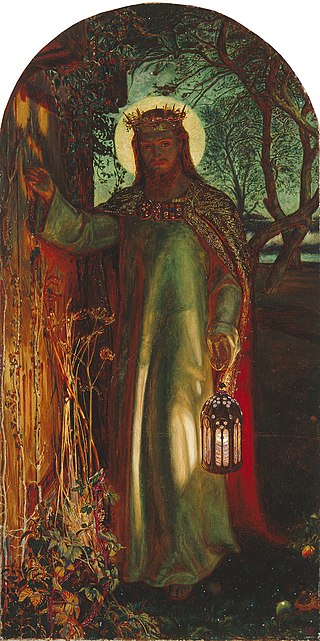 Max Lucado Daily: Succeed at Home First
Quiet heroes dot the landscape of our society. They don't make the headlines, but they do sew the hemlines and check the outlines and stand on the sidelines. You won't find their names on the Nobel Prize short list, but you'll find their names on the carpool, and Bible teacher lists. They are parents! Heroes! Their kids call them mom. Dad. And these moms and dads, more valuable than all the executives and lawmakers, quietly hold the world together.
Be numbered among them. Read books to your kids. Play ball while you can and they want you to. Make it your aim to watch every game they play, read every story they write, hear every recital in which they perform. Children spell love with four letters: T-I-M-E. Not just quality time, but hang time, downtime, anytime, all the time! Cherish the children who share your name. Succeed at home first!
From Dad Time
Joshua 5
When all the Amorite kings west of the Jordan and the Canaanite kings along the seacoast heard how God had stopped the Jordan River before the People of Israel until they had crossed over, their hearts sank; the courage drained out of them just thinking about the People of Israel.
2-3 At that time God said to Joshua, “Make stone knives and circumcise the People of Israel a second time.” So Joshua made stone knives and circumcised the People of Israel at Foreskins Hill.
4-7 This is why Joshua conducted the circumcision. All the males who had left Egypt, the soldiers, had died in the wilderness on the journey out of Egypt. All the people who had come out of Egypt, of course, had been circumcised, but all those born in the wilderness along the way since leaving Egypt had not been. The fact is that the People of Israel had walked through that wilderness for forty years until the entire nation died out, all the men of military age who had come out of Egypt but had disobeyed the call of God. God vowed that these would never lay eyes on the land God had solemnly promised their ancestors to give us, a land flowing with milk and honey. But their children had replaced them. These are the ones Joshua circumcised. They had never been circumcised; no one had circumcised them along the way.
8 When they had completed the circumcising of the whole nation, they stayed where they were in camp until they were healed.
9 God said to Joshua, “Today I have rolled away the reproach of Egypt.” That’s why the place is called The Gilgal. It’s still called that.
10 The People of Israel continued to camp at The Gilgal. They celebrated the Passover on the evening of the fourteenth day of the month on the plains of Jericho.
11-12 Right away, the day after the Passover, they started eating the produce of that country, unraised bread and roasted grain. And then no more manna; the manna stopped. As soon as they started eating food grown in the land, there was no more manna for the People of Israel. That year they ate from the crops of Canaan.
13 And then this, while Joshua was there near Jericho: He looked up and saw right in front of him a man standing, holding his drawn sword. Joshua stepped up to him and said, “Whose side are you on—ours or our enemies’?”
14 He said, “Neither. I’m commander of God’s army. I’ve just arrived.” Joshua fell, face to the ground, and worshiped. He asked, “What orders does my Master have for his servant?”
15 God’s army commander ordered Joshua, “Take your sandals off your feet. The place you are standing is holy.”
Joshua did it.
Our Daily Bread reading and devotion
Saturday, June 30, 2018
Read: Revelation 3:14–22
To Laodicea
14 Write to Laodicea, to the Angel of the church. God’s Yes, the Faithful and Accurate Witness, the First of God’s creation, says:
15-17 “I know you inside and out, and find little to my liking. You’re not cold, you’re not hot—far better to be either cold or hot! You’re stale. You’re stagnant. You make me want to vomit. You brag, ‘I’m rich, I’ve got it made, I need nothing from anyone,’ oblivious that in fact you’re a pitiful, blind beggar, threadbare and homeless.
18 “Here’s what I want you to do: Buy your gold from me, gold that’s been through the refiner’s fire. Then you’ll be rich. Buy your clothes from me, clothes designed in Heaven. You’ve gone around half-naked long enough. And buy medicine for your eyes from me so you can see, really see.
19 “The people I love, I call to account—prod and correct and guide so that they’ll live at their best. Up on your feet, then! About face! Run after God!
20-21 “Look at me. I stand at the door. I knock. If you hear me call and open the door, I’ll come right in and sit down to supper with you. Conquerors will sit alongside me at the head table, just as I, having conquered, took the place of honor at the side of my Father. That’s my gift to the conquerors!
22 “Are your ears awake? Listen. Listen to the Wind Words, the Spirit blowing through the churches.”
INSIGHT
Why does Jesus, like Moses and the prophets before Him, remind us that it’s possible to see without seeing, to hear without hearing, and to think without understanding? (Matthew 13:15; Deuteronomy 29:4).
Seven times in His letters to the seven churches, the resurrected Lord of the church offers counsel to those who have an ear to hear. Seven times He repeats to people who already thought of themselves as believers, “Whoever has ears, let them hear.” Why such repetition? What are the distractions He mentions in these letters? (Revelation 2–3). What could possibly turn us away from the One who is waiting for us to realize we still need Him more than the air we breathe? - Mart DeHaan
Light of the World
By Lisa Samra
Here I am! I stand at the door and knock. If anyone hears my voice and opens the door, I will come in. Revelation 3:20
One of my favorite pieces of art hangs in the Keble College chapel in Oxford, England. The painting, The Light of the World by English artist William Holman Hunt, shows Jesus holding a lantern in His hand and knocking on a door to a home.
One of the intriguing aspects of the painting is that the door doesn’t have a handle. When questioned about the lack of a way to open the door, Hunt explained that he wanted to represent the imagery of Revelation 3:20, “Here I am! I stand at the door and knock. If anyone hears my voice and opens the door, I will come in.”
The apostle John’s words and the painting illustrate the kindness of Jesus. He gently knocks on the door of our souls with His offer of peace. Jesus stands and patiently waits for us to respond. He does not open the door Himself and force His way into our lives. He does not impose His will on ours. Instead, He offers to all people the gift of salvation and light to guide us.
To anyone who opens the door, He promises to enter. There are no other requirements or prerequisites.
If you hear the voice of Jesus and His gentle knock on the door of your soul, be encouraged that He patiently waits for you and will enter if you welcome Him in.
Lord, thank You for the gift of salvation and Your promise to enter when we open the door. Please help me to respond to this gift and open the door for You today.
Open the door to Jesus; He is patiently waiting for you.
My Utmost for His Highest, by Oswald Chambers
Saturday, June 30, 2018
Do It Now!
Agree with your adversary quickly… —Matthew 5:25
In this verse, Jesus Christ laid down a very important principle by saying, “Do what you know you must do— now. Do it quickly. If you don’t, an inevitable process will begin to work ‘till you have paid the last penny’ (Matthew 5:26) in pain, agony, and distress.” God’s laws are unchangeable and there is no escape from them. The teachings of Jesus always penetrate right to the heart of our being.
Wanting to make sure that my adversary gives me all my rights is a natural thing. But Jesus says that it is a matter of inescapable and eternal importance to me that I pay my adversary what I owe him. From our Lord’s standpoint it doesn’t matter whether I am cheated or not, but what does matter is that I don’t cheat someone else. Am I insisting on having my own rights, or am I paying what I owe from Jesus Christ’s standpoint?
Do it quickly— bring yourself to judgment now. In moral and spiritual matters, you must act immediately. If you don’t, the inevitable, relentless process will begin to work. God is determined to have His child as pure, clean, and white as driven snow, and as long as there is disobedience in any point of His teaching, He will allow His Spirit to use whatever process it may take to bring us to obedience. The fact that we insist on proving that we are right is almost always a clear indication that we have some point of disobedience. No wonder the Spirit of God so strongly urges us to stay steadfastly in the light! (see John 3:19-21).
“Agree with your adversary quickly….” Have you suddenly reached a certain place in your relationship with someone, only to find that you have anger in your heart? Confess it quickly— make it right before God. Be reconciled to that person— do it now!
ISDOM FROM OSWALD CHAMBERS
We never enter into the Kingdom of God by having our head questions answered, but only by commitment.
The Highest Good—Thy Great Redemption
Friday, June 29, 2018
Joshua 4 , Bible Reading and Daily Devotionals
Max Lucado Daily: GOD BRINGS GIFTS
Long before you knew you needed grace, your Father had you covered! “Christ died for us while we were still sinners” (Romans 5:8). Before you knew you needed a Savior, you had one. And when you ask him for mercy, he answers, “I’ve already given it, dear child. I’ve already given it.”
There’s more! When you place your trust in Christ, he places his Spirit in you. And when the Spirit comes, he brings gifts, housewarming gifts of sorts. A spiritual gift, the Bible says, is given to each of us as a means of helping the entire church. (1 Corinthians 12:7). When you become a child of God, the Holy Spirit requisitions your abilities for God’s kingdom, and they become spiritual gifts. No one is gift deprived. Are you weary of an ordinary existence? Your spiritual adventure awaits. The cure for the common life begins and ends with God.
Read more Cure for the Common Life
Joshua 4 The Message (MSG)
4 1-3 When the whole nation was finally across, God spoke to Joshua: “Select twelve men from the people, a man from each tribe, and tell them, ‘From right here, the middle of the Jordan where the feet of the priests are standing firm, take twelve stones. Carry them across with you and set them down in the place where you camp tonight.’”
4-7 Joshua called out the twelve men whom he selected from the People of Israel, one man from each tribe. Joshua directed them, “Cross to the middle of the Jordan and take your place in front of the Chest of God, your God. Each of you heft a stone to your shoulder, a stone for each of the tribes of the People of Israel, so you’ll have something later to mark the occasion. When your children ask you, ‘What are these stones to you?’ you’ll say, ‘The flow of the Jordan was stopped in front of the Chest of the Covenant of God as it crossed the Jordan—stopped in its tracks. These stones are a permanent memorial for the People of Israel.’”
8-9 The People of Israel did exactly as Joshua commanded: They took twelve stones from the middle of the Jordan—a stone for each of the twelve tribes, just as God had instructed Joshua—carried them across with them to the camp, and set them down there. Joshua set up the twelve stones taken from the middle of the Jordan that had marked the place where the priests who carried the Chest of the Covenant had stood. They are still there today.
10-11 The priests carrying the Chest continued standing in the middle of the Jordan until everything God had instructed Joshua to tell the people to do was done (confirming what Moses had instructed Joshua). The people crossed; no one dawdled. When the crossing of all the people was complete, they watched as the Chest of the Covenant and the priests crossed over.
12-13 The Reubenites, Gadites, and the half-tribe of Manasseh had crossed over in battle formation in front of the People of Israel, obedient to Moses’ instructions. All told, about forty thousand armed soldiers crossed over before God to the plains of Jericho, ready for battle.
14 God made Joshua great that day in the sight of all Israel. They were in awe of him just as they had been in awe of Moses all his life.
15-16 God told Joshua, “Command the priests carrying the Chest of The Testimony to come up from the Jordan.”
17 Joshua commanded the priests, “Come up out of the Jordan.”
18 They did it. The priests carrying God’s Chest of the Covenant came up from the middle of the Jordan. As soon as the soles of the priests’ feet touched dry land, the Jordan’s waters resumed their flow within the banks, just as before.
19-22 The people came up out of the Jordan on the tenth day of the first month. They set up camp at The Gilgal (The Circle) to the east of Jericho. Joshua erected a monument at The Gilgal, using the twelve stones that they had taken from the Jordan. And then he told the People of Israel, “In the days to come, when your children ask their fathers, ‘What are these stones doing here?’ tell your children this: ‘Israel crossed over this Jordan on dry ground.’
23-24 “Yes, God, your God, dried up the Jordan’s waters for you until you had crossed, just as God, your God, did at the Red Sea, which had dried up before us until we had crossed. This was so that everybody on earth would recognize how strong God’s rescuing hand is and so that you would hold God in solemn reverence always.”
Our Daily Bread reading and devotion
Friday, June 29, 2018
Read: 2 John 1:1–6
My dear congregation, I, your pastor, love you in very truth. And I’m not alone—everyone who knows the Truth that has taken up permanent residence in us loves you.
3 Let grace, mercy, and peace be with us in truth and love from God the Father and from Jesus Christ, Son of the Father!
4-6 I can’t tell you how happy I am to learn that many members of your congregation are diligent in living out the Truth, exactly as commanded by the Father. But permit me a reminder, friends, and this is not a new commandment but simply a repetition of our original and basic charter: that we love each other. Love means following his commandments, and his unifying commandment is that you conduct your lives in love. This is the first thing you heard, and nothing has changed.
INSIGHT
Love is a prominent theme in the apostle John’s writings. In today’s reading (2 John 1:1–6) John writes: “It has given me great joy to find some of your children walking in the truth, just as the Father commanded us” (v. 4). Just as caring parents delight in the development of the gifts and character of their children, John had a father’s pride in those who walked in love. It is interesting to contemplate what John means by “walk in love” (v. 6). The Greek word translated “walk” can also mean a consistency one exhibits in speech, attitudes, and behavior. It’s clear that we’re being told to make sure the words we say, the attitudes we have toward others, and our general behavior be characterized by sensitivity and generosity. Of course, the ultimate example of love is the Lord Jesus Christ Himself (1 John 4:10). We love others because Christ first loved us. - Dennis Fisher
Pictures of Love
By Amy Peterson
I am not writing you a new command but one we have had from the beginning. I ask that we love one another. 2 John 1:5
My children and I have started a new daily practice. Every night at bedtime, we gather colored pencils and light a candle. Asking God to light our way, we get out our journals and draw or write answers to two questions: When did I show love today? and When did I withhold love today?
Loving our neighbors has been an important part of the Christian life “from the beginning” (2 John 1:5). That’s what John writes in his second letter to his congregation, asking them to love one another in obedience to God (2 John 1:5–6). Love is one of John’s favorite topics throughout his letters. He says that practicing real love is one way to know that we “belong to the truth,” that we’re living in God’s presence (1 John 3:18–19). When my kids and I reflect, we find that in our lives love takes shape in simple actions: sharing an umbrella, encouraging someone who is sad, or cooking a favorite meal. The moments when we’re withholding love are equally practical: we gossip, refuse to share, or satisfy our own desires without thinking of others’ needs.
Paying attention each night helps us be more aware each day, more tuned in to what the Spirit might be showing us as we walk through our lives. With the Spirit’s help, we’re learning to walk in love (2 John 1:6).
Lord, let us not love just in words, but in actions and in truth. Teach us to be obedient to Your call to love.
How can I show love today?
My Utmost for His Highest, by Oswald Chambers
Friday, June 29, 2018
The Strictest Discipline
If your right hand causes you to sin, cut it off and cast it from you; for it is more profitable for you that one of your members perish, than for your whole body to be cast into hell. —Matthew 5:30
Jesus did not say that everyone must cut off his right hand, but that “if your right hand causes you to sin” in your walk with Him, then it is better to “cut it off.” There are many things that are perfectly legitimate, but if you are going to concentrate on God you cannot do them. Your right hand is one of the best things you have, but Jesus says that if it hinders you in following His precepts, then “cut it off.” The principle taught here is the strictest discipline or lesson that ever hit humankind.
When God changes you through regeneration, giving you new life through spiritual rebirth, your life initially has the characteristic of being maimed. There are a hundred and one things that you dare not do— things that would be sin for you, and would be recognized as sin by those who really know you. But the unspiritual people around you will say, “What’s so wrong with doing that? How absurd you are!” There has never yet been a saint who has not lived a maimed life initially. Yet it is better to enter into life maimed but lovely in God’s sight than to appear lovely to man’s eyes but lame to God’s. At first, Jesus Christ through His Spirit has to restrain you from doing a great many things that may be perfectly right for everyone else but not right for you. Yet, see that you don’t use your restrictions to criticize someone else.
The Christian life is a maimed life initially, but in Matthew 5:48 Jesus gave us the picture of a perfectly well-rounded life— “You shall be perfect, just as your Father in heaven is perfect."
WISDOM FROM OSWALD CHAMBERS
The truth is we have nothing to fear and nothing to overcome because He is all in all and we are more than conquerors through Him. The recognition of this truth is not flattering to the worker’s sense of heroics, but it is amazingly glorifying to the work of Christ. Approved Unto God, 4 R
A Word with You, by Ron Hutchcraft
Friday, June 29, 2018
Nice Ways to Miss God - #8210
Usually, the only way we know a musical artist we like is through listening to their CD or maybe watching their music video. We've come a long way from Grandma's old 78 RPM records. In fact, someone's listening and saying, "What's a record?" But there's something much better than either the audio or video recording of a great musician. It's called going to their concert where you can actually see them and hear them live in person. There's nothing like the live concert.
I'm Ron Hutchcraft and I want to have A Word With You today about "Nice Ways to Miss God."
If you can see a musician in person, or better yet, if you have a chance to meet that person, why would you just settle for something they've made like a recording? Sadly, many a person in their search for spiritual answers has made a tragic mistake like that. They've gotten all involved with something God made or a religion that represents Him, but they've missed meeting Him in person!
In Mark 12:34, which is our word for today from the Word of God, Jesus made a sobering statement about what I would call a spiritual "near miss." The man He said it to had a lot of Bible knowledge and spiritual understanding but he didn't have a personal commitment to Jesus. Jesus said, "You are not far from the kingdom of God." Almost there, but not in. That means there will be people who came very close to doing what they must do in order to get to heaven. But like a man who misses his airplane flight by only seconds, they still won't get there. If Jesus were to appear to you personally where you are today, I wonder if He might say those same words to you, "You're not far from the kingdom of God. But you're not in."
Maybe you've found your spiritual experience in creation: the mountains, the ocean, the universe. That's good, but that's not God. God talks about that in Romans 1. "Since the creation of the world God's invisible qualities-His eternal power and divine nature-have been clearly seen, being understood from what has been made, so that men are without excuse. For although they knew God, they neither glorified Him as God nor gave thanks to Him, but their thinking became futile..." See, that's what happens when you stop at what God made and you don't go on to a personal relationship with the God who made it! If you think what He's produced is impressive, wait until you meet Him!
Or maybe you've gotten as close to Jesus as a religion that's about Him. But your church, your religion, is just a representation of the One that you need to know personally; it's only an introduction to Him. Religion can be a very nice way to miss God. If you think your religion does something for you, well wait until you meet the One the religion is just representing! Jesus said, "I am the way, the truth and the life. No one can come to the Father except through Me" (John 14:6). It's Jesus that gets you to heaven, not Christianity. And one of the greatest spiritual dangers in the world is to put your trust in a Christian religion or a Christian belief and miss putting your trust in Jesus himself.
And today I've just got to believe He's inviting someone who's listening to finally experience the real thing-an eternal love relationship with Jesus himself. It's not practicing a religion. It's responding to His love with total trust, responding with all your heart to His pouring out all His life for you when He died on the cross to take your place. He absorbed all of God's punishment for your sin there. Responding to this Rescuer from heaven who blew the doors off His grave on Easter morning. That's what begins a relationship; it's not enough just to know He did those things, any more than it would be enough for a drowning person to know that a lifeguard could save him. You've got to grab Him; you've got to hold onto Him as your only hope.
For all your spirituality and all your religion, the hole in your heart is still empty because the missing person in your life is Jesus. The Bible says you "...were made by Him and for Him" (Colossians 1:16). This is the day you can finally have Him in your soul! Tell Him, "Jesus, I'm yours." He promised that upon your invitation, He's coming into your heart.
Look, if you want to be sure you have begun a relationship with Him; you want to know how to do that, would you go to our website today. It's ANewStory.com.
Your lifelong search for meaning, for love, for God, do you know where it ends? It ends at the feet of Jesus, and it's time to come home.
Subscribe to:
Posts (Atom)